Mundial 2010: celebración en Granada y por toda España / Worldcup 2010: festivities in Granada and all over Spain

Español Inglés
Apenas unos minutos después del partido final del mundial 2010, Holanda-España, las calles de Granada comenzaron a llenarse de aficionados. Los coches se hicieron dueños del asfalto y un montón de gente salió a la calle para celebrar este título histórico para España.
Fue increíble ver a tanta gente con la cara pintada de rojo y amarillo, gritando y cantando “A por ellos”, “Viva España” o “Yo soy español”.

En España, cuando se consiguen éxitos tan importantes, la gente se aloca un poco, y lo celebran bañándose en las fuentes. En Granada hay muchas, pero la que más destaca es la Fuente de las Batallas que se encuentra al lado del teatro y a 10 minutos andando de la escuela Delengua de aprendizaje del español .

Este año, a contrario de lo que ha pasado para la Eurocopa 2008, no se podía entrar al agua, de haber tantos policías rodeando las fuentes por seguridad de los ciudadanos. Sin embargo, sí que la gente se tiró al agua desde el puente del río de Paseo del Salón… un baño resfrecante para una noche caliente y de emociones…

Cerca de esta fuente es como si la ciudad entera explotara por los petardos que lanzaba la gente, expresión ruidosa de su alegria y felicidad. La fiesta continuó hasta altas horas de la madrugada en Granada, y por toda España….

Es increíble lo que puede hacer el fútbol; unir a la gente de un mismo país pero de crencias distintas, opiniones y educacion diferentes, unir gente de diferentes nacionalidades y de todas las generaciones.
Jóvenes, niños, ancianos paseando por las calles  compartiendo una historia común, llevando más que nunca los colores del país al que pertenecen y asumiendo los legames con qualquier otra persona de su pais. Orgullosadamente…

Este año los futbolistas de la selección española han realizado el sueño de miles de españoles…
¡Fútbol es emoción! Fútbol genera pasión…

españoles campeones del mundo

Spain_crowd_celebrations

por las calles de Granada

Just a few minutes after the end of the World cup 2010 final Holand-Spain, the streets of Granada got full of football fans. Cars became  the masters of the asphalt, and a crowd of people invaded the streets in order to celebrate this historical title for Spain.
It was just amazing to see such a lot of people with red and yellow faces, screaming and singing typical songs like”A por ellos”, “Viva España” o “Yo soy español”.

In Spain, when there are such special events, people go a bit crazy, and use to have baths in the foutains. In Granada, there is plenty of fountains, but the most famous is la Fuente de las Batallas, situated near the theater and 10 minutes walking from the Spanish language school Escuela Delengua.
This year, unlike 2 years ago, during The European Cup 2008, people couldn’t enter the water, because of the presence of many policemen in front of the fountains. However, it did not stop people from having their bath… they just jumped into the river near to Paseo del Salón, from the roman bridge…  a refreshing bath for a hot and exciting night…

Near to this fountain, the festive atmosphere was spread, and firecrackers exploted in the air to express the joy and happiness. Needless to say that festivities continued till the morning of the following day in Granada and all over Spain…

What can soccer do to people? It is incredible how this sport can unite a people, a country, and many nationalities. In the streets, all generations shared that historic moment, becoming closer to each others. A new bound is created and fans are proud to be Spanish, that’s why they’re still wearing now more than ever the colors of the country they are part of.

This year, Spanish footballers realized the dream of all spanish people.
Soccer is emotion and generates passion!

Festival Internacional de Música y Danza de Granada/ International Music and Dance Festival

Español Inglés
El Festival Internacional de Música y Danza de Granada invita cada año a los amantes de la danza y la música. Durante veinte días se puede aprovechar de conciertos y espectáculos en diversos lugares en la ciudad.

El festival tiene una historia desde el año 1883 cuando en el Palacio de Carlos V el maestro Arbós y la Orquesta Sinfónica de Madrid actuaron juntos en un concierto. Hoy el festival forma parte de la feria del Corpus Christi.

El festival ofrece un ancho de banda de espectáculos diversos como conciertos sinfónicos, música de cámara, Ballet, danza contemporánea, música arcaica o destrezas del flamenco, entre otros. Y como Granada ofrece unos escenarios perfectos, estos eventos están subrayados por los bastidores bonitos de la Catedral o el Monasterio de San Jerónimo, del barrio del Albaicín o las alturas del Sacromonte. Pero no sólo los bastidores apoyan unos espectáculos inolvidables. La gran diversidad que ofrece el Festival Internacional de Música y Danza brinda algo para cada uno. Además de la magia que traen los actos músico y danzas hay actos literarios y artes escénicas que enriquecen la tradición histórico-cultural de Granada.

¡Haz te parte de este tiempo mágico, apúntate a un curso de español con la Escuela Delengua! Con nosotros vas a aprender español y además te introducimos en la riqueza de la cultura española y además en la especial cultura granadina. ¡No te pierdes el Festival de Música y Danza de Granada! ¡No te pierdes un tiempo mágico en la ciudad de la Escuela Delengua!

The International Music and Dance Festival in Granada invites every year the fanciers of dance and music. During twenty days you can enjoy concerts and spectacles in different places in the city.

The festival has a history since 1883 when the master Arbós and the Simphony Orchestre of Madrid acted together in a concert in the Palace of Carlos V. Today the festival is part of the feast of Corpus Christi.

The festival offers a big spectrum of diverse spectacles like sinfonia concerts, chamber music, Ballett, Modern Dance, Archaic Dance or Flamenco, between others. And like Granada offers some perfect scenes, these events are amphasized by the beautiful backdrops of the Cathedral or the Monastery of San Jerónimo, the Albaycin district and the altitudes of Sacromonte. But not just the backdrops support to make these spectacles unforgettable. The bid diversity which offers the International Music and Dance Festival brings something for everyone. Besides the magic which bring the acts of music and dance there are literal and art scene performances which enrich the historic-cultural tradition of Granada.

Be part of this magic time, inscribe for a spanish programme with the language school Escuela Delengua! With us you will learn Spanish and furthermore we introduce you in the richness of the Spanish culture and the special culture of Granada. Don’t miss the Music and Dance Festival in Granada! Don’t miss a magic time in the hometown of the language school Escuela Delengua!

Día de la Tarasca/ The Day of the Tarasca

Español   Inglés
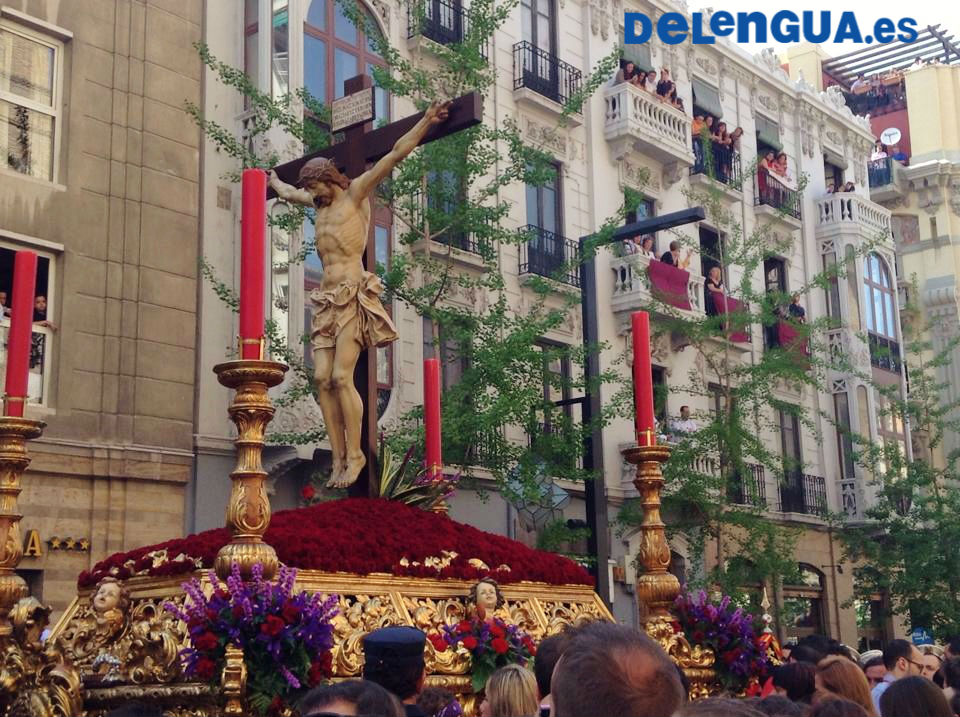
El Día de la Tarasca es el primer día de la fería de Corpus Christi. Con una procesion este día debe preludiar a la fería granadina que es muy importante para los ciudadanos. Normalmente muy puntual sale el desfile con la Tarasca al las 12:00 horas del mediodía del ayuntamiento. Desde allí muchos curiosos al lado de las calles Reyes Católicos y la Gran Vía ya le esperan con impaciencia. Porque la Tarasca es más que sólo un desfile para anunciar los días del Corpus Christi.La Tarasca es un maniquín que está ariba de la espalda de un dragon. Acompañado por charanga y bandas de música, el maniquín sobre el dragón presenta las últimas tendencías de la moda actual. Y como cada manequín también la Tarasca tiene un adyutante que le apoya elegir la ropa adecuada y vestirse. Sólo en caso de este maniquín especial no es un diseñador sino un técnico de cultura del Ayuntamiento de Granada. Pero no lo hace con menos pasión. Porque la Tarasca tiene mucho historia y la gente que trabaja en que este fería es un éxito siempre lo hace con mucho pasión.

Tradicionalmente el desfile con la Tarasca está encabezado por los gigantes y cabezudos que deben encarnar los grandes Reyes Católicos y a los últimos reyes de la dinastía nazarí que gobernaron Granada, Boabdil y Moraima. Los Reyes Católicos, Isabel de Castilla y Ferdinand de Aragón, eran los reyes que encabezaron la Reconquista y que crearon el Corpus Christi como fería mayor en Granada.

Tanto como el día de la Tarasca es parte de Granada, eso es también la Escuela Delengua. No sólo ofrecemos cursos del español. Igualmente es importante para nosotros que nuestros alumnos aprenden algo sobre la vida y la cultura española, sobre nuestros costumbres y nuestra historia. Si a ti también te interesa aprender español y también algo más sobre España y nuestra sociedad, ¡apúntate para uno de nuestros cursos!

The Day of the Tarasca is the first day of the Feast of Corpus Christi. With a procession this day should prelude the feast of Granada which is very important for the citizens. Usually the procession with the Tarasca leaves on time at 12:00 o’clock noon from the city hall. From there on lots of curios onlookers in the streets Reyes Católicos and Gran Vía wait impatiently. Because the Tarasca is more than just a procession to announce the days of the Corpus Christi.The Tarasca is a mannequin which stands on a dragons back. Accompanied by a marching band and other music bands, the mannequin on the dragon presents the latest fashion of the season. And like every other model the Tarasca has a helper, too, who helps her to find the right clothes and to dress up. It’s just, that this special model doesn’t have a designer who helps her but a cultural engeneer of the city hall of Granada. But he doesn’t support with less passion. Because the Tarasca has got a long history and the people who work for this feast to be a success, always do this with lots of passion.

Traditionally the procession with the Tarasca is leaded of gigants and big puppets made of carton which are supposed to constitute the Catholic Kings and the last kings of the dynasty of arabians who ruled Granada, Boabdil and Moraima. The Catholic Kings, Isabel of Castilla and Ferdinand of Aragon, were the kings who lead the catholic recapture of Granada and whomade Corpus Christi the major feast of Granada.

Like the Day of the Tarasca is part of Granada, is it the language school Escuela Delengua. We don’t just offer sppanish programmes. It’s also important for us, that our students learn something about spanish live and culture, about our costums and our history. If you, too, are interested in learning Spanish and about Spain and our society, sign in for one of our programmes!

¡El primer concurso de la Escuela Delengua! / Delengua Language School’s first Competition!!


Español English
En estos momentos la Escuela Delengua está celebrando su primer concurso de vídeo. Le ofrece la oportunidad de ganar un curso intensivo de español con alojamiento gratuito para dos personas…  ¡durante dos semanas! Esto es una oportunidad para cualquiera que esté interesado en venir a España para aprender español. Puede venir a Granada, una de las ciudades más animadas y divertidas de toda España para aprender uno de los idiomas más populares del mundo. Sólo tendría que pagar su billete de ida y vuelta y sus gastos particulares.

La localización de la Escuela le permitirá  divertirse más de Granada por estar situada en el centro de Granada y en la base del Albaycín. Puede pasear por Plaza Nueva donde hay algunos bares y restaurantes a dos minutos de la escuela, o por el centro de Granada, a tan sólo cinco minutos. Como la Escuela está situada muy cerca del Albaycín, a tan sólo 15 minutos, puede visitar el mirador de San Nicolás, desde el que podrá admirar la Alhambra.

La Alhambra no es la única atracción en Granada. También Granada tiene otras atracciones turísticas como el Generalife, La Capilla Real, La Catedral, El Albaycín, el Parque de las Ciencias, el Parque de Federico García Lorca y los bares de la ciudad. Granada es una de las pocas ciudades en España que continua ofreciendo tapas gratuitas cuando compra una bebida. Por este motivo, Granada se considera uno de los sitios más baratos para vivir, y cuando venga aquí no tendrá que gastar mucho dinero.

Granada está situado a 40 minutos de Sierra Nevada y la Costa Tropical. Así, Granada puede dar algo a gusto de todos. Las personas que quieren  esquiar en el invierno o a aquellas que desean hacer bicicleta en verano, pueden hacerlo en Sierra Nevada. Y también ofrece a las personas que sólo quieren relajarse, irse a las playas de la Costa Tropical.

Venga y participe en nuestro primer concurso para tener una oportunidad de ganar el premio de su vida con la Escuela Delengua. Con Escuela Delengua puede a asistir a un curso intensivo de español con alojamiento gratuito durante 2 semanas para 2 personas.

Para más detalles del concurso visite:
Español / Ingles

Delengua Language School is currently hosting its very first video competition. It is offering you the chance to win a two week intensive Spanish course with accommodation for Free! This is the perfect opportunity for anyone who is interested in coming to Spain to learn Spanish. You are able to come to Granada, one of Spain’s most vibrant and exciting cities to learn one of the world’s most rapidly increasing languages. All you have to do is pay for flights and living expenses.

The language school’s location will help make your stay in Granada even more enjoyable due to it being located in the centre of Granada at the foot of the Albayzin. Within walking distance of where you will be studying Spanish you will be at Plaza Nueva in two minutes where there are numerous bars and restaurants and also to the centre of town in 5 minutes. Due it being located very close to the Albayzin it is also about a 15 minute walk to El Mirador de San Nicolas where you will be able to look across to the breathtaking Alhambra palace.

The Alhambra is not the only attraction that Granada offers. It also has tourist attractions such as the Generalife, the Royal Chapel, The Cathedral, The Albayzin, the Science Park, Federico Garcia Lorca Park and the local bars. Granada is one of the few remaining cities in Spain that continues to serve free tapas when you purchase a drink. This helps make Granada one of the cheapest places to live in and would help to keep the costs of your stay to a minimum.

Granada is located both 40 minutes away from the Sierra Nevada mountain range and the Tropical Coast. This makes Granada attractive to everyone as it enables sport ethusiasts to go skiing during the winter or go cycling during the summer in the Sierra Nevada. It also allows those of you who would like a nice relaxing time in the sun by the sea to do just that with a very short trip.

Come and participate in our competition for your chance to come and win that prize of a lifetime being held by Delengua Language school offering you the chance to win a free two week Spanish course with accommodation for up to two people!

Full details of the competition:
English
/ Spanish

La noche de San Juan / San Juan Night

Español Inglés
Los elementos de la tierra son protagonistas en el gran festival granadino, en la noche del solsticio de verano. Agua y fuego son los ingredientes básicos de la fiesta, porque estaban unidos en los antiguos rituales del solsticio de verano. Por eso celebran la noche de San Juan siempre cerca de un río, largo o del mar y con hogueras grandes.También en la provincia y en la ciudad de Granada celebran la llegada del verano con hogueras y barbacoas. Los pueblos de la provincia suelen añadir varias actividades y actuaciones a los elementos básicos, así también el ayuntamiento de la ciudad.Mucha gente dice que la noche de San Juan es la más mágica del año. La verdad la noche más corta del año ya es el 21 de junio. Por eso en Granada las celebraciones ya empiezan unos días antes de la noche mágica, el 23 de junio, pero terminan de la misma manera como en los otros pueblos. Con una verbena y la tradicional barbacoa cerca del río Genil se saluda al verano en la noche de su llegada. También la Escuela Delengua participa esta tradición cada año, y nunca falta cuando encienden las hogueras que deben dar más fuerza al sol. Porque la llegada del verano significa también que los días empiezan a ser más cortos. Las llamas de las hogueras apoyan al sol que desde este día se pone más y más débil.

La noche de San Juan, o sea el solsticio de verano, suelen celebrar en muchos países del mundo. Aparte de España también hay celebraciones en Portugal (Fogueiras de São João), Noruega (Jonsok), Dinamarca (Sankthans), Suecia (Midsommar), Finlandia (Juhannus) y Reino Unido (Midsummer). En Sudamérica, por ejemplo Brasil tiene las Festas Juninas, y Venezuela se celebra la noche de San Juan como en España.

Conecta tu estancia en Granada con un curso de español en la Escuela Delengua y vive con nosotros la noche mágica de San Juan.

El 21 Festival Internacional de Tango de Granada / The 21st International Festival of Tango of Granada

Español English

“La forma más romántica y peligrosa de la música, que siempre ha inspirado al cuerpo humano a adherirse al otro. La experiencia de la emoción y el estremecimiento del placer.”

Fred Dellar (Mojo) sobre Tango

Por primera vez el tango fue bailado en Buenos Aires y Montevideo al final de siglo XIX. En este tiempo era influido de los estilos de los bailes europeos y fue considerado el más indecente. Con el tiempo la gente adquirió la elegancia y refinó movimientos y el Tango ganó la aceptación del público y el Vaticano. Hoy día el Tango es un baile explosivo y elegante que expresa: amor, romance y odio.

Del 31 de marzo de 2009 al 5 de abril de 2009 El Festival Internacional del Tango está organizado en Granada. Este festival es un acontecimiento pionero en el mundo europeo del Tango. De su apertura en 1988 ofreció la diversidad de los estilos en cada uno de los aspectos diferentes del tango: instrumento, baile y canción. Este año en su 21 edición más de 60 artistas, 5 voces femeninas, 12 parejas que bailan, 6 voces masculinas y solistas participan. Uno de los artistas principales es Miguel Ángel Zotto, que es considerado por muchas personas como el bailarín más notable en la historia del Tango.

Durante una semana el festival ofrece numerosos conciertos musicales, espectáculos y clases del Tango. Hay también exposiciones fotográficas, debates en la cultura, lecturas de poesía así como mucho más. Los acontecimientos principales ocurren sobre todo en el Teatro Isabel la Católica, los adicionales son localizados en la Universidad de Granada, Corral del Carbón, Mirador de San Nicolás y otros sitios.

Entonces si ahora realmente quiere participar en el 21 Festival Internacional del Tango de Granada, no vacile. Embale su maleta y venga a Granada para aprender el español en la Escuela Delengua, bailar el Tango con profesionales y admirar extraordinarias interpretaciones en el nivel internacional más alto.

21 Festival Internacional de Tango

“The most romantic and dangerous form of music, which has ever inspired the human body to stick to another. The experience of emotion and thrill of pleasure.”

Fred Dellar (Mojo) about Tango

The tango was danced for the first time ever in Buenos Aires and Montevideo at the end of the XIXth century. At this time it was influenced by styles of European dances and was considered the most indecent. With time people acquired elegance and refined movements and the Tango gained acceptance from the public and Vatican. Nowadays the Tango is an explosive and elegant dance which expresses love, romance and hate.

From March 31, 2009 until April 5, 2009 The International Festival of Tango is organised in Granada. This festival is a pioneering event in the European world of Tango. From its opening in 1988 it offered diversity of styles in each of the different aspects of tango: instrument, dance and song. This year in its 21st edition more than 60 artists, 5 female voices, 12 dancing couples, 6 male voices and soloists are taking part. One of the main artists is Miguel Ángel Zotto, who is considered by many people as the most notable ballet dancer in the history of Tango.

For one week the festival offers numerous musical concerts, spectacles and classes of Tango. There are also photographic exhibitions, debates on culture, poetry readings as well as much more. Main events take place mostly in the Theater “Isabel la Católica”. Additional ones are located at the University of Granada, Corral del Carbón, Mirador de San Nicólas and other places.

So now if you really want to participate in The 21st International Festival of Tango of Granada, don’t hesitate. Pack your suitcase and come to Granada to learn Spanish at Delengua Language School, dance Tango with professionals and admire extraordinary performances at the highest international level.

El Día de San Cecilio

Español English

San Cecilio es el patrón de Granada, era el primer obispo de Granada enviado por España para promover el cristianismo. Su vida era misteriosa, se sabe que sufrió martirio aunque no quedó ningún documento que podía darnos más información sobre su existencia.

Para que la gente no olvide este gran personaje, cada año, el primero domingo de febrero, Granada celebra, el día de su patrón San Cecilio. Hay dos partes en esta festividad: una ritual y otra popular. Gracias a esta fiesta era posible ver gratuitamente los restos del santo en las Catacumbas del Monasterio del Sacramonte. Es el mismo lugar donde turistas y habitantes normalmente suben para reunirse con su propia bebida y comida para hacer un picnic. Se puede aprovechar también de la comida típica que aporta el ayuntamiento que se compone: de habas verdes y salaillas, que son pequeños panes, salados y muy ricos, así como bacalao y tortilla del Sacromonte.

El día de San Cecilio se celebraba por todas partes del Sacramonte pero nosotros con algunos estudiantes del centro español Escuela Delengua subimos al Museo de Cuevas de Sacramonte. Allí a partir de las 14 h se estrenaba el grupo de flamenco Babolé, que comenzó con la corta historia de San Cecilio, presentada en la forma del poema. Después de media hora de canto entró una bailoara con su traje del flamenco. Cuando empezó a bailar toda la gente dejo de hablar y se acercó a la plataforma para ver mejor esa bailarina estupenda y sacar fotos.

En la fiesta no faltaban cervecitas así como comida: carne, salchichas, tomates y queso con aceite y a partir de 15h la paella. Algunos trajeron su comida propia que compartieron entre sus amigos o familia.

En general toda la gente, mayores junto a menores, disfrutaba del día del patrón de Granada bebiendo, comiendo, tomando sol en compañía de la música y el baile y con unas vistas impresionantes del barrio y la ciudad.

San Cecilio,  Granada

San Cecilio the patron of Granada, was the first archbishop of Granada sent by Spain to promote Christianity. His life was mysterious, it is commonly known that he suffered martyrdom although none of the documents survived that could tell us anything more about his existence.

So that noone would not forget how great person he was, each year, during the first Sunday of February, Granada celebrates the day of its patron San Cecilio. There are two parts of that holiday the one being ritual and the other more informal. On the occasion of the holiday it was possible to see, for free, the remains of the saint in Catacombs of the Monastery of Sacramonte. The same Monastery is also the place where the locals together with tourists gather together with their own drinks and meals to make a picnics. Thanks to the Tawn Hall the participants can enjoy the typical food: green broad beans, salaillas (small salted bread) as well as tortilla de Sacramonte.

San Cecilio day is celebrated in all parts of Sacramonte but we, together with other students from Escuea Delengua, went to the Museo de Cuevas de Sacramonte. From 14h onwards it was possible to see the flamenco group called Babolé who presented the short history of San Cecilio in the form of a poem. Half an hour later a dancer dressed in flamenco costume entered the stage. When she started dancing all the people stopped talking and approached the stage in order to see her better and take some photos of her.

The fiesta would not be complete without beer and food such as: meat, sausages, tomatoes and cheese with olive oil and 15h there was also paella. Some brought their own food which them and shared with their families or friends.

In general, all the people, the young together with the elders, enjoyed themselves drinking, eating, sunbathing with the music in the background and impressive views on Sacramonte and the city.

La Fiesta de las Castañas / The Chestnut Festival

Español English

En los pueblos de las Alpujarras, en las afueras de Granada, el 1 de noviembre es algo más que el día de Todos los Santos: también es cuando se celebra la Fiesta de la Castaña. Hoy en día se celebra con senderos castañeros, degustaciones de castañas asadas, concursos y bailes tradicionales. Los vecinos de estos pueblos salen al campo y hacen una merienda. Recogen las castañas, las asan en el campo, cerca de los castaños enormes que existen allí (algunos de 8 metros de perímetro), y beben ‘chapurrao’ (un vino sin fermentar, con aguardiente) para avanzar la fiesta. Durante este día, se distribuyen miles de kilos de castañas: en las fiestas, sobre todo por la noche, las castañas son gratis y acompañadas por verbenas con orquestras de música.

La fiesta tiene sus raices en la costumbre de los labradores Alpujarreños de festejar la cosecha, y hoy en día se ha convertido en una fiesta de otoño. Antiguamente, el fruto castañero fue un alimento muy importante en España, hasta el descubrimiento de América y la patata por Cristobal Colón. Se usaban la harina de la castaña para hacer galletas y mermeladas, además de comerlas asadas. Todavía se comen mucho, y en Granada se ve castañeros en las esquinas por todo el otoño. Visitar la Fiesta de las Castañas en cualquier pueblo de las Alpujarras te permite celebrar el otoño (una estación muy bonita en Granada y su provincia), probar las castañas (un manjar local) y, por supuesto, ¡practicar tu español!

Fiesta de las Castañas

In the small towns of the Alpujarras, just outside Granada, the 1st November is something more than All Saints’ Day: it is also when the Chestnut Festival is celebrated. Today it is celebrated with chestnut trails, tastings of roast chestnuts, competitions and traditional dances. The locals of these towns go out and picnic in the fields. First, they collect the chestnuts, then they roast them in the fields, near the huge chestnut trees that exist there (some are more than 8 metres in diameter), and they drink ‘chapurrao’ (an unfermented wine with added liquor) to help the party along. Throughout the day, thousands of kilos of chestnuts are given away: in the festivals, especially at night, the chestnuts are free, and are accompanied by live music and open air dancing.

The festival is rooted in the Alpujarran workers’ old custom of celebrating the harvest, and it has now become a celebration of autumn itself. In the past, the fruit of the chestnut tree was a very important foodstuff in Spain, until Christopher Columbus’ discovery of America and the potato. The flour of the chestnut was used to make biscuits and jams, and they were also eaten roasted. They are still eaten a lot, and in Granada you can see chestnut sellers on the corners throughout the autumn. Visiting the Chestnut Festival in any one of the Alpujarran towns lets you celebrate autumn (a very pretty season in Granada and its province), try the chestnuts (a local delicacy), and, of course, practise your Spanish!

El Día de Todos los Santos / All Saints’ Day

Español English

El día 1 de noviembre se llama ‘El día de Todos los Santos’ y es un día importante en España, creado por la iglesia hace muchos años para reconocer a todos los santos, aparezcan en el calendario de los santos o no aparezcan, incluso los desconocidos por la mayoría de los cristianos.

También es el día cuando la gente recuerda a sus seres queridos que han muerto, y cuando los visita. Todo el mundo va a los cementerios para honrar a sus familiares difuntos: es el día del año en que más flores se venden, y los cementerios se llenan de color y todo tipo de flores.

Además del aspecto religioso del día, hay que mencionar los dulces típicos de esta fecha, que se cocinan para la festividad. Por toda España, se come ‘los buñuelos de viento’ (se dicen que cada vez que comes un buñuelo, sacas un alma del purgatorio) y ‘los huesos de santo’, que son dulces de mazapán que imitan el canibalismo. No es tan truculento como parece: si comes a los muertos simbólicamente, significa que los quieres y no tienes miedo.

Flores para Todos los Santos

The 1st of November is known as All Saints’ Day, and is an important day in Spain: one created by the church many years ago in order to recognise all of the saints, whether they appear in the calendar or not, including those who are unknown by most Christians.

It is also the day when people remember their loved ones who have passed away, and visit them. Everyone goes to the cemeteries to honour their dead relatives: it is the day of the year when the most flowers are sold, and the cemeteries are filled with colour and every type of flower.

As well as the religious side of the day, we cannot forget the typical sweets of these days, which are made for the festivities. Throughout Spain, people eat ‘buñuelos de viento’ (‘wind fritters’) (it is said that every time you eat one of these fritters, you release a soul from purgatory), and ‘los huesos de santo’ (‘saint’s bones’), which are marzipan sweets which are made to imitate cannibalism. This is not as gruesome as it seems: by symbolically eating the dead, you are showing that you love them and are not afraid of them.

Feria del Caballo de pura raza española, Armilla (Granada) / The festival of purebred Spanish horses, Armilla (Granada)

Español English
Suelen haber muchas ferias y fiestas en Granada, y esta semana no es una excepción. Este fin de semana, entre los días 23 y 26 de octubre, en Armilla, justo al lado de Granada, se celebra la séptima Feria del Caballo de pura raza española. En esta feria participarán más de trescientos caballos de las ganaderías más prestigiosas de España. Hay concursos entre estos caballos de pura raza, dirigidos tanto a los profesionales como los aficionados al caballo entre el público. También vale la pena visitar la feria si tienes interés por la moda flamenca: los profesionales de este sector acuden a la pasarela que hay el día 25, y el espectáculo capta la atención. Además, hay doma de caballos y vacas, un espectáculo infantil, exhibiciones de carruajes y concursos diarios.

Es la segunda feria más importante de España, después de la de Jerez, y la calidad de los espectáculos es muy alta. Después de siete años de éxito y de mejora, esperan una feria de una calidad aun más alta este año. El objetivo es ayudar al fomento y a la expansión del Caballo de Pura Raza Española. Este año se han invertido 200.000 euros y hay el máximo número de caballos para el espacio (300 caballos en 12. 000 metros cuadrados): se espera que asistan unas 40.000 personas. Si estás en Granada, vale la pena visitar la feria: si ya has visto un caballo de pura raza española, conoces su belleza y orgullo cautivantes, o si no has visto este tipo de caballo nunca, tienes que hacerlo cuanto antes para poder apreciar su elegancia.

Feria del Caballo de pura raza española

There are often many festivals and fiestas in Granada, and this week is no different. This weekend, between the 23rd and 26th of October, in Armilla, just outside Granada, the 7th Festival of Purebred Spanish horses is taking place. More than three hundred horses from the most prestigious ranches in Spain will take part in the festival. There are competitions between these thoroughbred horses, aimed as much as horse-lovers among the public as professionals from the industry. The festival is also well worth a visit if you are interested in Flamenco clothing: those who are in this line of work flock to the catwalk show that takes place on the 25th, which certainly captures the attention. You can also watch horses and bulls being broken in, there is a children’s show, carriage exhibitions, and daily competitions.

This festival is the second most important in Spain, after that in Jerez, and the quality of the shows is incredibly high. After seven years of success and improvement, a festival of an even higher quality is hoped for this year. The aim of the festival is to help the development and expansion of the Purebred Spanish Horse. This year, 200,000 euros have been spent on the festival, and there are as many horses as will fit into the available space (300 horses in 12,000 square metres): it is expected that approximately 40,000 people will show up. If you are in Granada, it is really worth going to the festival: if you have already seen a pure, thoroughbred Spanish horse, you will know of their mesmerising beauty and pride, and if you have never seen this type of horse, you have to do so as soon as possible, so that you can appreciate their elegance.