
Alhama de Granada/ Alhama de Granada

Español Inglés
Alhama esta enclavado en la Sierra de Tejeda en la provincia de Granada en Andalucía. Es más conocida por sus baños termales árabes (de los que procede su propio nombre, al-Hama, que significa “el baño” en árabe). Ya fueron usados por los romanos y árabes y hoy en día los baños ofrecen modernos tratamientos contra la artritis, el reúma y el estrés.Durante el siglo XIX, el balneario antiguo de la ciudad gozó de gran popularidad, llegando a convertirse en el más importante de toda Andalucía. Actualmente, nuevas construcciones han modernizado el balneario y debido a su naturaleza medicinal, los baños son continuamente visitados por enfermos reumáticos y por turistas en busca de descanso.Los Romanos legaron algunos restos a su paso como la calzada romana, el puente romano y algunas villas pero los árabes influyeron más en el carácter de la ciudad que los romanos, como los restos de muralla, las torres vigía y, lo más importante, el Baño Fuerte, con sus espléndidos arcos de herradura. Después de la conquista cristiana, en 1482, se construyó la iglesia de la Encarnación levantada por orden de los Reyes Católicos en 1505. También la ciudad cuenta con un castillo, de origen árabe y reconstruido a principios del siglo XX; la iglesia del Carmen, edificio renacentista del siglo XVI con decoración barroca; la Casa de la Inquisición, de estilo gótico isabelino, que sólo conserva original la fachada; el Hospital de la Reina; y la fuente conocida como Caño Wamba, erigida en 1533. Existen también en la ciudad numerosas casas solariegas, todas dotan a la ciudad de un rico patrimonio monumental de gran belleza y se hace un destino turístico de Andalucía.Hay varios lugares interesantes para visitar en Andalucía, situado en el sur de España. Escuela Delengua se ubica en Granada, una ciudad muy bonita en pleno centro de la región y 50km de Alhama, ofrece cursos de español y durante los fines de semana, la escuela organiza excursiones a algunas de las ciudades más conocidas de Andalucía.
El balneario
La Iglesia del Carmen
Alhama is located in the heart of the Sierra de Tejeda in the province of Granada in Andalusia. The city is best known for its thermal Arabic baths (from which comes its own name, al-Hama, that means “bath” in Arabic). They have been used by the Romans and the Arabs and nowadays the baths offer modern treatments against arthritis, rheumatism and stress. During the 19th century, the old spa in the city was hugely popular, making itself the most important in all of Andalusia. Today the spa has new modernized contructions and thanks to its medicinal nature, the baths are continually visited by rheumatic patients and by tourists looking for a relaxing break.There remains some of the Roman influences in the city, like the Roman road, the Roman bridge and some villas but the Arabs influenced the character of the city more than the Romans, as with the remains of the mural, the watchtower and, the most important, the “Baño Fuerte” (one of the baths) with its splendid horseshoe arch. After the Christian conquest in 1482, the church of the Incarnation was built, constructed by the order of the Catholic Kings in 1505. Also the city has a castle, of Arabic origin and reconstructed at the beginning of the 20th century; the church of Carmen, renaissance building from the 16th century with barroque decoration; the house of the Inquisition, of Elizabethan gothic style, that has only conserved the original front; el Hospital de la Reina; and the fountain known as the “Caño Wamba”, erected in 1533. There are also many ancestral homes in the city, all these mentioned above give the city a rich monumental heritage of great beauty and makes it a top tourist destination in Andalusia.There are various interesting places to visit in Andalusia, situated in the south of Spain. Escuela Delengua is located in Granada, a very beautiful city in the heart of the region, 50km from Alhama, it offers Spanish courses and during the weekend the school organizes excursions to some of the best known cities in Andalusia.

Sevilla/ Seville

Español Inglés
Sevilla es la capital artística, cultural y financiera del sur de España, también es la capital de la comunidad autónoma de Andalucía y de la provincia de Sevilla. Está situada en el río Guadalquivir, el segundo más largo de España y el más largo de Andalucía.

Sevilla tiene más de 2.000 años y tiene un centro histórico grande y bien conservado. Aunque tiene un patrimonio medieval fuerte, renacentista y barroco, la ciudad recibió una gran influencia de la cultura Árabe. La catedral, uno de los lugares más conocidos de Sevilla, fue construída entre 1401 y 1519, después de la Reconquista en el antiguo emplazamiento de la mezquita de la ciudad. Se trata de la más grande de todas las catedrales medievales y góticas. Su interior presume de la nave más larga de España, con un decorado espléndido de una gran cantidad de oro. Otro lugar conocido en Sevilla es el Alcázar, al lado de la Catedral, desarrollado a partir del palacio Árabe más antiguo de la ciudad. La construcción empezó en 1181 y continuó durante más de 500 años, principalmente en el estilo Mudéjar, pero también en Renacentista. Sus jardines son una mezcla de tradiciones árabes, cristianas y de Andalucía.

La ciudad también tiene muchos museos como el Museo de Bellas Artes de Sevilla, establecido en 1835 y también hay muchos jardines y parques como el Parque de María Luisa que fue construído para la Exposición Universal de 1929 en Sevilla. La ciudad es bien conocida por sus bonitas procesiones durante la Semana Santa y por su feria animada que tiene lugar dos semanas después, la Feria de Sevilla ó Feria de Abril.

Otra atracción a la ciudad es la cultura de las tapas, la gente va de un bar a otro para disfrutar de especialidades locales. El Flamenco es otra atracción a la ciudad, sobre todo en el barrio gitano de Triana.

Escuela Delengua, la escuela de español que está situada en la ciudad de Granada organiza excursiones durante los fines de semanas a Sevilla. En autobús desde Granada a Sevilla, el trayecto es de 3 horas aproximadamente, lo cual es un destino perfecto para un viaje de un día.

Seville is the artistic, cultural and financial capital of southern Spain, it is also the capital of the autonomous community of Andalusia and of the province of Sevilla. It is situated on the River Guadalquivir which is the second longest river in Spain and the longest in Andalusia.

Seville is more than 2,000 years old and is a large and well-preserved historical center, although it has a strong medieval, renaissance and baroque heritage, the city received heavy influences from the Arabic culture. The Cathedral is one of Seville’s main landmarks, it was built from 1401–1519 after the Reconquista on the former site of the city’s mosque. It is amongst the largest of all medieval and Gothic cathedrals. The interior is the longest nave in Spain, and is lavishly decorated, with a large quantity of gold. Another famous landmark in Seville is the Alcázar facing the cathedral, it has developed from the city’s old Moorish Palace. Construction begun in 1181 and continued for over 500 years, mainly in Mudéjar style, but also in Renaissance. Its gardens are a blend of Moorish, Andalusian, and Christian traditions.

The city also has many museums like The Museum of Fine Art of Seville, established in 1835 and also many beautiful gardens and parks like the Parque de María Luisa which was built for the 1929 World’s fair held in Seville. It is also known for its beautiful processions during Holy Week and for the lively and colourful fair held two weeks after, La Feria de Sevilla.

Another main attraction to the city is the tapas culture where people can go from one bar to another enjoying the tapas of local specialities. Flamenco is also another attraction to the city, shown in the gypsy area of Triana.

Escuela Delengua, the Spanish language school which is situated in the city of Granada organises weekend trips to Seville. By bus it takes just three hours to get to Seville, making it a perfect destination for a day trip!

Granada y sus alrededores de costas y playas bonitas // Granada and its surrounding beautiful beaches and Coasts

Español Inglés
Los alrededores del Sur Granada son famosos por sus preciosas playas.Situada entre la famosísima Costa del Sol y Almería, la banda de arena fina de la costa Tropical, de sólo unos 60 kms, se ubica al Sur de la ciudad histórica de Granada, que también es conocida por Costa de Granada.

La Costa Tropical de Granada tiene mucho que ofrecer:
El clima, muy agradable, unido a unas maravillosas playas andaluzas y las numerosas ofertas hoteleras y gastronómicas conciben un destino turístico de mucho éxito.

Esta costa posee tantos atractivos turísticos y lugares insólitos que cada año son elegidos por numerosos viajeros de todas partes del mundo para disfrutar de sus vacaciones de verano en un bello entorno.

Es más, todos los que una vez hayan venido, quieren volver, y volverán.

Por supuesto, en el programa de actividades de la Escuela Delengua hay excursiones organizadas para descubrir playas tan bonitas como las de las imágenes de este artículo.

Para descansar después de un curso intensivo de español, irse a la playa con los compañeros de clase y amigos para disfrutar del buen tiempo es lo ideal. Los destinos de una excursión pueden ser Salobreña, Nerja, Almuñécar…

Salobreña está ubicada en el medio de la Costa Tropical de Granada que se extiende hacia el Oeste (localidades de Almuñécar y La Herradura) y hacia el Este (Motril, puerto).
Salobreña es la localización más cercana a Granada.
Aproximadamente unos 45 minutos en coche y una hora en autobús.

Costas de Andalucía // Andalusian coasts

Costa Tropical: la Herradura

Costa del Sol : Nerja

Costa Tropical : Salobreña

The south of Granada is very famous for its beautiful beaches.
Situated between the Costa del Sol and Almeria, the strip of fine sand of the Tropical Coast is just 60 km south of the historic city of Granada and is also known as the Granada Coast.

The Tropical Coast of Granada has a lot to offer:
A very pleasant climate , combined with marvellous  andalusian beaches, and numerous hotels and restaurants, it is also known as a very successful tourist destination.

This Coast has many tourist attractions and unusual places full of charm that each year are chosen by many travellers from all over the world, to enjoy their summer holidays  in a beautiful setting.

It’s more, those who come once and who want to come back again, and again.

Of course, in the activities program of Escuela Delengua, there are excursions organised so that you can discover beaches as beautiful as the ones you can see in the pictures.

To relax after an Intensive Spanish course, going to the beach with your classmates and friends to enjoy the scorching weather, is ideal. The excursions can be to Salobreña, Almuñecar, Nerja…

Salobreña is situated on the coast in the centre of the Tropical Coast of Granada which extends to the west to Almuñecar & La Herradura, and to the east to the Spanish working town and port of Motril.
It is the closest coast from Granada, no more than 45 minutes by car and one hour by bus.

EXIT Festival Internacional de Cine Universitario de Granada/ EXIT, International University Short Film Festival in Granada

Español Inglés
Durante los días 4,5 y 6 de Mayo, se realizará la primera edición de EXIT Festival Internacional de Cine de Granada. Se trata de un festival que muestra obras cinematográficas producidas por universitarios de todo el mundo. Fue creado por tres estudiantes de Comunicación Audiovisual de la Universidad de Granada, Fernando Alanzor, Resu Ros y Javier López.

El objetivo del festival es encontrar a jóvenes realizadores de la comunidad universitaria internacional y difundir sus obras más recientes. También da la oportunidad a estos jóvenes de presentar sus obras a mucha gente en una ciudad tan maravillosa como es Granada. Además el festival intercultural permitirá que surjan nuevas ideas y creaciones cinematográficas. Está organizado por la organización cultural, “My Car is Mine”, la Facultad de Comunicación y Documentación y la Universidad de Granada, patrocinador oficial del evento.

Los universitarios podrán concursar en tres categorías de cortometrajes diferentes: Ficción, Documentación y Experimental, el mejor corto de cada categoría ganará un premio de 1000 euros. Los miembros del jurado serán representantes del medio audiovisual, artístico y cultural.

Este tipo de festival es bastante habitual en Sudamérica pero en España solo existía uno similar, organizado por la Universidad Juan Carlos de Madrid, conocido como “Unifest”, que ya cumple con siete años de gran éxito.

Dicen que “La filosofía de EXIT es la de crear una plataforma universitaria donde confluyan diversas realidades culturales y cinematográficas, así como fomentar el espíritu emprendedor, la creación artística grupal y la participación activa de todos aquellos que deseen formar parte del Festival.

Si te apasiona el mundo cinematográfico y audiovisual, no deberías perderte este gran evento. En la Escuela Delengua, cada semana realizamos una actividad relacionada con este maravilloso arte como es el cine.

Fernando Alanzor, Resu Ros y Javier López, posan con la camiseta de su festival

For three days in May, the 4th, 5th and 6th, the first edition of the EXIT International university short film festival of Granada will take place. It is a festival which shows the cinematography produced by universities from all over the world. It was created by three audiovisual students from the University of Granada, Fernando Alanzor, Resu Ros y Javier López.

The objective of the festival is to find young producers from the international university community and to broadcast their most recent work. It gives the opportunity to young people to present their work to lots of people in a city as amazing as Granada. The intercultural festival also allows new ideas and creation to arise. The festival is organised by the cultural organisation, “My Car is Mine”, the Documentation and Communication faculty and the University of Granada, official sponsor of the event.

The universities will compete in three different categories of short films: Fiction, Documentary and Experimental, the best short film from each category will win 1000 euros. The judges will be representatives audiovisual, artistic and cultural worlds.

This type of festival happens quite often in South America but there is only one other that exists like this in Spain, it is organised by the Juan Carlos university in Madrid, it is called “Unifest” and has already completed its seventh year of great success.

They say that “EXIT’s philosophy is to create a university platform where different cultural and cinematographic realities come together, as well as to promote spirit of entrepreneurship, collective art creation and active participation of all people willing to take part in the Festival.

If you are passionate about the world of cinematography don’t miss out on this great event. At Escuela Delengua each week we hold an activity relating to this marvelous art as it is in the cinema.

Las Cruces de mayo / “May’s crosses celebration”

Español Inglés
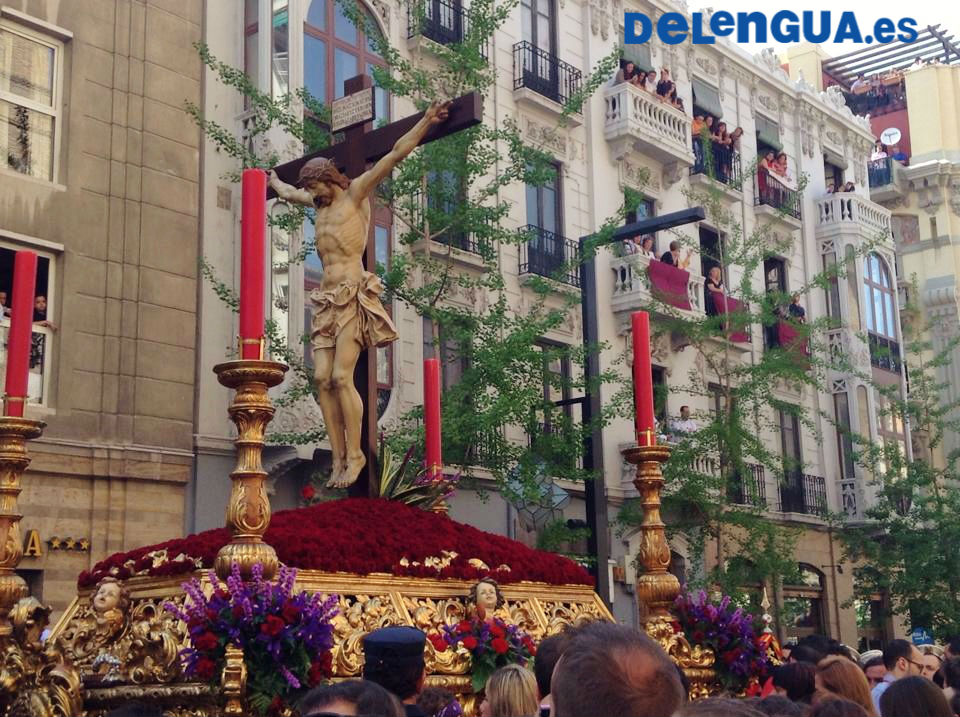
Como cada año, el 3 de Mayo Granada celebra el día de la Cruz. Esta fiesta se celebra en muchos lugares de España y en la mayoría de los países de Latino América, pero en ninguna ciudad se celebra con tanto fervor y entusiasmo como en Granada. Es una de las fiestas más bonitas de la provincia.

En la ciudad de origen de la Escuela Delengua el día en que se encontró la Cruz de Cristo siempre se llena de colores vivos. Autóctonos y forasteros se dan, cada año, cita en esta fiesta tradicional de la ciudad andaluza.

Muchos lugares de la ciudad se adornan con flores y cruces de flores pueblan la maravillosa ciudad. La flor típica de la fiesta es el clavel rojo, del cual van forradas las enormes cruces. Ya el día de antes ó, incluso, varios días antes del gran día, los vecinos preparan los patios para que luzcan unos más que otros. Las mujeres, jóvenes y mayores, se visten de Flamenca y en algunos bares como también en la calle se puede disfrutar de una fiesta del baile andaluz.

Se trata de un encuentro multicultural, ya que tanto Granadinos como forasteros celebran la fiesta de las Cruces juntos. La gente suele venir de todas partes del país y también del mundo. En la calle se habla español, inglés, francés, alemán y muchos idiomas más. Y también donde no hay tanta tradición triunfan las ganas de celebrar y el tinto de verano.

Si quieres vivir y celebrar con nosotros la fiesta de las Cruces, puedes compaginarla perfectamente con un curso de español impartido por la Escuela Delengua, donde además se realizarán actividades relacionadas con esta fiesta.

Every year on 3rd May, Granada celebrates the Day of the Cross. This holiday is celebrated in many places in Spain as well as in most Latin American countries,but in no other city is the day celebrated in such a way as it is in Granada. It is one of the most beautiful celebrations in the province.

Escuela Delengua’s city of origin always finds itself full of vibrant colours on the Day of the Cross. Natives and foreigners get together every year for this traditional celebration in the Andalusian city.

Many places in the city are decorated with flowers and there are crosses of flowers which populate the marvelous city. The flower typical of this holiday is the red carnation, enormous crosses are covered in them. The day before or even several days before the big day, the people of Granada prepare their patios so that they look nice for the speacial occasion. Women,old and young dress up in Flamenco dresses and in bars as well as in the streets, they celebrate the Andalusian dance.

It is a multicultural meeting, you find so many people from Granada, as well as foreigners celebrating the holiday of the Crosses together. People come not only from all over the country but also from all over the world. In the streets they speak Spanish, English, French, German and many other languages. Where there is not as much tradition, they enjoy the celebration and the Spanish drink, « el tinto de verano ».

If you want to experience and celebrate the Day of the Cross with us, you can combine it perfectly with a Spanish course at Escuela Delengua, where
they too hold activities relating to this holiday.

La cultura gitana: un componente esencial de Granada/The Gypsy culture: an essential part of Granada

Español Inglés
Granada es y siempre ha sido una ciudad multicultural. Aparte de influencias cristianas, árabes, y judías hay otra población que caracteriza la cultura de Granada: los romaníes. Pero, ¿quiénes son los romaníes y de dónde vienen? No se puede imaginar la ciudad de Granada sin los gitanos, como son llamados también, pero sin embargo no se sabe mucho sobre ellos.

Mucha gente asocia a los gitanos con la Europa Oriental. No obstante, originalmente son del norte de la India. Hay una teoría que dice que los romaníes (y los sinti) dejaron su país en el siglo XIV y marcharon como artesanos hacía Europa. Así se convirtieron de un pueblo sedentario a un pueblo errante. Hasta el día de hoy hay grupos de romaníes que van de un lugar a otro vendiendo artesanía.

Los gitanos llegaron a España en el siglo XV. Al principio, las relaciones entre la población local y los gitanos fueron en general buenas. Sin embargo, con la llegada al trono de los Reyes Católicos en 1469, la situación cambió radicalmente. Los gitanos tenían un plazo de dos meses para buscar un domicilio, trabajo y para abandonar su forma de vestir y sus costumbres. Si no cumplían esto, les amenazaron con la expulsión del país. Durante los siglos siguientes hubo varios intentos de extinguir la raza de los gitanos en España. Con el tiempo, la situación ha mejorado y los gobiernos han introducido varias medidas para una integración mejor. Sin embargo, hasta el día de hoy, aunque hay una ley contra la discriminación de los romaníes, este pueblo sigue siendo discriminado.

En Granada y toda Andalucía, los gitanos forman hoy en día una parte importante de la vida cultural. Por comunidades autónomas, Andalucía cuenta con la mayor población de gitanos con cerca de 300.000, casi un 5% del total de la población de la comunidad. Una parte de la cultura andaluza que siempre se asocia con los romaníes es el flamenco. Los gitanos siempre habían sido un pueblo cantante, y encontraron en Andalucía el lugar perfecto para desarrollar su música porque esta región disfrutaba de un impresionante auge cultural, artístico y científico, debido a casi ochocientos años de mezcla de culturas árabes, judías y cristianas. Después de su llegada a Andalucía, los romaníes retomaron el flamenco para ganarse la vida, y con el tiempo lo desarrollaron y se volvieron los representantes generales del flamenco. Uno de los cantaores del flamenco moderno más influyentes era Camarón de la Isla, y su álbum más vendido se llama “Soy gitano”.

Cuando estás en Granada, la influencia de la cultura gitana es algo que salta a la vista. Un ejemplo es el barrio Sacromonte, que es también conocido como el barrio de las cuevas o de los gitanos. En este barrio hay muchas casas cueva que en su mayoría están habitadas por gitanos. Lo especial de este barrio es que se puede dar un paseo por allí y encontrar a gente dando un concierto de flamenco. En la Escuela Delengua se ofrecen muchas actividades extraescolares, entre otras cosas visitas guiadas por el Sacromonte o la visita a un espectáculo de flamenco, algo que no te deberías perder si vienes a Granada.

Un espectáculo de flamenco

Las casas cueva del Sacromonte

Una casa típica del Sacromonte

Granada is and has always been a multicultural city. Apart from Christian, Arab and Jewish influences, there is another population that characterizes Granada’s culture: the Roma. But, who are the Roma and where do they come from? One can’t imagine the city of Granada without the gypsies, like they are also called, but nevertheless there’s not much common knowledge about these people.

Normally the gypsies are associated with Eastern Europe. Nevertheless, they are originally from the North of India. There’s a theory that says that the Roma (and Sinti) left their country in the 14th century and went to Europe as craftsmen. So they converted from a sedentary to a wandering people. Until today there are still groups of Roman who go from one place to another selling craftsmanship.

The gypsies reached Spain in the 15th entury. At the beginning, the relations between the local people and the gypsies were quite good. Nevertheless, when the Catholic Monarchs mounted the throne in 1469, the situation changed radically. The gypsies had a time limit of two months to find a residence, a job and to abandone their way of dressing and their costumes. If they didn’t keep to this, they were threatened with being expelled from the country. During the following centuries there were several attempts to extinguish the gypsies in Spain. In the course of time, the situation improved and the governments have introduced various measurements for a better integration. Nevertheless, although there is a law that prohibits the discrimination against the Roma, they still suffer from many disadvantages.

In Granada and whole Andalusia, the gypsies form an important part of the cultural life. Andalusia is the autonomous community with the biggest share in Roman population. The 300.000 Roma living there form 5% of the complete population. One part of the Andalusian culture that is always associated with the Roma is Flamenco. The gypsies have always been a singing folk, and in Andalusia they found the perfect place to develop their music, due to the cultural, artistic and scientific heights this region enjoyed during almost 800 years of a mixture of Arab, Jewish and Christian culture. After their arrival to Granada, the Roma took up the Flamenco to earn their keep, and in the course of time they developed it and became the main represantatives of Flamenco. One of the most influential “cantaores”, how the Flamenco-singers are called, was Camerón de la Isla, and his best-selling album was called “Soy gitano” (“I’m a Gypsy”).

When you are in Granada, you will directly perceive the influence of the gypsy-culture. One example is the district Sacromonte, which is also known as the district of the caves or of the gypsies. In this district there are many cave houses which are mostly inhabited by gypsies. What is special about this district is that you can go there for a walk and find people giving a Flamenco concert. At Delengua Spanish Language School you can participate in many activities, for example guided tours through the Sacromonte or visiting a Flamenco show, something you shouldn’t miss when you come to Granada.

Todos valen una visita: Los museos de Granada/They are all worth a visit: The Museums of Granada

Español Inglés
Granada tiene mucho que ofrecer. La ciudad cuenta con una historia larga y turbulenta, con un paisaje único con mar y montañas cubiertas de nieve cerca de la ciudad al mismo tiempo, y también con mucha cultura. En relación con eso, en Granada hay una multitud de museos. Sería demasiado mencionarlos todos, pero a continuación se presentan los museos mas importantes de Granada.

Museo de la Alhambra y Museo de Bellas Artes: Este magnifico museo del arte barroco se encuentra en el Palacio de Carlos V. Aquí se pueden admirar obras de Alonso Cano, Pedro Raxis, Pedro de Mena, y muchos más. Aparte de la exposición permanente también hay exposiciones temporales. En la biblioteca del museo se puede encontrar lecturas especializadas en arte y restauración, además de un gran archivo documental. El museo se encuentra en un lugar excepcional, en pleno recinto de la Alhambra en un palacio renacentista.

Museo Arqueológico: Este museo fue creado oficialmente en 1879 y ha cambiado de sede varias veces. Desde 1923, se encuentra en la Casa de Castril, que impresiona con una magnifica fachada plateresca del siglo XVI. El museo esta dividido en siete salas, donde se expone artefactos de diferentes etapas de la prehistoria humana, como por ejemplo el paleolítico, el neolítico y la Edad del Cobre, la Edad del Bronce, la antigüedad tardía y también de la historia de Andalucia.

Casa Museo Federico García Lorca: Este museo se encuentra en la Huerta de San Vicente, la casa de verano de la familia Lorca. Aquí, Lorca realizó una gran parte de su obra, por ejemplo Romancero Gitano, Poema del Cante Jondo, La Casa de Bernarda Alba y Bodas de Sangre. La Fundación García Lorca ha conseguido restaurar la casa como estaba en vida del poeta, así que un paseo por la Casa-Museo de la Huerta de San Vicente permite recordar y comprender aspectos como el ambiente y la decoración de una casa de campo granadina de principios del siglo XX, elementos concretos de la vida cotidiana de la familia Lorca, las obras escritas en la Huerta por Lorca entre 1926 y 1936, los acontecimientos que tuvieron lugar entre el 14 de julio y el 9 de agosto de 1936 y mucho más.

Museo Casa de los Tiros: Este museo es el museo de historia de la ciudad, biblioteca y además archivo de temas locales. Fue inaugurado en 1929 para servir como oficina de turismo, mientras que el resto de las salas se utilizaron para desarrollar un museo dedicado a la historia de la ciudad. El Museo está dividido en doce salas temáticas donde se exponen muestras del paisaje granadino, fotografías de la época y elementos distintivos de la artesanía granadina, barros, carteles y retratos de costumbres.

Museo del Parque de las Ciencias: Este museo, que fue fundado en 1995, es el más visitado de Granada y uno de los más relevantes del sur de Europa. Tiene una superficie de más de 70.000 metros cuadrados y es un museo interactivo para todas las edades. Consta de cuatro edificios con varias salas interactivas, de las cuales cada una tiene su propia tema científica, por ejemplo física, percepción, biosfera, astronomía, un planetario, el cuerpo humano etc. Además, el museo cuenta con áreas exteriores (con varias jardines, esculturas etc), exposiciones temporales y un Torre de Observación de 37 metros que ofrece al visitante una panorámica de la ciudad y diversas experiencias científicas y tecnológicas.

En esta ciudad llena de cultura y museos se encuentra la Escuela Delengua. Aquí se da gran importancia a que los estudiantes que hacen un curso de español no solo aprenden el idioma, sino que también conocen a la ciudad y sus peculiaridades. Por eso, se ofrecen muchas actividades a los alumnos, entre otras cosas visitas de los museos que hay en Granada.

El Palacio Carlos V, sede del Museo de Bellas Artes

El Museo Arqueológico de Granada

La fachada del Museo Casa de los Tiros

El Parque de las Ciencias

Granada has a lot to offer. The city disposes of a long and turbulent history, of a unique landscape with sea and snow covered mountains near the city at the same time, and also a lot of culture. In connection with this, in Granada there is a large number of museums. It would bee too much to mention them all, but in the following you can read about the most important museums of Granada.

Museum of the Alhambra and Museum of Fine Arts: This magnificent museum of baroque art is housed in the Palace of Charles V. Here one can look at works by Alonso Cano, Pedro Raxis, Pedro de Mena, and many more. Apart from the permanent expositions there are also temporary expositions. In the museum’s library you can find reading matters specialized in art and restauration, in addition to great documentary archives. The museum is housed in a exceptional place, inside the Alhambra in a renaissance palace.

Archaeological Museum: This museum was oficially created in 1879 and has changed its place several times. Since 1923 it is located in the Castril Palace, which impresses by its magnificent façade from the 16th century. The museum is divided into seven halls where there are hosted artefacts from the different ages of human prehistory, for example the paleolithic, the neolithic and the Chalcolithic, the Bronze Age, the late antiquity as well as the history of Analusia.

Museum House of Federico Garcia Lorca: This museum is located in Huerta de San Vicente, the summer home of Lorca’s family. Here, Lorca has composed a great part of his works, for example Romancero Gitano, Poema del Cante Jondo, The House of Bernarda Alba and Blood Wedding.The Lorca Foundation has succeeded in restoring the house as it was in Lorca’s lifetime, so that a walk through the Museum House of Huerta de San Vicente permits to remember and to understand aspects like the atmosphere and the decoration of a country house in Granada at the beginning of the 20th century, concrete elements of the everyday life of Lorca’s family, the works he wrote in this house between 1926 and 1936, the incidents that have occurred between 14 July and 9 August 1936 and a lot more.

Museum Casa de los Tiros: This museum is the city’s history museum, library and also an archives of local subjects. It was inaugurated in 1929 to serve as an office of tourism, while the other halls were used to develop a museum dedicated to the city’s history. The museum is divided into twelve thematic halls were you can look at examples of Granada’s landscape, fotographies of the age and different elements of Granada’s craftsmanship, pottery, posters and descriptions of customs.

The Science Park Museum: This museum that was founded in 1995 is Granada’s most visited museum and one of the most relevant ones in Southern Europe. It has a surface of 70,000 squaremetres and is an interactive museum for people of all ages. It consists of 4 buildings with several interactive halls, of which everyone has its own scientific theme, for example physics, perception, biosphere, astronomy, a planetarium, the human body etc. Furthermore, the museum has an outside area (with several gardens, sculptures etc), temporary expositions and an Observation Tower of 37 metres that offers a viewpoint over the City of Granada where one can experience science and technology.

In this city full of culture, there is Delengua Spanish Language School. In the school it is very important that the students who do a spanish course do not only learn the language, but also get to know the city and its special qualities. Therefore, the students can participate in many activities offered by the school, among other things visits of Granada’s museums.

La Paella: uno de los platos más populares de España/one of Spain’s most popular dishes

Español Inglés
¿Qué te viene a la mente cuando piensas en comida típica española? Tortilla, Tapas, Calamares, Jamón, Churros,…¡y seguramente Paella! Este plato, que se inventó en Valencia, es uno de los platos favoritos de los españoles, pero también tiene muchos fans en todo el mundo.

El origen de la paella, como el de casi todos los platos de la cocina popular de cada zona, es una conjunción de los ingredientes que cada pueblo tenía a su alrededor. La Paella era una comida fácil de transportar y cocinada con los ingredientes que la gente tuviera a mano o que fueran fáciles de adquirir en las zonas cercanas. En la zona de Valencia, que es muy fértil, hay muchas verduras frescas, las familias criaban habitualmente pollos y conejos para su consumo propio, y además existían arrozales. Éstas eran las condiciones perfectas para la creación de este plato. Luego, en las zonas cerca del mar, se añadió el pescado y el marisco a la paella original.

Si te gusta la paella pero no sabes cómo hacerla, a continuación encontrarás una receta para intentar hacer tu primera paella de marisco.

Ingredientes:

  • 400 gramos de Arroz tipo bomba
  • 250 gramos de Calamares
  • 250 gramos de Sepia
  • 8 Gambas
  • 4 Cigalas
  • 2 Dientes de ajo
  • 8 cucharadas de tomate triturado
  • 1 Azafrán
  • 1,5 litros de caldo de pescado
  • 8 cucharadas de aceite de oliva
  • una pizca de sal

La sartén en que se hace la paella ha de ser de un diámetro mínimo de unos 30 centímetros y no muy honda, con unos bordes de 7 a 12 centímetros.

Se trocea la sepia y los calamares en cuadrados.

Se calienta el aceite en una paellera y se saltean las gambas y las cigalas durante un minuto, se sacan y se reservan.

A continuación en el mismo aceite se introducen la sepia con los calamares y se sofríen hasta que tengan un color dorado.

En ese instante se añade el tomate, dos ajos picados muy finos y se sofríe el conjunto.

A continuación se echa el arroz, removiendo y rehogando el conjunto, para después verter el doble de caldo que de arroz y el azafrán. En el caso de no disponer de azafrán, se sustituirá por una pizca de colorante alimenticio.

Se deja cocer la paella 10 minutos a fuego vivo y se pone a punto de sal.

A continuación, se colocan las gambas y las cigalas encima del arroz y se deja cocer otros 5 minutos más, hasta que se evapore por completo el caldo.

Y ahora: ¡Que aproveche!

En la Escuela Delengua, aparte de las clases de español, se ofrecen también muchas actividades para los estudiantes. De vez en cuando, el director en persona hace una paella gigantesca para todos sus estudiantes.

El director de la Escuela Delengua preparando una paella…

…para todos sus estudiantes

What comes to your mind when you think of tipical Spanish food? Tortilla, Tapas, Calamares, Jamón, Churros,…and certainly Paella! This dish that was invented in Valencia is one of the favourite dishes of the Spanish population, but has also a lot of fans all over the world.

The origin of the Paella, like the origin of almost all tipical dishes of every region, is a conjunction of ingredients that every village found close by. The Paella is easy to transport and is made by the ingredients that people had around or that could be easily acquired in the regions nearby. In the Region of Valencia, which is quite fertile, there were plenty of fresh vegetables, the families bred routinely chicken and rabbits for their own use, and in this region they had also ricefields. These were the perfect conditions for the creation of this dish. Later, in the regions close to the sea, people added fish and seafood to the original paella.

If you like Paella but you don’t know how to make it, below you will find a recipe to try to make your first paella de marisco.

Ingredients:

  • 400 grams grain rice
  • 250 grams calamares (squid)
  • 250 grams cuttlefish
  • 8 shrimps
  • 4 Norway lobster
  • 2 cloves of garlic
  • 8 tablespoons grated tomatoes
  • 1 strand of saffron
  • 1,5 litres of fish broth
  • 8 tablespoons olive oil
  • a pinch of salt

The skillet in which the paella is made should have a diameter of at least 30 centimetres and shouldn’t be too deep, with edges of 7 to 12 centimetres.

Cut the cuttlefish and the calamares into cubes.

Heat the olive oil in a skillet and fry the shrimps and the Norway lubsters for one minute, and set aside.

Next, fry the cuttlefish and the calamares in the same olive oil until brown.

Add now the tomatoes and the garlic and fry it all together.

Next, add the rice and sauté the mixture, and after that pour the fish broth, which must be double the amount of the rice and saffron. In case you don’t have saffron, use a pinch of food colouring.

Keep the paella boiling for 10 minutes and season it with salt.

Now, arrange the shrimps and the Norway lubsters on top of the rice and keep it boiling another 5 minutes until all the broth has been absorbed.

And now: Enjoy your meal!

At Delengua Spanish Language School we offer also many free time activities for the students. Sometimes, the director in person cooks a huge paella for all of his students.

¿Qué se puede hacer en Granada en invierno?/What can you do in Granada during winter?

Español Inglés
A sólo 40 kilómetros de Granada se encuentra Sierra Nevada. Ahí está la cumbre más alta de la Península Ibérica, el Mulhacén, que se eleva a 3480 metros. Su nombre viene de Mulay Hasan, que fue el penúltimo rey de Granada en el siglo XV. Se dice que este rey fue enterrado en las montes del Mulhacén.

Sierra Nevada se puede ver también desde el centro de Granada. Desde los miradores, por ejemplo el mirador de San Nicolás, que se encuentra a sólo 10 minutos de la Escuela Delengua, se tiene una vista maravillosa a las montañas cubiertas de nieve.

Quizás te sorprenda que se pueda esquiar tan cerca del centro de Granada, una ciudad que es conocida por el sol y el buen tiempo. Pero la verdad es que en Granada puedes esquiar en Sierra Nevada por la mañana y pasar la tarde tomando el sol en las playas de la Costa Tropical.

Cada fin de semana, las estaciones de esquí en Sierra Nevada acogen a más de siete mil personas que quieren disfrutar de la nieve. Y si a ti no te gusta esquiar, ¿por qué no disfrutas de la nieve con un tobogán o un paseo en un trineo de perros? Se puede hacer todo esto y mucho más aquí en Granada, puesto que practicar el esquí no es lo único que se puede hacer en Sierra Nevada en invierno. Aparte de las estaciones de esquí existen numerosas rutas de senderismo para los apasionados de la naturaleza. Así que, si te gusta la naturaleza y el senderismo, no te pierdas la ocasión de caminar en la montaña ya que está sólo a una hora de Granada. Con la nieve, Sierra Nevada se convierte en un lugar completamente diferente, y no creerás que estés en España.

La Escuela Delengua también ofrece muchas actividades extraescolares para sus estudiantes. En invierno, Sierra Nevada es uno de los destinos favoritos de los estudiantes. Si quieres hacer un curso de español en Granada, ves que la ciudad tiene mucho que ofrecer incluso en invierno.

La Sierra Nevada en invierno

Estudiantes de la Escuela Delengua en la Sierra Nevada

At only 40 kilometres from Granada there is Sierra Nevada. There is the Iberian Peninsula’s highest summit, the Mulhacén, with a height of 3480 metres. Its name derives from Mulay Hasan, who was the penultimate king of Granada in the 15th century. It is said that he was buried in the mountains of the Mulhacén

Sierra Nevada can also be seen from the centre of Granada. From the “miradores”, the viewpoints, for example the mirador of San Nicolás, which is located only 10 minutes from Delengua Spanish Language School, you have a wonderful view over the snow-covered mountains.

It might surprise you can do skiing so close by the centre of Granada, a city that is known for the sun and the good weather. But the truth is that in Granada you can go skiing in Sierra Nevada in the morning and spend the afternoon sunbathing at the beaches of Costa Tropical.

Every weekend, the ski stations in Sierra Nevada welcome more than seven thousand people who want to enjoy the snow. And if you don’t like skiing, why don’t you enjoy the snow by going tobogganing or dog sledding? You can do all this and even more here in Granada, because skiing is not the only thing you can do in Sierra Nevada in winter. Apart from the ski stations there are numerous hiking routes for nature lovers. Therefore, if you like nature and hiking, don’t miss this opportunity to go hiking through the mountains since they are only one hour from Granada. By the snow, Sierra Nevada turns into a completely different place, and you won’t believe that you are in Spain.

Delengua Spanish Language School offers as well many extracurricular activities for the students. In winter, Sierra Nevada is one of the students’ favourite destinations. If you want to do a Spanish course in Granada, you see that the city has to offer a lot even in winter.

XXXI Festival Internacional de Jazz de Granada/ 31st Granada International Jazz Festival

Español Inglés
Del 5 al 21 de noviembre se celebra el XXXI Festival Internacional de Jazz de Granada. Este festival es uno de los más antiguos e importantes de Europa y el único miembro español del “Europe Jazz Network”, la red europea de festivales de jazz. Desde que se celebró el primer festival en el año 1980, han participado artistas famosos como Miles Davis, Oscar Peterson, Charlie Haden, Art Blakey, Tete Montoliu y muchos muchos más. Mientras que el primer festival duró solamente 3 días, la duración creció con los años, así que el XXXI festival que se celebra de momento tarda más de dos semanas.

El XXXI Festival Internacional de Jazz de Granada se abre con un concierto del legendario compositor de jazz Wayne Shorter. El ganador de ocho Grammys fue miembro de los Jazz Messengers de Art Blakey, del histórico quinteto de Miles Davis y fundador de Weather Report, un grupo que creó un nuevo sonido de jazz rock. Otro músico muy conocido es Joe Lovano, que presenta el “Lovano Europa Quartet”, un proyecto novedoso integrado por músicos europeos. Aparte de Nils Petter Molvaer, que ofrece un jazz contemporáneo con elementos de break beats, hip hop y rock, los músicos exitosos de jazz Kurt Rosenwinkel y Charles Lloyd y Esperanza Spalding, que participa por primera vez en este festival, este año se presta especial atención a los músicos granadinos. En el Ciclo Granada Jazz participan entre otros la Granada Big Band y el grupo Parkerland Nonet.

Aparte de estos conciertos, durante el Festival también hay actividades paralelas, por ejemplo más de treinta conciertos en los Trasnoches de Jazz, que son organizados por los locales y clubes de la ciudad. Además hay varios conciertos gratuitos en la calle. En Puerta Real se puede ver conciertos de Potato Head Jazz Band, un grupo con miembros de distintas nacionalidades que ofrece un jazz tradicional, y conciertos del Paul Stocker Cuarteto, un músico residente en Granada que ha colaborado con artistas de todas partes del mundo y que cuenta sus experiencias a través de su música.

Este año también hay una exposición de carteles en el Teatro Alhambra. Se expone una colección de los carteles del Festival de Jazz de Granada diseñados por el artista Juan Vida. Desde el tercer festival en el año 1982, Juan Vida se dedicó cada año a crear el cartel para el festival. Tiene un estilo inconfundible; para los carteles siempre usa muchos colores para mostrar personajes y crear ambientes.

El Festival Internacional de Jazz de Granada es sin duda uno de los festivales mas grandes e importantes de España. Por supuesto, los estudiantes de la Escuela Delengua aprovechan también de este evento y van a ver al menos uno de los conciertos del festival. Entonces, si tú estás en Granada y tienes la ocasión de asistir al Festival de Jazz de Granada, ¡no te pierdas este evento único!

El cartel del XXXI Festival Internacional de Jazz de Granada

Un concierto de jazz en la calle

From 5 to 21 November, the 31st International Jazz Festival takes place in Granada. This festival is one of the oldest and most important ones in Europe and the only Spanish member of the “Europe Jazz Network”, the european network of jazz festivals. Since the first festival in 1980, there have participated famous artists like Miles Davis, Oscar Peterson, Charlie Haden, Art Blakey, Tete Montoliu and many many more. While the first festival lasted only three days, the duration has increased over the years, so that the 31st festival that takes place at the moment lasts more than two weeks.

The 31st Granada International Jazz Festival opens with a concert by the legendary jazz composer Wayne Shorter. The winner of eight Grammys was member of the Jazz Messengers of Art Blakey, of the historial quintet of Miles Davis and founder of Weather Report, a group that created a new jazz rock sound. Another famous musician is Joe Lovano who presents the “Lovano Europa Quartet”, a new type of project consisting of european musicians. Apart from Nils Petter Molvaer, who offers contemporary jazz with break beats, hip hop and rock elements, the successful jazz musicians Kurt Rosenwinkel and Charles Lloyd and Esperanza Spalding, who participates for the first time in this festival, this year the festival pays special attention to musicians from Granada. Among others, the Granada Big Band and the group Parkerland Nonet participate in the Granada Jazz Cycle.

Apart from these concerts, there are also parallel activities during the festival, for example more than thirty concerts during the “Trasnoches de Jazz”, the “Sleepless Nights of Jazz”, which are organized by the pubs and clubs of the city. Furthermore, there are various free concerts in the streets. At Puerta Real you can see a concert by the Potato Head Jazz Band, a group consisting of musicians of different nationalities that offers traditional jazz, and a concert by the Paul Stocker Quartet, a musician resident in Granada who has colaborated with artists from all parts of the world and who talks about his experiences through his music.

This year there is also an exposition in the Alhambra Theater, where posters of the Jazz Festival are exhibited. These posters have been designed by the artist Juan Vida, who has dedicated himself to create the festival’s poster every year since the third festival in 1982. His style is quite distinctive; for his posters he always uses many different colours to portray personalities and to create a certain atmosphere.

Granada International Jazz Festival is unquestionably one of the biggest and most important festivals in Spain. Of course, the students of Delengua Spanish Language School will also enjoy this festival and will go to at least one of the festival’s concerts. So, if you are in Granada and you have the opportunity to visit the Granada Jazz Festival, don’t miss this unique event!