
desde Granada a Marruecos / From Granada to Morocco

Posted on July 13th, 2011 in Granada,Salir en Granada/ To go out in Granada,Uncategorized by admin
Español Inglés
Granada es única y múltiple.
Ciudad de encanto y de culturas….

No hace falta ir muy lejos para sentirse como en Marruecos. Basta con ambientarse en un “souk” granaino, l’Alcaicería… o dejarse llevar por la calles del Albaicín, el barrio donde se encuentra la Escuela Delengua. La calle de la Escuela de español esta bordeada de teterías y tiendas árabes, lo que da al barrio un sabor especial… huele a menta, a mil y una noches, a cuero, a carbón para cachimbas…

La arquitectura árabe ha dejado huellas por toda la ciudad, y eso es lo bueno de la multiculturalidad…
Aquí los pueblos viven juntos, gitanos, marroquís, egipcios, argelinos… todos comparten un mismo modo de ser y estar y sobretodo una ciudad magnífica.

Si todavía quieres más de Marruecos, ¡también puedes ir a Marruecos desde Granada! Hay excursiones y muchas posibilidades de llegar a este país.

Tienda árabe

Granada is a unique city with charm and culture.

You don’t have to go far to feel like you are in Morocco. You just have to try out the ambiance in a granadine “souk”, l’Alcaicería… or just take to the narrow streets of the Albaicin, the area where Escuela Delengua is situated. The street of the Spanish School is bordered with tea-rooms and arabian shops which give the area a special flavour.. It smells of mint, a thousand and one nights, leather and smoke from the shisha pipes..

The Arabic architecture has left its tracks all over the city giving it a multicultural feel.. Here in the city the people live together, the gypseys, Marrocans, Egyptians, Algerians… They all share the same lifestyle,  way of being and above all this magnificent city.

If you still want to experience more of Marocco, you can also visit it from Granada! There are excursions there and also many other ways to get to the country.

Festival de Granada “Cines del Sur”/ Film Festival of Granada “Cines del Sur”

Español Inglés
Este año por 5º año consecutivo, del 4 al 10 de junio, Granada celebra el Festival “Cines del Sur”, que tiene como objetivo las obras cinematográficas de los países adscritos normalmente como el sur geopolítico. Países como Georgia, Kazajstán, Israel, Cuba, Taiwan, Irak, Palestina, Australia, Irán o México, entre otros, han participado con sus producciones cinematográficas en el festival de Granada.
Con un estilo muy especial, pero no menos interesante  que el cine de otros países, “Cines del Sur” presenta obras cinematográficas animadas, de ficción o de comedia, películas de amor o de horror, para pensar o sólo para disfrutar. Pero casi siempre con un mensaje que puede enriquecer nuestra vida.
Entre inauguración y clausura los espectadores y también el jurado esperan muchas películas de varios países en escenarios bonitos de la ciudad. Por ejemplo delante de la catedral en la Plaza de las Pasiegas o en varios cines de la ciudad.
El jurado elige ganadores en siete categorías. El premio Alhambra de Oro, al mejor largometraje, está dotado con 50.000 euros y Trofeo, el premio Alhambra de Plata, al mejor guionista de largometraje, con 30.000 euros y Trofeo, y el premio Alhambra de Bronce, el premio especial del jurado, está dotado con 15.000 euros y Trofeo. Además, el Premio del Público a la mejor película, dotado con 5.000 euros y Trofeo, la mención del Jurado al mejor actor/actriz y el Premio RTVA Mediterráneos, patrocinado por Cajasol y dotado con 6.000 euros. El último Premio es el Premio Netpac que debe premiar a las dos mejores películas asiáticas.
Si quieres enriquecer tu vida con un festival de cine muy particular y también aprender español en la ciudad del festival “Cines del Sur”, ven a Granada y a la Escuela Delengua. Con nosotros aprenderás español de la manera más rápida, además de disfrutar de la vida y cultura granadina.

This year for the 5th consecutive year, from 4th to the 10th June, Granada is celebrating the “Cines del Sur” Festival. The main purpose is casting films from the countries of the geopolitical South. Countries  like Georgia, Kazakstan, Israel, Cuba, Taiwan, Irak, Palestine, Australia, Iran or Mexico take part each year in the Granada’s Festival.
With a special style but not less interesting than the cinema of other countries, “Cines del Sur” shows different genres of films: cartoons, comedies, action, adventure, romance, drama, horror,… for reflection or just enjoying.
However, there is almost always a message to enrich our daily life.
Spectators as well as the judges are hoping for a variety of films coming from different countries being shown in beautiful settings in the city of Granada. For example like in the Plaza de las Pasiegas, in front of the Cathedral, or in some of the cinemas of the city.
The judges choose winners from seven categories. The Gold Alhambra prize goes to the best feature-length film, they win a 50 000 euros prize and a trophy. The Silver Alhambra Prize goes to the best supervision of  feature-lenght film with a 30 000 Prize and a trophy, and the Bronze Prize is the special prize decided by the judges with a 15 000 euros prize and a trophy.
Moreover, the Award from the Public to the best film is awarded (with a prize of 5000 euros and a trophy), which goes to the best actor/actress who receive a prize too, and the RTVA Meditrráneos Award sponsorized by Cajasol, with a 6000 euros prize. The last but not the least of awards is called Netpac and awards the two best asian films.
If you want to go to a very special cinema festival, and also improve or learn Spanish, come to the city of the “Cines del Sur”, Granada…
The Delengua School will help you to learn Spanish quickly and give you the opportunity to enjoy and discover the granadin’s daily life and culture.

Las Cruces de mayo / “May’s crosses celebration”

Español Inglés
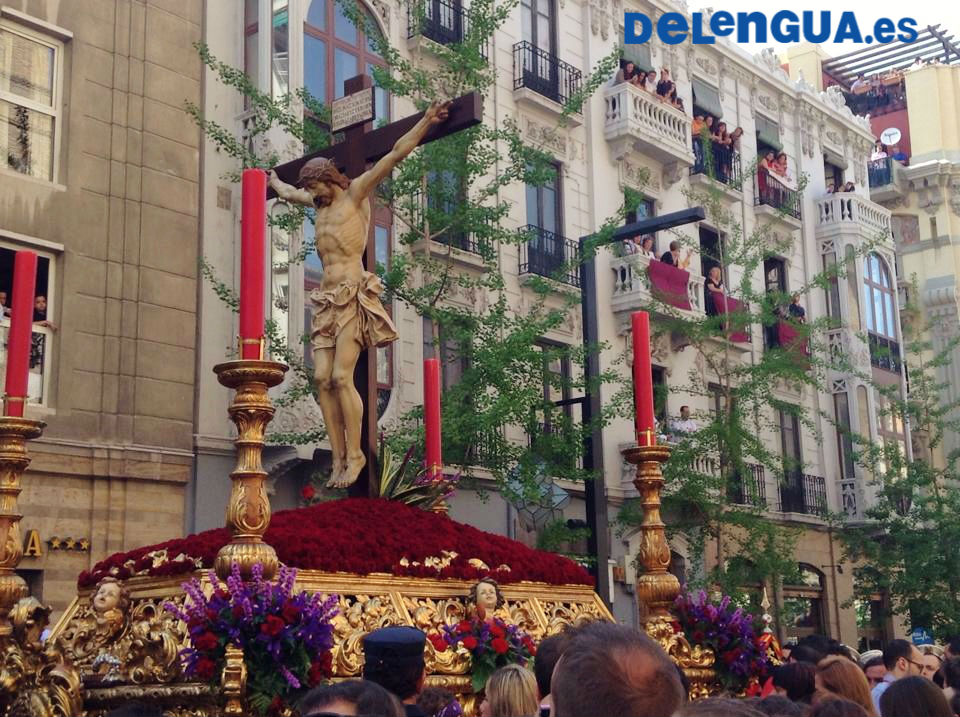
Como cada año, el 3 de Mayo Granada celebra el día de la Cruz. Esta fiesta se celebra en muchos lugares de España y en la mayoría de los países de Latino América, pero en ninguna ciudad se celebra con tanto fervor y entusiasmo como en Granada. Es una de las fiestas más bonitas de la provincia.

En la ciudad de origen de la Escuela Delengua el día en que se encontró la Cruz de Cristo siempre se llena de colores vivos. Autóctonos y forasteros se dan, cada año, cita en esta fiesta tradicional de la ciudad andaluza.

Muchos lugares de la ciudad se adornan con flores y cruces de flores pueblan la maravillosa ciudad. La flor típica de la fiesta es el clavel rojo, del cual van forradas las enormes cruces. Ya el día de antes ó, incluso, varios días antes del gran día, los vecinos preparan los patios para que luzcan unos más que otros. Las mujeres, jóvenes y mayores, se visten de Flamenca y en algunos bares como también en la calle se puede disfrutar de una fiesta del baile andaluz.

Se trata de un encuentro multicultural, ya que tanto Granadinos como forasteros celebran la fiesta de las Cruces juntos. La gente suele venir de todas partes del país y también del mundo. En la calle se habla español, inglés, francés, alemán y muchos idiomas más. Y también donde no hay tanta tradición triunfan las ganas de celebrar y el tinto de verano.

Si quieres vivir y celebrar con nosotros la fiesta de las Cruces, puedes compaginarla perfectamente con un curso de español impartido por la Escuela Delengua, donde además se realizarán actividades relacionadas con esta fiesta.

Every year on 3rd May, Granada celebrates the Day of the Cross. This holiday is celebrated in many places in Spain as well as in most Latin American countries,but in no other city is the day celebrated in such a way as it is in Granada. It is one of the most beautiful celebrations in the province.

Escuela Delengua’s city of origin always finds itself full of vibrant colours on the Day of the Cross. Natives and foreigners get together every year for this traditional celebration in the Andalusian city.

Many places in the city are decorated with flowers and there are crosses of flowers which populate the marvelous city. The flower typical of this holiday is the red carnation, enormous crosses are covered in them. The day before or even several days before the big day, the people of Granada prepare their patios so that they look nice for the speacial occasion. Women,old and young dress up in Flamenco dresses and in bars as well as in the streets, they celebrate the Andalusian dance.

It is a multicultural meeting, you find so many people from Granada, as well as foreigners celebrating the holiday of the Crosses together. People come not only from all over the country but also from all over the world. In the streets they speak Spanish, English, French, German and many other languages. Where there is not as much tradition, they enjoy the celebration and the Spanish drink, « el tinto de verano ».

If you want to experience and celebrate the Day of the Cross with us, you can combine it perfectly with a Spanish course at Escuela Delengua, where
they too hold activities relating to this holiday.

Las teterías en Granada/ Tea Houses in Granada

Español Inglés
Una tradición árabe que existe en el Albayzín en Granada son las teterías. Estas tiendas están en la zona árabe de la ciudad, donde hay una atmósfera muy exótica. La Escuela Delengua está en la Calle Calderería Vieja, en pleno centro de esta zona, y por eso nuestros estudiantes tienen muchas oportunidades de probar y disfrutar de estas tiendas bohemias y lujosas.

Las teterías suelen ser íntimas y poco iluminadas, con almohadones en vez de sillas y telas de colores vivos, lo que crea un ambiente del Oriente. Son lugares muy exóticos, y las bebidas que se sirven son exóticas también: té de hierba endulzado con mucha miel, batidos y limonada con hierbabuena. Todos están muy ricos, refrescantes y delicados, y a veces se sirven tapas dulces típicas de Marruecos con las bebidas.

El ambiente en las teterías de Granada es muy relajado y son populares entre los estudiantes, también entre los de la Escuela Delengua. Las teterías están en la parte baja del Albayzín, por lo tanto es muy fácil llegar a pie desde la Gran Vía y el centro de la ciudad. Puedes admirar los edificios antiguos y refrescarte en una tetería. Vale la pena dar un paseo por la Calderería Nueva y la Calderería Vieja, porque también hay muchos bazares donde se puede comprar todo tipo de recuerdos interesantes.

Las teterías del Albaicín – ¡sin duda algo que no puedes perderte cuando estés en Granada!


En las teterías también se puede fumar una “Cachimba”

Estudiantes de la Escuela Delengua tomando té en una tetería

An Arabic tradition that exists in the Albayzín area of Granada is the ‘tetería’, or ‘tea house’. These shops are in the Arabic area of the city, where there is a very exotic atmosphere. Escuela Delengua is in Calderería Vieja street, right in the middle of this area, so the students have plenty of opportunities to experience and enjoy these luxurious yet bohemian cafés.

The teterías are ususally intimate and dimly lit, with big scatter cushions instead of chairs and richly coloured fabrics everywhere, which gives them an Eastern feel. They are very exotic places, and the drinks match. You can drink all kinds of herbal teas sweetened with a lot of honey, milkshakes and lemonade with fresh mint. All of these are delicious, refreshing and delicate, and are sometimes accompanied by sweet Marroccan tapas.

The atmosphere in Granada’s tea shops is very relaxed, and they are popular with students, also with the students of Escuela Delengua. The tea houses are in the lower part of the Albayzín, so it is very easy to reach them on foot from Gran Vía and the centre of the city. You can admire the old buildings and then get some refreshment in a tea shop. It is worthwhile taking a walk around Calderería Nueva and Calderería Vieja streets, because there are also lots of Marroccan bazaars, where you can buy all kinds of interesting souvenirs.

The tea houses in Albaicín- something you definitely shouldn’t miss when you are in Granada!

Tradición de los baños árabes en Granada / Arab baths tradition in Granada

Español Inglés
En Granada, son numerosas las actividades y visitas que no te puedes perder.

La influencia árabe ha dejado huellas por toda la ciudad… Sin embargo hay un barrio en el que se nota aún más la fusión del arte musulmán y de la arquitectura española: el Albaicín, ubicado en la colina en frente de la Alhambra. Se respira el mundo árabe en este barrio, al dar un paseo por aquí, uno se cree en un zoco de Marrakech, por la música que se escapa de las tiendas, por los adornos de las teterías y de las tienditas en las que se venden cachimbas, tés de menta, recuerdos marroquíes, tunecinos, egipcios…

Son muchas las tiendas que bordean estas calles, y precisamente por la zona es dónde está ubicada la Escuela Delengua. Es encantador este barrio, tiene un sabor especial. No te lo puedes perder!

Y si quieres seguir disfrutando de un ambiente oriental muy especial, puedes ir a los baños árabes para relajarte.

Siempre es un momento de puro descanso merecido, muy relajante, te olvides de tus problemas el tiempo de un masaje con esencias aromáticas, sólo disfrutas y tu mente se evade.
Además, gozas de un entorno muy bonito y tranquilo dentro de los hammams. El refinamiento tipo Al andalus es impresionante y en los baños árabes hay un real esfuerzo de adorno y decoración : mármol, columnas esculpadas, yeserías, mosáica de colores…

Es un verdadero placer para todos los sentidos…

Esta tradición milenaria te permite bañar en piscinas de varias temperaturas, con fondo acústico de música oriental, bebiendo té de menta, y disfrutando la vista de un maravilloso lugar… que se parece a la Alhambra! ¡Qué lujo poder vivir esta experiencia!

Si eres alumno de la Escuela Delengua, puedes conseguir un descuento a la hora de reservar para un baño. Ven a Granada para experienciarlo y si quieres mejorar tu nivel de español, recuerda que en la Escuela Delengua, a lo largo del año, muchos estudiantes extranjeros se inscriben a nuestro curso intensivo de español y así disfrutan más de la vida granadina…

splendid-hammam

DSC01587

banos-arabes-granada

In Granada you can’t miss such a lot of interesting activities and visits.

The arabic influence left traces all over the city. However, there is one particular area in which arabic arts and spanish arquitecture have fusionned: The Albaicin, located on the hill opposite to the Alhambra.
This area has a feeling of peace and arabic environment. When you have a walk, you just feel like being in a real and authentic Moroccan market, thanks to the shops letting out typical music, to the adornments and decorations of the “teterías” and shops in which you can purchase cachimbas, mint tea, morocca, tunisian, egyptian souvenirs…
Many typical shops line these streets, and exactly where Spanish Language School Delengua is ubicated. It is a really charming area, with a special flavour and taste. You can’t miss it!

If you want more of this special atmosphere, you can enjoy an oriental environment going to the Arab baths to relax.

It is always a very moment of  relief and rest deserved… very relaxing, you forget your problems during the time of a special massage with essencial and aromatic oils, you just enjoy and your mind can escape.
Moreover, you enjoy a beautiful and quiet environment, within the arab baths ans hammams. The refinment of the Al-Andalous period is impressvie and astonishing: marble, sculpted columns, plaster works, colorful tilded floor and walls…

A very pleasure for all of the senses…

This thousand-year-old tradition let you having a bath in different  swimming pools, with oriental music backdrop, having cups of mint tea, and enjoying the view of a marvellous historical place… that looks like the Alhambra! what a luxury  being able to experience such an activity!

If you are a Delengua student, you can obtain a discount when you make a reservation for a bath or a package bath and massage. Come to Granada to experience it, and if you want to improve your Spanish, have in mind that in Escuela Delengua, during all year long, many foreign students enroll in our Spanish  Intensive Course, and then you can enjoy more and more the Granadine’ daily life…

Vacaciones en Granada / Holidays in Granada

Español Inglés

A parte de ser una ciudad muy hermosa, Granada tiene muchas ventajas gracias a su ubicación. Para divertirse no falta nada, es una ciudad muy animada y joven, y todas las generaciones  se unen en la calle.
Hay muchísimas cosas que puedes hacer para pasarlo bien durante todo el verano.

En Granada podrás disfrutar de muchos eventos culturales y celebraciones que son la oportunidad para relajarse y divertirse. Entre los eventos más famosos y típicos, destacan el Festival Internacional de Música y Danza, un Festival de Jazz,  y festival de música y teatro… El festival de cine de verano tiene lugar en general en monumentos históricos, lugares bonitos y cargados de historia como el “Corral del Carbón” o delante de la Catedral.

Durante el verano la Escuela de español Delengua, que ofrece cursos de español en Granada, organiza excursiones en el Sacromonte donde se pueden ver espectáculos de Flamenco de óptima calidad y al aire libre. Así se disfruta de un espectáculo original, con buen ambiente, y en un lugar privilegiado.

La provincia de Granada también ofrece muchas posibilidades de divertirse y de descansar y mientras puedes aprender español en un curso intensivo de español, tienes la oportunidad de participar en excursiones organizadas con un profesor y actividades. Por ejemplo, a tan solo unos minutos de Granada, está el parque acuático “Aqua Ola”, que tiene muchas piscinas y toboganes para pasarlo bien en vacaciones y refrescarse.

Hay también pueblos muy bonitos y rústicos en la Alpujarra a partir de los que se puede hacer senderismo con vistas maravillosas. Se puede aprovechar para subir al Mulhacén (el pico más alto de Sierra Nevada, y de la Península Ibérica).

En la provincia de Granada, la montaña está muy cerca del mar, en tan sólo un par de horas puedes bajar del sitio más alto de la Península, a la playa.
¡Por eso Granada tiene una ubicación perfecta!
La costa tropical es muy chula ya que goza de paisajes maravillosos y arena blanca… lo ideal para relajarte…
Salobreña es un pueblo encantador y el mar es muy bonito. En Almuñécar tiene lugar el Festival de Jazz en la Costa, donde podrás escuchar muchos músicos de fama internacional.

Como ves, Granada y su provincia ofrecen muchas cosas interesantes que hacer para pasarlo bien todo el verano. Si además, vienes a hacer un curso de español en la Escuela Delengua, disfrutarás y aprenderás mucho al mismo tiempo. Quedarse en Granada para las vacaciones y tener clases de español es la opción más relevante para disfrutar de tu estancia y hacerla inolvidable.

Parque AquaOla cerca de Granada

Parque acuático “Aqua Ola”

Delengua-actividades-Guëjar SierraGuëjar Sierra

Playa de Nerja

Playa de Nerja

Except from being a beautiful city, Granada has a lot offer thanks to its localization.
If you want to have fun, there is a large range of activities and wonderful places to visit. Granada is a dynamic and young city, and all generations meet in the street.
You can do a lot of diferent activities, trips or simply having a rest in a quiet and preserved area.

During summer, many festivals and celebrations take place, and it is the perfetc occasion to relax and have fun. Typical cultural events as The International Music and Dance Festival, or the Jazz Festival have a lot of success. The summer festival of cinema is also a good opportunity to attend an outdoor show in a gret Historical monument as “Corra ldel Carbón” or just in front of the Cathedral.

During summer, the Spanish language school Delengua -offering intensive spanish courses all year long- organizes excursions to the Sacromonte, the typical flamenco district where you can attend top quality flamenco shows, outdoors. So you enjoy an original show in a priviledged place and with a friendly atmosphere.

Granada’s vicinity has also a lot to propose to the visitors, in order to relax and enjoy the holidays.
When you enroll in an intensive spanish course, you can also take part in the activity programm and in the  organized excursions.
Very near to Granada, the acquatic park “Acqua Ola” is offering more than swimming pools, toboggans…

In the Alpujarra mountain/region you can visit and fall in love with rustic and authentical villages. From these villages you can go backpacking, and reach the Mulhacén (the highest peak in Sierra Nevada and of all the Iberian Peninsula).

You will discover that the moutains are very close to the sea, you only need a couple of hours to climb down from the highest place in the Peninsula to the beach.
That is why Granada is the perfect location!
The Tropical Coast is beautifully impressive… with great landscapes and white sand… ideal to relax!
Salobreña, very close to Granada, is a charming place and the sea is just beautiful. In Almuñecar (one hour from Granada), the Jazz Festival on the Coast takes place, where you will see world-famous musicians.

To put it in a nutshell, Granada and its region really offer a wide range of amazing activities to do in summer…
If you also enroll in an intensive spanish course, it is obvious that you will improve your Spanish skills and more… you will really enjoy Granada and its people. Coming to Granada and having spanish lessons is the best way to enjoy and make your stay unforgettable.

Mundial 2010: celebración en Granada y por toda España / Worldcup 2010: festivities in Granada and all over Spain

Español Inglés
Apenas unos minutos después del partido final del mundial 2010, Holanda-España, las calles de Granada comenzaron a llenarse de aficionados. Los coches se hicieron dueños del asfalto y un montón de gente salió a la calle para celebrar este título histórico para España.
Fue increíble ver a tanta gente con la cara pintada de rojo y amarillo, gritando y cantando “A por ellos”, “Viva España” o “Yo soy español”.

En España, cuando se consiguen éxitos tan importantes, la gente se aloca un poco, y lo celebran bañándose en las fuentes. En Granada hay muchas, pero la que más destaca es la Fuente de las Batallas que se encuentra al lado del teatro y a 10 minutos andando de la escuela Delengua de aprendizaje del español .

Este año, a contrario de lo que ha pasado para la Eurocopa 2008, no se podía entrar al agua, por los policías que rodeaban las fuentes por seguridad de los ciudadanos. Sin embargo, sí que la gente se tiró al agua desde el puente del río de Paseo del Salón… un baño refrescante para una noche calurosa y cargada de emociones…

Cerca de esta fuente es como si la ciudad entera explotara por los petardos que lanzaba la gente, expresión ruidosa de su alegría y felicidad. La fiesta continuó hasta altas horas de la madrugada en Granada, y por toda España….

Es increíble lo que puede hacer el fútbol; unir a la gente de un mismo país pero de creencias distintas, opiniones y educación diferentes, unir gente de diferentes nacionalidades y de todas las generaciones.
Jóvenes, niños, ancianos paseando por las calles  compartiendo una historia común, llevando más que nunca los colores del país al que pertenecen y asumiendo los legames con cualquier otra persona de su país. Orgullosamente…

Este año los futbolistas de la selección española han realizado el sueño de miles de españoles…
¡Fútbol es emoción! Fútbol genera pasión…

españoles campeones del mundo

Spain_crowd_celebrations

por las calles de Granada

Just a few minutes after the end of the World cup 2010 final Holand-Spain, the streets of Granada got full of football fans. Cars became  the masters of the asphalt, and a crowd of people invaded the streets in order to celebrate this historical title for Spain.
It was just amazing to see such a lot of people with red and yellow faces, screaming and singing typical songs like”A por ellos”, “Viva España” o “Yo soy español”.

In Spain, when there are such special events, people go a bit crazy, and use to have baths in the foutains. In Granada, there is plenty of fountains, but the most famous is la Fuente de las Batallas, situated near the theater and 10 minutes walking from the Spanish language school Escuela Delengua.
This year, unlike 2 years ago, during The European Cup 2008, people couldn’t enter the water, because of the presence of many policemen in front of the fountains. However, it did not stop people from having their bath… they just jumped into the river near to Paseo del Salón, from the roman bridge…  a refreshing bath for a hot and exciting night…

Near to this fountain, the festive atmosphere was spread, and firecrackers exploted in the air to express the joy and happiness. Needless to say that festivities continued till the morning of the following day in Granada and all over Spain…

What can soccer do to people? It is incredible how this sport can unite a people, a country, and many nationalities. In the streets, all generations shared that historic moment, becoming closer to each others. A new bound is created and fans are proud to be Spanish, that’s why they’re still wearing now more than ever the colors of the country they are part of.

This year, Spanish footballers realized the dream of all spanish people.
Soccer is emotion and generates passion!

El Flamenco / Flamenco

Español Inglés
Aunque existen varias interpretaciones sobre el origen de la palabra “Flamenco”, la teoría más difundida es la que dice que “Flamenco” deriva del árabe “Felah-Mengus” (campesino errante ).

Sin duda, el Flamenco nos recuerda al pueblo gitano; este pueblo originario de la India y que llegó a España en el s. XV. Encontraron en Andalucía (una tierra donde se mezclaron árabes, judíos y cristianos) un lugar perfecto para desarrollar su musicalidad. La tradición nómada de los gitanos hace que recojan formas musicales distintas para reinterpretarlas a su manera, de ahí el carácter mestizo del Flamenco. Los gitanos llegaron a España en un momento difícil, ya que los Reyes Católicos expulsaban a todos los no-católicos. Así que los gitanos desarrollaban su arte en secreto. Con el tiempo se fueron integrando cada vez más y el Flamenco empezó a tener sitio entre los bailes españoles.

A partir del s.XVIII, destacan tres ciudades como focos de mayor importancia para el Flamenco: Cádiz, Jérez de la Frontera y el barrio de Triana en Sevilla. En esta época “Flamenco” es sinónimo de gitano andaluz. También aparece la guitarra flamenca como acompañamiento ya que el Flamenco empezó sólo con voz y palmas.

A fines del s.XIX, el arte flamenco está muy extendido por toda Andalucía. Con la creación del primer Café Cantante impulsado por Silverio Franconetti en Sevilla, el Flamenco se profesionaliza y se convierte en género musical. Es un periodo muy prolífico que se ha llegado a llamar “ La Edad de Oro del Flamenco”.

Pero, esta profesionalización no gustó a los puristas como Manuel de Falla (compositor) y Federico García Lorca (poeta), los dos de Granada. Así que crearon un concurso en Granada en el 1922 para el cual exigían que los concursantes fueran desconocidos, gente del pueblo que no hubiera pisado los Cafés Cantantes. Para ellos el flamenco nace del pueblo. Ganó un niño de 13 años que se convirtió en el gran Manolo Caracol. A pesar de eso, el Flamenco siguió teniendo fama mundial y nacieron los primeros festivales.

A partir de los años 50, nos encontramos con un Renacimiento del Flamenco, siendo Antonio Mairena su figura principal. En lo que se refiere a la guitarra flamenca, ha sido gran protagonista Paco de Lucía, dando a su arte una dimensión universal. Incorporó sonidos e instrumentos de otras músicas como el jazz, la salsa o la bossa nova. Para el cante flamenco, destacan las figuras de Enrique Morente (de Granada), que trabajó con músicos hindúes y fusionó flamenco y rock; y la de Camarón de la Isla, que con su estilo propio tuvo muchos seguidores.

El Flamenco hoy sigue evolucionando y manteniendo su carácter mestizo.

Aunque tenga fama mundial, sigue siendo Andalucía la capital del Flamenco. En Granada por ejemplo, se puede disfrutar de espectáculos de Flamenco en el Sacromonte (el barrio gitano de la ciudad). Sigue perdurando un estilo folclórico: la Zambra. La Zambra puede ser el espectáculo o la sala donde se desarrolla. También en el Albaicín hay muchos tablaos flamenco; destaca la Peña Platería fundada en 1949. A los pies del Albaicín, se encuentra la escuela Delengua que, además de ofrecer cursos de español todo el año, permite vivir tu pasión flamenca a través de su curso de flamenco. Además de mejorar tu nivel gracias a nuestros cursos de español, si quieres, podrás disfrutar también aprendiendo el baile flamenco y, por qué no, aprender a tocar la guitarra flamenca.

Delengua-Flamenco in Granada

Baile Flamenco

Guitar class 2

There is a lot of theories about the origin of the word “Flamenco”. The most popular theorie says that “Flamenco” stems from the arabic word “Felah-Menguas” (“The wandering farmer).

Without any doubt,  we associate Flamenco with the Gipsy community; this people that originates from India and arrived in Spain in the 15th century. With Andalusia, a melting point of arabic, jewish and catholic culture, they found the perfect place to develop their music. Being nomadic people, the Gipsies used to pick up diffrent types of music and reinterpreted them. This  explains the mixed caracter of Flamenco. The Gipsies reached Spain in a difficult moment, when the Catholic Kings were expelling all non-catholic people. That is why they had to hide and could only develop their art secretly. With time passing by they more and more integrated Flamenco into their own music and also they started to dance spanish dances.

In the 18th century,  three cities became the most important centers for Flamenco: Cadiz, Jerez de la Frontera and the Triana neighbourhood in Seville. During that time, Flamenco was synonym for andalusian Gipsy. Also the Flamenco guitarre as acompayning instrument was introduced whilst before Flamenco consisted only of singing and hand clapping.

In the end of the 19th century the Art of Flamenco had spread all over Andalusia.With the creation of the first Flamenco bars, so called “Cafés Cantantes”, Flamenco was played more and more professionally and became an actual music genre. We call this very prolific period today the “Golden age of Flamenco”.

However, flamenco purists like the composer Manuel de Falla or the poet Frederíco García Lorca, both from Granada, did not apreciate the professionalisation of Flamenco. In 1922 they organised a competition for unknown flamenco musicians from the countryside who had never entered a “Café Cantante”. The purists saw Flamenco tightly connected to the villages in the countryside. A 13 year old boy, who would later become famous as the grand Manolo Caracol,  won the competition. However the professionalisation was not to stop. Flamenco became famous in the whole world and there were more and more Flamenco festivals.

In the 50ies Flamenco experienced a renaissance. Antonio Mairena and the guitarre player Paco de Lucía were its protagonists. The included new instruments and with them influences from other types of music like jazz, salsa or bossa nova  in traditional Flamenco. Enrique Morente and Camarón de la Isla were two of the most popular Flamenco singers. They developped what later was called Flamenco fusion, a fusion of Flamenco and other types of music.

Today Flamenco is still developping and maintaining ist mixed caracter.

Even though it is world famous, Andalusia is still the Capital of Flamenco. In Granada you can enjoy amazing flamenco shows in the Sacromonte, the Gipsy neighboorhood of Granada. Also in the Albaycin, in the arabic quarter, you can find a lot of flamenco bars. The Spanish school Escuela Delengua is situated in this beautiful, historic neighbourhood. Delengua offers not only regular Spanish courses, but also Flamenco dance classes. If you would like to improve your Spanish and at the same time live your passion for Flamenco or even learn how to play Flamenco guitarre, you should join us and do a Spanish course at Delengua.

La Costa del Sol / The Sun Coast

Español English
La Costa del Sol es la región costera de la provincia de Málaga.
Es un motor económico de Andalucía y de España por el turismo que se ha desarrollado aquí (la concentración de hoteles es la más grande de toda Andalucía). Los turistas vienen principalmente de Inglaterra, Alemania y Francia.

Este crecimiento de la actividad en esta región tiene consecuencias: el desarrollo de las construcciones de hoteles y de residencias. Así los hoteles son tan numerosos que se puede encontrar precios muy bajos para hoteles de 4 estrellas. Muchas personas son alarmistas sobre este desarrollo porque piensan que ha destruido el paisaje de antes, sobre todo en Torremolinos, por ejemplo.

Sin embargo la Costa del Sol tiene todavía muchas ventajas y lugares muy bonitos y preservados.
Primero, la capital de la región, Málaga, es una ciudad que cuenta con muchos museos (por ejemplo el museo Picasso) y acoge con regularidad acontecimientos culturales como conciertos, teatro o baile.
Pero el lugar más famoso de la costa del sol es Marbella, ciudad costera que también ha conocido un crecimiento muy importante: ¡hay 10 veces más habitantes ahora que en 1960! Hoy día vive sobre todo de la actividad hotelera.
La ventaja más importante de la Costa del Sol son las playas. En Marbella, se cuentan más de 27 kilómetros de playas, en las que se pueden practicar numerosos deportes de agua, como la vela, el submarinismo, la tabla de windsurf, el motociclismo acuático… ¡Hay muchas ofertas para que no te aburras!

La Escuela Delengua ya ha organizado visitas a la Costa del Sol, a la playa de Nerja y a Málaga, por ejemplo, durante las actividades complementarias a los cursos de español.

The Costa del Sol is the coast region of Malaga’s province. It’s an economic motor for Andalusia and Spain thanks to the big development of the tourism here (it’s the highest concentration of hotels in Andalusia). The tourists mainly come from England, Germany and France.

This expansion of the activity in this region has consequences: The construction development of hotels and residencies. There are so many hotel vacancies that the prices are very low, even for a 4 star hotel. Many people think this development is very dangerous for the region because it has destroyed the former landscapes of the region, above all in Torremolinos.

Anyway, the Costa del Sol still has many assets and very charming and preserved places. First of all, the capital of the province, Malaga, is a very cultural city with a lot of museums (Pablo Picasso for example) and events such as ballet, theatre, and concerts.
But the most famous place in Costa del Sol is Marbella, a city near the coast which also has developed very quickly: In 1960 there were 12 000 inhabitants, and now there is 10 times more inhabitants in the city! The city’s development nowadays is above all based on the hotel activity.
The main asset of Costa del Sol is its beaches. In Marbella, we count more than 27 kilometers of beach, where you can practice various watersports such as sailing, snorkelling, windsurfing board, jetski… You can’t get bored here!

Delengua school organizes activities in the Costa del Sol, complementary to the Spanish courses, in Nerja beach or in Malaga for instance.

El tapeo / The Tapa concept

Posted on June 21st, 2010 in Granada,Salir en Granada/ To go out in Granada by Agnieszka
Español English
Elemento esencial de la gastronomía granadina y andaluza, la tapa tiene cada vez más éxito entre los extranjeros y autóctonos.
Quien disfruta de Granada se ve envuelto por el embrujo de esta forma de degustar y catar la oferta gastronómica.

Esta antigua costumbre no sólo supo mantenerse sino que ha evolucionado con el tiempo y las características de la nueva cocina granadina, una de las más ricas de Andalucía. Hay una gran variedad de productos: del mar, de la vega, de la montaña, con elementos tan esenciales de la gastronomía española como el aceite de oliva, el jamón curado, el queso, unas cucharitas de garbanzos y fideos…  y los magníficos e increíbles vinos que en ella se elaboran.

El tapeo es una de las mejores formas de conocer Granada: ir de “bar en bar”, probando sus especialidades, callejeando por la ciudad y descubriendo sus monumentos…

Es mucho mas que tomarse una cañita, es un arte, un saber hacer, y algo muy propio de la vida granadina.

Por eso la Escuela Delengua organiza une actividad de “ir de tapas” a menudo para poder acercarse a este mundo, entrar a otro mundo… Es una noble cultura, una forma de compartir, es disfrutar de una conversación y vivir unos momentos de relax con los amigos.

No conocer el tapeo es ignorar el espíritu de sus gentes y tradiciones.

¡Déjese llevar y disfrute de esta forma de vida!

tapas-bares-madrid

tapas tours logo

Being the main element of the andalusian and granadine’ gastronomy, the “tapa” concept is being more and more successful among visitors and Spanish people.
Who enjoys Granada is surrounded by the enchantment of this way of tasting the gastronomic offer.
This old tradition has not just persisted troughout the centuries but also has evolved along with the characteristic of the new granadine’ cuisine, one of the best of Andalusia. There is a wide variety of products : from the sea, the mountains, the fertile lowland, with products as essencials as the Serrano Ham, the Olive Oil, the Cheese, cheakpeas… and of course incredibly tasty wines.

The “tapeo” is one of the best ways to discover Granada: going from a bar to another, tasting the specialities, hanging around the streets and discovering the monuments and architecture.

It’s far away from just having a beer, it is an Art, a know-how, and a very typical act of the granadine’ life.

That is why Escuela Delengua organizes an activity “ir de tapas” quite often, to be able to approach this world, enter another world… It is a noble culture, a way to share, it means enjoying a conversation and experience relaxed moments with friends.

Ignoring the “tapeo” is ignoring the spirit and way of life of this people, and their traditions.

Loose yourself in this way of life and enjoy!