
El Museo de Bellas Artes de Granada/ The Museum of Fine Arts of Granada

Español Inglés
El Museo de Bellas Artes de Granada es la pinacoteca más importante de la ciudad y fue inaugurado en 1839, por ello es la pinacoteca provincial más antigua de España. Se encuentra en el edificio del Palacio de Carlos V, una construcción sorprendente del más puro estilo del Renacimiento situada en pleno corazón de la Alhambra. El arquitecto encargado de la obra fue Pedro Machuca, un enamorado del renacimiento de acreditada experiencia. El palacio es cuadrado, con una fachada principal de 63 metros de ancho por 17 metros de alto. Destaca su patio circular en el centro, único en su estilo y la obra más destacada del renacimiento en España. Sólo están decoradas las fachadas sur y oeste en su totalidad. Las del norte y este solo en parte, debido a que el edificio está unido al Alcázar de la Alhambra. El Museo conserva importantes obras de artistas del siglo XVI; entre ellos, Alonso Cano y Machuca. Destaca el grupo escultórico “El Entierro de Cristo”, obra de Jacobo Florentino. También se puede ver parte de la sillería del coro del convento de Santa Cruz y otras obras de antiguos conventos e iglesias granadinas. Hay nueve salas y cada uno tiene una exposición diferente, todos forman un orden organizado. El conjunto de obras que se expone, fundamentalmente pinturas y esculturas de los siglos XV al XX, muestra qué ha sido del arte en Granada y qué ha sido del arte a través de Granada. El museo se distribuye en cuatro grandes apartados: Renacimiento y Manierismo, el Barroco en Granada, la pintura en Granada en el siglo XIX y, por último, del Novecentismo a las Vanguardias. Escuela Delengua es una escuela de español que se sitúa en el centro de la ciudad de Granada, muy cerca de la Alhambra y el Museo de Bellas Arte. Si le interesa el arte, Escuela Delengua ofrece un curso de español sobre la Historia y Arte de España y América Latina en que las obras de arte más representativas para los diferentes periodos están estudiado.

El Patio Circular

Palacio de Carlos V en pleno corazón de la Alhambra

The Museum of Fine Arts of Granada is the most important art gallery in the city and was opened in 1839 making it the oldest provincial art gallery in Spain. It is found in the building of the Palace of Carlos V, a surprising construction of the purest Renaissance style situated in the heart of the Alhambra. The architect in charge of the work was Pedro Machuca, a lover of the Renaissance and with accredited experience. The palace is square, with it’s main entrance being 63 metres wide and 17 metres high. The circular patio in the centre of the building stands out, unique in its style and the most prominant of the Renaissance in Spain. Only the south and west entrances are completely decorated whereas the north and east are only in part, because the building is joined to the palace of the Alhambra. The museum preserves important works by artists from the 16th century; amongst them Alonso Cano and Machuca. The sculptural group “The funeral of Christ” stands out, work by Jacobo Florentino. You can also see parts of the choir stalls from the convent of Santa Cruz, and other old works from the convent and from churches in Granada. There are nine rooms and each one has a different exposition, but they are formed in an organised order. The collection of work that is exhibited, fundamentally paintings and sculptures from the 15th – 20th century, shows how art has been in Granada and how it has been across Granada. The museum is distributed into four big sections: Renaissance and Mannerism, the Barroque period in Granada, paintings in Granada in the 19th century and finally nineteenth century to the Avant-garde. Escuela Delengua is a Spanish language school that is situated in the centre of the city of Granada, very near to the Alhambra and the Museum of Fine Arts. If you are interested in art, Escuela Delengua offers a Spanish course on Spanish and Latin-American History and Art in which the most representative artwork from different periods are studied.

Festival Internacional de Cine Clásico (Retroback)/ International Classic Film Festival

Posted on January 30th, 2012 in Arte/ Art,Cine/ Cinema,Granada,Spanish Courses Blog (english-spanish) by Lena
Español Inglés
El festival de Cine Clásico, el “Retroback”, es único en el mundo. Es una conmemoración del primer cine del siglo 20, para que nunca se olviden las grandes películas de esta época. Pero como nueva oferta en un mundo nutrido de eventos culturales en Granada, el Festival de Cine Clásico todavía es muy joven. Fue creado en 2008 y tuvo lugar por primera vez en enero de 2009. “Retroback” está dirigido por David López González, crítico de cine y fundador de la web cinematográfica de ideal.es. Con el festival, los organizadores quieren llenar un hueco inédito en el panorama de festivales nacionales e internacionales. “Retroback” se celebra en Granada este año entre el 17 y 28 de febrero y cada año otro actor, otro director u otro tema está en el centro de la atención. Conmemorando el 80º cumpleaños de Audrey Hephurn, el I Festival en 2009 giró en torno a la legendaria actriz. Y como en el cine todo trató de Audrey Hephurn la ciudad organizó paralelamente una exposición de objetos que pertenecieron a la actriz. “Retroback” es un festival para los amantes del cine clásico y para todos los cineastas.
Si tú también quieres ver alguna vez este festival único en el mundo, combina tu visita en Granada con un curso de español en la Escuela Delengua, por ejemplo, el curso de Literatura de España y Latinoamérica.

 The Classic Film Festival “Retroback” is unique in the world. It is a conmemoration of the first cinemas of the 20th century so that the great movies of this epoch will never be forgotten. As a new offer in the well-fed world of cultural events in Granada, the film festival still is quite young. It was created in 2008 and took place for the first time in 2009. “Retroback” is managed by David López González, film critic and founder of the cinematic website ideal.es. With this festival, the organizing committee wants to fill a whole in the panorama of national and international festivals. “Retroback” is held in Granada between the 17th and 28th of February. Every year, the focus is on another actor, director or topic. The first festival in 2009 commemorated the 80th birthday of Audrey Hepburn and centred around this legendary actress. And since everything in cinema dealt with Audrey Hepburn, the city of Granada organized an exposition of some of the actress’s belongings at the same time. “Retroback” is a festival for those who love movies and cineasts. If you, too, want to visit one day this unique festival, why not connect your visit in Granada with a Spanish Course at the Escuela Delengua, for example with the Spanish and Latin American Literature Course.

Festival de Granada “Cines del Sur”/ Film Festival of Granada “Cines del Sur”

Español Inglés
Este año por 5º año consecutivo, del 4 al 10 de junio, Granada celebra el Festival “Cines del Sur”, que tiene como objetivo las obras cinematográficas de los países adscritos normalmente como el sur geopolítico. Países como Georgia, Kazajstán, Israel, Cuba, Taiwan, Irak, Palestina, Australia, Irán o México, entre otros, han participado con sus producciones cinematográficas en el festival de Granada.
Con un estilo muy especial, pero no menos interesante  que el cine de otros países, “Cines del Sur” presenta obras cinematográficas animadas, de ficción o de comedia, películas de amor o de horror, para pensar o sólo para disfrutar. Pero casi siempre con un mensaje que puede enriquecer nuestra vida.
Entre inauguración y clausura los espectadores y también el jurado esperan muchas películas de varios países en escenarios bonitos de la ciudad. Por ejemplo delante de la catedral en la Plaza de las Pasiegas o en varios cines de la ciudad.
El jurado elige ganadores en siete categorías. El premio Alhambra de Oro, al mejor largometraje, está dotado con 50.000 euros y Trofeo, el premio Alhambra de Plata, al mejor guionista de largometraje, con 30.000 euros y Trofeo, y el premio Alhambra de Bronce, el premio especial del jurado, está dotado con 15.000 euros y Trofeo. Además, el Premio del Público a la mejor película, dotado con 5.000 euros y Trofeo, la mención del Jurado al mejor actor/actriz y el Premio RTVA Mediterráneos, patrocinado por Cajasol y dotado con 6.000 euros. El último Premio es el Premio Netpac que debe premiar a las dos mejores películas asiáticas.
Si quieres enriquecer tu vida con un festival de cine muy particular y también aprender español en la ciudad del festival “Cines del Sur”, ven a Granada y a la Escuela Delengua. Con nosotros aprenderás español de la manera más rápida, además de disfrutar de la vida y cultura granadina.

This year for the 5th consecutive year, from 4th to the 10th June, Granada is celebrating the “Cines del Sur” Festival. The main purpose is casting films from the countries of the geopolitical South. Countries  like Georgia, Kazakstan, Israel, Cuba, Taiwan, Irak, Palestine, Australia, Iran or Mexico take part each year in the Granada’s Festival.
With a special style but not less interesting than the cinema of other countries, “Cines del Sur” shows different genres of films: cartoons, comedies, action, adventure, romance, drama, horror,… for reflection or just enjoying.
However, there is almost always a message to enrich our daily life.
Spectators as well as the judges are hoping for a variety of films coming from different countries being shown in beautiful settings in the city of Granada. For example like in the Plaza de las Pasiegas, in front of the Cathedral, or in some of the cinemas of the city.
The judges choose winners from seven categories. The Gold Alhambra prize goes to the best feature-length film, they win a 50 000 euros prize and a trophy. The Silver Alhambra Prize goes to the best supervision of  feature-lenght film with a 30 000 Prize and a trophy, and the Bronze Prize is the special prize decided by the judges with a 15 000 euros prize and a trophy.
Moreover, the Award from the Public to the best film is awarded (with a prize of 5000 euros and a trophy), which goes to the best actor/actress who receive a prize too, and the RTVA Meditrráneos Award sponsorized by Cajasol, with a 6000 euros prize. The last but not the least of awards is called Netpac and awards the two best asian films.
If you want to go to a very special cinema festival, and also improve or learn Spanish, come to the city of the “Cines del Sur”, Granada…
The Delengua School will help you to learn Spanish quickly and give you the opportunity to enjoy and discover the granadin’s daily life and culture.

Festival Internacional de Poesía/ International Poetry Festival

Español Inglés
El FIP es un festival de Poesía tradicional, vanguardista y también político. Es un evento cultural dedicado a la poesía celebrado anualmente en la ciudad de Granada, a mediados de  mayo. En el festival participan los mejores autores del panorama poético internacional y se desarrolla en lugares emblemáticos de la ciudad. En el año 2009, la cantante famosa, Suzanne Vega, enriqueció el festival con un recorrido por sus grandes éxitos. Otro invitado de prestigio fue Wole Soyinka, el primer Nobel nigeriano que ha sido el primer autor africano en ganar el Premio Nobel de Literatura. Wole Soyinka es un símbolo de la lucha del desarrollo en África. Durante la Guerra Civil, el nigeriano pasó más de veinte meses en la cárcel. La mayoría de sus poemas más famosos fueron escritos durante su encarcelamiento. El FIP no sólo abarca a autores adultos: los directores también quieren incluir a los niños y jóvenes en el evento. Para que los adolescentes no olviden que no sólo hay Pokemon y Shin Chan, han inventado como novedad un Concurso Escolar de Poesía. Los ganadores de este concurso pueden participar en el festival y tienen la posibilidad de presentar sus obras en escena.

También los alumnos de varias facultades de la Universidad de Granada (UGR) pueden inscribirse en las Jornadas Académicas del FIP para ganar tres créditos de libre configuración. Las facultades de Filosofía y Letras, Ciencias de la Educación y Medicina participan en este concepto del festival.

Si te interesa la poesía o la literatura en general, puedes aprender más de este tema con la Escuela Delengua. Aparte de nuestros cursos intensivos de lengua española, también ofrecemos cursos del español relacionados con la literatura española o latinoamericana, o también historia, arte y negocios.

Festival Internacional de Poesía 2011

del 9 al 13 de mayo

The FIP is a festival of traditional, vanguard and as well political poetry. It’s a cultural event dedicated to Poetry, celebrated each year in Granada, in mid-May. All the best poets from the International poetry scene take part in it, and the Festival takes place in the most emblematic places in the city. In 2009, the famous singer Suzanne Vega enriched the festival with a look into all her greatest successes. Another guest was Wole Solyinka, the Nigerian Nobel Prize winner who was the first african author to win the Nobel Prize of Litterature. Wole Soyinka is a symbol of the fight for progress and development in Africa. During the Civil War the Nigerian spent more than twenty months in prison. The majority of his most famous poems were written during his captivity.

The FIP is not only aimed at adult authors, the directors also want to include children and young people in the event. Just so that the teens don’t forget that there is more than just Pókemon and Chin Chan, they have invented the School Competition for Poetry. The winners of this competition can participate in the festival and have the opportunity to present their poems.

The students from the University of Granada (UGR), too, can enroll in the Academic Department of the FIP to get three credit points for free configuration.
The faculties of Philosophy and Letters, Science and Education and the Medical Faculty participate in this part that the festival offer.

If you are interested in poetry or literature in general, you can learn more about this subject with the language school Escuela Delengua. Besides our intensive courses we offer spanish courses about spanish and latinamerican litterature or another option is our course about history and art.

EXIT Festival Internacional de Cine Universitario de Granada/ EXIT, International University Short Film Festival in Granada

Español Inglés
Durante los días 4,5 y 6 de Mayo, se realizará la primera edición de EXIT Festival Internacional de Cine de Granada. Se trata de un festival que muestra obras cinematográficas producidas por universitarios de todo el mundo. Fue creado por tres estudiantes de Comunicación Audiovisual de la Universidad de Granada, Fernando Alanzor, Resu Ros y Javier López.

El objetivo del festival es encontrar a jóvenes realizadores de la comunidad universitaria internacional y difundir sus obras más recientes. También da la oportunidad a estos jóvenes de presentar sus obras a mucha gente en una ciudad tan maravillosa como es Granada. Además el festival intercultural permitirá que surjan nuevas ideas y creaciones cinematográficas. Está organizado por la organización cultural, “My Car is Mine”, la Facultad de Comunicación y Documentación y la Universidad de Granada, patrocinador oficial del evento.

Los universitarios podrán concursar en tres categorías de cortometrajes diferentes: Ficción, Documentación y Experimental, el mejor corto de cada categoría ganará un premio de 1000 euros. Los miembros del jurado serán representantes del medio audiovisual, artístico y cultural.

Este tipo de festival es bastante habitual en Sudamérica pero en España solo existía uno similar, organizado por la Universidad Juan Carlos de Madrid, conocido como “Unifest”, que ya cumple con siete años de gran éxito.

Dicen que “La filosofía de EXIT es la de crear una plataforma universitaria donde confluyan diversas realidades culturales y cinematográficas, así como fomentar el espíritu emprendedor, la creación artística grupal y la participación activa de todos aquellos que deseen formar parte del Festival.

Si te apasiona el mundo cinematográfico y audiovisual, no deberías perderte este gran evento. En la Escuela Delengua, cada semana realizamos una actividad relacionada con este maravilloso arte como es el cine.

Fernando Alanzor, Resu Ros y Javier López, posan con la camiseta de su festival

For three days in May, the 4th, 5th and 6th, the first edition of the EXIT International university short film festival of Granada will take place. It is a festival which shows the cinematography produced by universities from all over the world. It was created by three audiovisual students from the University of Granada, Fernando Alanzor, Resu Ros y Javier López.

The objective of the festival is to find young producers from the international university community and to broadcast their most recent work. It gives the opportunity to young people to present their work to lots of people in a city as amazing as Granada. The intercultural festival also allows new ideas and creation to arise. The festival is organised by the cultural organisation, “My Car is Mine”, the Documentation and Communication faculty and the University of Granada, official sponsor of the event.

The universities will compete in three different categories of short films: Fiction, Documentary and Experimental, the best short film from each category will win 1000 euros. The judges will be representatives audiovisual, artistic and cultural worlds.

This type of festival happens quite often in South America but there is only one other that exists like this in Spain, it is organised by the Juan Carlos university in Madrid, it is called “Unifest” and has already completed its seventh year of great success.

They say that “EXIT’s philosophy is to create a university platform where different cultural and cinematographic realities come together, as well as to promote spirit of entrepreneurship, collective art creation and active participation of all people willing to take part in the Festival.

If you are passionate about the world of cinematography don’t miss out on this great event. At Escuela Delengua each week we hold an activity relating to this marvelous art as it is in the cinema.

Federico García Lorca: El poeta más importante de España/Spain’s most important poet

Español Inglés
Federico García Lorca, cuyo nombre completo es Federico del Sagrado Corazón de Jesús García Lorca, es el escritor de mayor influencia y popularidad de la literatura española del siglo XX. Lorca nació el 5 de junio de 1898 en Fuente Vaqueros, un pueblo cerca de Granada. Era hijo de un hacendado y una maestra de escuela. Desde muy pequeño mostró talento artístico, ya con dos años aprendió canciones populares. A causa de una enfermedad no aprendió a caminar hasta los cuatro años y su salud siguió siendo frágil. Por eso pasaba mucho tiempo leyendo. Le interesaba la literatura romántica y clásica, y el teatro también era una de sus aficiones.

En 1914 empezó a estudiar Derecho, Filosofía y Literatura en la Universidad de Granada. En el año 1919 se mudó a Madrid donde siguió estudiando en la Universidad Complutense. Allí conoció al escritor Juan Ramón Jiménez, al director Luis Buñuel y al pintor Salvador Dalí. Junto con otros escritores y poetas, Lorca fundó la Generación del 27, un grupo de intelectuales que se dedicaron a la poesía. Durante su estancia en Madrid escribió una obra de teatro sobre Mariana Pineda, una revolucionaria granadina que luchó por la libertad.

En 1929, mientras sufría una depresión por sus fracasos tanto literarios como sentimentales, García Lorca se decidió a ir a Nueva-York: Nueva-York me parece horrible pero por eso me voy allí, escribió. Pero no se sintió bien allí, la ciudad le pareció demasiado grande y echó de menos la naturaleza. Sus experiencias las resumió en el libro Poeta en Nueva-York.

Después de un año regresó a España y empezó el proyecto La Barraca, un teatro ambulante que viajaba a zonas rurales donde se desconocía el teatro. Se adaptaron muchas obras clásicas del Siglo de Oro. En ese periodo de creatividad excepcional Lorca escribió obras importantes como Yerma o Bodas de sangre.

En 1936 publicó La Casa de Bernarda Alba, que se considera su obra maestra. Esta obra fue la última que terminó, ya que en ese mismo año estalló la Guerra Civil en España. El 16 de agosto fue detenido por las fuerzas franquistas y fusilado tres días después por ser republicano y homosexual. Así terminó la vida del hombre que hoy en día se reconoce como el poeta español más leído de todos los tiempos.

En la Escuela Delengua se ofrecen también cursos específicos de literatura de España y América Latina. En este curso se habla de los autores y las obras literarias más representativas del mundo hispanohablante, como por ejemplo Federico García Lorca.

Federico García Lorca

La Huerta de San Vicente en Granada, la casa de verano de la familia de Lorca

Federico Garcia Lorca, whose full name is Federico del Sagrado Corazón de Jesús García Lorca, is the most influential and popular writer of Spanish literature from the 20th century. Lorca was born on 5 june 1898 in Fuente Vaqueros, a village near the city of Granada. He was the son of a landowner and a school teacher. Yet as a small boy he was very talented; at the age of two he already learnt folk songs. Due to a desease he didn’t begin to walk until he was four years old, and his health continued to be fragile. Therefore he spent a lot of time reading. He was interested in romantic and classic literature, and theatre was also one of his affections.

In 1914 he started studying law, philosophy and literature at the University of Granada. In 1919 he moved to Madrid where he continued his studies at the University Complutense. There he got to know the writer Juan Ramón Jiménez, the director Luis Buñuel and the painter Salvador Dalí. Together with other writers and poets, Lorca founded the Generación del 27, a group of intellectuals who dedicated themselves to poetry. During his stay in Madrid he wrote a play about Mariana Pineda, a revolutionary woman from Granada who fought for liberty.

In 1929, while he was suffering from depression due to literary and sentimental failures, Garcia Lorca decided to go to New York: New York seems horrible to me, that’s why I’m going there, he wrote. But he didn’t feel very comfortable there, the city was too big for him and he missed the countyside. He recounted his experiences in his book Poeta en Nueva-York.

One year later he returned to Spain and started the project La Barraca, a mobile theatre that toured the country where theatre was still unknown. He adapted many classic plays from the Golden Age. In this period of exceptional creativity Lorca wrote important works like Yerma and Bodas de Sangre (Blood Wedding).

In 1936 he published La casa de Bernarda Alba (The House of Bernarda Alba), which is considered his masterpiece. This piece of work was the last one that he finished, because in the same year the Spanish Civil War broke out. On 16 August he was arrested by the nationalist militia and was executed three days later for being a republican and a homosexual. This is how the life of the man known as the most read spanish poet ended.

At Delengua Spanish Language School you can participate as well in special courses about Spanish and Latin American literature. In these courses you learn about the most representative authors and literary works from the Spanish-speaking world, for example Federico García Lorca.

Pablo Picasso: Un andaluz muy famoso/ A very famous Andalusian

Español Inglés
En Andalucía nacieron muchos artistas, entre ellos Pablo Picasso, uno de los pintores más importantes del siglo XX. Nacido en Málaga, el andaluz luego se hizo famoso y halló aprobación en todo el mundo.

Su padre también era pintor y empezó pronto a incentivar el talento de su hijo. Con ocho años, Picasso pintó su primer cuadro que es famoso hasta el día de hoy. El “Picador”, que muestra una escena en una plaza de toros, fue el principio de la carrera de un niño excepcionalmente dotado.

Tras estudiar en las Escuelas de Bellas Artes de Barcelona y Madrid y estancias en París, a principios del siglo XX empezó el así llamado período azul. Lo característico de este período era la reducción de la forma y de los colores a un mínimo. Por los dominantes colores azulados que Picasso solía usar, algunos críticos describieron sus cuadros como melancólicos. Al mismo tiempo elogiaron al pintor por sus creaciones innovadoras. Con sus obras de este período, Picasso causó por primera vez mucha sensación en el mundo del arte.

Continuó con el período rosa durante el cual Picasso se ocupó de nuevos tonos de colores, sobre todo tonos rosa y naranja. Junto con Georges Braque fundó el cubismo, un estilo que al principio se criticó mucho. En el cubismo el objeto se reduce a formas geométricas y cubos. Luego, en sus obras Picasso también usó elementos africanos, así como elementos neoclásicos y surrealistas.

Lo que siempre había fascinado a Picasso era el motivo del toro y más tarde también el minotauro. Ya su primera obra mostró una escena en una arena de toros, y después siempre de nuevo retomaba este motivo en sus cuadros.

Durante la Guerra Civil Española Picasso pintó la obra “Guernica”. Guernica es una ciudad en el norte de España que fue bombardeada durante la Guerra Civil y causó grandes estragos en la población civil. Picasso, que en aquel tiempo vivía en el exilio en Francia, se quedó horrorizado por los acontecimientos en España e intercedió a favor de los republicanos y en contra del régimen de Franco. La obra gigantesca de “Guernica” pasó a la historia como uno de los cuadros antiguerra más importantes.

Aunque nació en Málaga, Picasso nunca volvió a esa ciudad después de marcharse. Sin embargo, para los aficionados de sus obras Málaga vale un viaje, porque ahí está el Museo Picasso que expone muchos de sus cuadros. En la Escuela Delengua también se ofrecen cursos de historia y arte de España y América Latina, así como excursiones a museos de arte en los alrededores de Granada.

El pintor malageño Pablo Picasso

“El Picador”, el primer cuadro de Picasso

“Guernica”

Esta obra tiene unas  dimensiones de    3,5 x 7,8 metros

Andalusia is the birhtplace of many artists, among others Pablo Picasso, one of the most important painters of the 20th century. The Andalusian born in Málaga became famous and gained recognition all over the world.

His father was an artist as well and began early to further his son’s talent. By the age of 8, Picasso did his first painting which is still famous today. The “Picador”, which shows a scene from a bullring, was the beginning of the career of an extremely talented boy.

After having studied at the Universities of Fine Arts of Barcelona and Madrid and stays in Paris, at the beginning of the 20th century the so called Blue Period started. It was characteristic of this period to reduce the form and the colours to a minimum. Due to the dominant blues he normally used, critics described his paintings as melancholy. At the same time, they praised the painter for his innovative creations. With the works from this period, Picasso caused sensation in the art scene for the frist time.

He continued with the Rose Period in which he tackled new tones of colour, most of all tones of rose and orange. Together with Goerges Braque he pioneered cubism, a style that was criticized a lot at the beginning. In cubist artworks, objects are reduced to geometric and cubic forms. Later, Picasso used in his paintings also African elements as well as neoclassic and surrealistic elements.

A motive that had always fascinated Picasso was the bull and later also the minotaur. Yet his first painting showed a scene from a bullring, and he kept taking up this topic in his works during his career.

During the Spanish Civil War Picasso painted the work “Guernica”. Guernica is a city in the north of Spain which was bombed during the Civil War and claimed the lives of many civilists. Picasso, who lived in exile in France at that time was shocked about what was happening in Spain and was active on behalf of the Republicans and against the system of Franco. The huge painting of “Guernica” went down in history as one of the most important anti-war-paintings.

Although he was born in Málaga, Picasso never came back after he had left the city. Nevertheless, for people who are keen on his works the city is definitely worth a visit, because there’s the Picasso Museum where a great number of his paintings is exhibited. At Delengua Spanish Language School you can also participate in a specific course about Spanish and Latin American history and art, as well as in the excursions to art museums that are offered regularly.

Todos valen una visita: Los museos de Granada/They are all worth a visit: The Museums of Granada

Español Inglés
Granada tiene mucho que ofrecer. La ciudad cuenta con una historia larga y turbulenta, con un paisaje único con mar y montañas cubiertas de nieve cerca de la ciudad al mismo tiempo, y también con mucha cultura. En relación con eso, en Granada hay una multitud de museos. Sería demasiado mencionarlos todos, pero a continuación se presentan los museos mas importantes de Granada.

Museo de la Alhambra y Museo de Bellas Artes: Este magnifico museo del arte barroco se encuentra en el Palacio de Carlos V. Aquí se pueden admirar obras de Alonso Cano, Pedro Raxis, Pedro de Mena, y muchos más. Aparte de la exposición permanente también hay exposiciones temporales. En la biblioteca del museo se puede encontrar lecturas especializadas en arte y restauración, además de un gran archivo documental. El museo se encuentra en un lugar excepcional, en pleno recinto de la Alhambra en un palacio renacentista.

Museo Arqueológico: Este museo fue creado oficialmente en 1879 y ha cambiado de sede varias veces. Desde 1923, se encuentra en la Casa de Castril, que impresiona con una magnifica fachada plateresca del siglo XVI. El museo esta dividido en siete salas, donde se expone artefactos de diferentes etapas de la prehistoria humana, como por ejemplo el paleolítico, el neolítico y la Edad del Cobre, la Edad del Bronce, la antigüedad tardía y también de la historia de Andalucia.

Casa Museo Federico García Lorca: Este museo se encuentra en la Huerta de San Vicente, la casa de verano de la familia Lorca. Aquí, Lorca realizó una gran parte de su obra, por ejemplo Romancero Gitano, Poema del Cante Jondo, La Casa de Bernarda Alba y Bodas de Sangre. La Fundación García Lorca ha conseguido restaurar la casa como estaba en vida del poeta, así que un paseo por la Casa-Museo de la Huerta de San Vicente permite recordar y comprender aspectos como el ambiente y la decoración de una casa de campo granadina de principios del siglo XX, elementos concretos de la vida cotidiana de la familia Lorca, las obras escritas en la Huerta por Lorca entre 1926 y 1936, los acontecimientos que tuvieron lugar entre el 14 de julio y el 9 de agosto de 1936 y mucho más.

Museo Casa de los Tiros: Este museo es el museo de historia de la ciudad, biblioteca y además archivo de temas locales. Fue inaugurado en 1929 para servir como oficina de turismo, mientras que el resto de las salas se utilizaron para desarrollar un museo dedicado a la historia de la ciudad. El Museo está dividido en doce salas temáticas donde se exponen muestras del paisaje granadino, fotografías de la época y elementos distintivos de la artesanía granadina, barros, carteles y retratos de costumbres.

Museo del Parque de las Ciencias: Este museo, que fue fundado en 1995, es el más visitado de Granada y uno de los más relevantes del sur de Europa. Tiene una superficie de más de 70.000 metros cuadrados y es un museo interactivo para todas las edades. Consta de cuatro edificios con varias salas interactivas, de las cuales cada una tiene su propia tema científica, por ejemplo física, percepción, biosfera, astronomía, un planetario, el cuerpo humano etc. Además, el museo cuenta con áreas exteriores (con varias jardines, esculturas etc), exposiciones temporales y un Torre de Observación de 37 metros que ofrece al visitante una panorámica de la ciudad y diversas experiencias científicas y tecnológicas.

En esta ciudad llena de cultura y museos se encuentra la Escuela Delengua. Aquí se da gran importancia a que los estudiantes que hacen un curso de español no solo aprenden el idioma, sino que también conocen a la ciudad y sus peculiaridades. Por eso, se ofrecen muchas actividades a los alumnos, entre otras cosas visitas de los museos que hay en Granada.

El Palacio Carlos V, sede del Museo de Bellas Artes

El Museo Arqueológico de Granada

La fachada del Museo Casa de los Tiros

El Parque de las Ciencias

Granada has a lot to offer. The city disposes of a long and turbulent history, of a unique landscape with sea and snow covered mountains near the city at the same time, and also a lot of culture. In connection with this, in Granada there is a large number of museums. It would bee too much to mention them all, but in the following you can read about the most important museums of Granada.

Museum of the Alhambra and Museum of Fine Arts: This magnificent museum of baroque art is housed in the Palace of Charles V. Here one can look at works by Alonso Cano, Pedro Raxis, Pedro de Mena, and many more. Apart from the permanent expositions there are also temporary expositions. In the museum’s library you can find reading matters specialized in art and restauration, in addition to great documentary archives. The museum is housed in a exceptional place, inside the Alhambra in a renaissance palace.

Archaeological Museum: This museum was oficially created in 1879 and has changed its place several times. Since 1923 it is located in the Castril Palace, which impresses by its magnificent façade from the 16th century. The museum is divided into seven halls where there are hosted artefacts from the different ages of human prehistory, for example the paleolithic, the neolithic and the Chalcolithic, the Bronze Age, the late antiquity as well as the history of Analusia.

Museum House of Federico Garcia Lorca: This museum is located in Huerta de San Vicente, the summer home of Lorca’s family. Here, Lorca has composed a great part of his works, for example Romancero Gitano, Poema del Cante Jondo, The House of Bernarda Alba and Blood Wedding.The Lorca Foundation has succeeded in restoring the house as it was in Lorca’s lifetime, so that a walk through the Museum House of Huerta de San Vicente permits to remember and to understand aspects like the atmosphere and the decoration of a country house in Granada at the beginning of the 20th century, concrete elements of the everyday life of Lorca’s family, the works he wrote in this house between 1926 and 1936, the incidents that have occurred between 14 July and 9 August 1936 and a lot more.

Museum Casa de los Tiros: This museum is the city’s history museum, library and also an archives of local subjects. It was inaugurated in 1929 to serve as an office of tourism, while the other halls were used to develop a museum dedicated to the city’s history. The museum is divided into twelve thematic halls were you can look at examples of Granada’s landscape, fotographies of the age and different elements of Granada’s craftsmanship, pottery, posters and descriptions of customs.

The Science Park Museum: This museum that was founded in 1995 is Granada’s most visited museum and one of the most relevant ones in Southern Europe. It has a surface of 70,000 squaremetres and is an interactive museum for people of all ages. It consists of 4 buildings with several interactive halls, of which everyone has its own scientific theme, for example physics, perception, biosphere, astronomy, a planetarium, the human body etc. Furthermore, the museum has an outside area (with several gardens, sculptures etc), temporary expositions and an Observation Tower of 37 metres that offers a viewpoint over the City of Granada where one can experience science and technology.

In this city full of culture, there is Delengua Spanish Language School. In the school it is very important that the students who do a spanish course do not only learn the language, but also get to know the city and its special qualities. Therefore, the students can participate in many activities offered by the school, among other things visits of Granada’s museums.

El Flamenco / Flamenco

Español Inglés
Aunque existen varias interpretaciones sobre el origen de la palabra “Flamenco”, la teoría más difundida es la que dice que “Flamenco” deriva del árabe “Felah-Mengus” (campesino errante ).

Sin duda, el Flamenco nos recuerda al pueblo gitano; este pueblo originario de la India y que llegó a España en el s. XV. Encontraron en Andalucía (una tierra donde se mezclaron árabes, judíos y cristianos) un lugar perfecto para desarrollar su musicalidad. La tradición nómada de los gitanos hace que recojan formas musicales distintas para reinterpretarlas a su manera, de ahí el carácter mestizo del Flamenco. Los gitanos llegaron a España en un momento difícil, ya que los Reyes Católicos expulsaban a todos los no-católicos. Así que los gitanos desarrollaban su arte en secreto. Con el tiempo se fueron integrando cada vez más y el Flamenco empezó a tener sitio entre los bailes españoles.

A partir del s.XVIII, destacan tres ciudades como focos de mayor importancia para el Flamenco: Cádiz, Jérez de la Frontera y el barrio de Triana en Sevilla. En esta época “Flamenco” es sinónimo de gitano andaluz. También aparece la guitarra flamenca como acompañamiento ya que el Flamenco empezó sólo con voz y palmas.

A fines del s.XIX, el arte flamenco está muy extendido por toda Andalucía. Con la creación del primer Café Cantante impulsado por Silverio Franconetti en Sevilla, el Flamenco se profesionaliza y se convierte en género musical. Es un periodo muy prolífico que se ha llegado a llamar “ La Edad de Oro del Flamenco”.

Pero, esta profesionalización no gustó a los puristas como Manuel de Falla (compositor) y Federico García Lorca (poeta), los dos de Granada. Así que crearon un concurso en Granada en el 1922 para el cual exigían que los concursantes fueran desconocidos, gente del pueblo que no hubiera pisado los Cafés Cantantes. Para ellos el flamenco nace del pueblo. Ganó un niño de 13 años que se convirtió en el gran Manolo Caracol. A pesar de eso, el Flamenco siguió teniendo fama mundial y nacieron los primeros festivales.

A partir de los años 50, nos encontramos con un Renacimiento del Flamenco, siendo Antonio Mairena su figura principal. En lo que se refiere a la guitarra flamenca, ha sido gran protagonista Paco de Lucía, dando a su arte una dimensión universal. Incorporó sonidos e instrumentos de otras músicas como el jazz, la salsa o la bossa nova. Para el cante flamenco, destacan las figuras de Enrique Morente (de Granada), que trabajó con músicos hindúes y fusionó flamenco y rock; y la de Camarón de la Isla, que con su estilo propio tuvo muchos seguidores.

El Flamenco hoy sigue evolucionando y manteniendo su carácter mestizo.

Aunque tenga fama mundial, sigue siendo Andalucía la capital del Flamenco. En Granada por ejemplo, se puede disfrutar de espectáculos de Flamenco en el Sacromonte (el barrio gitano de la ciudad). Sigue perdurando un estilo folclórico: la Zambra. La Zambra puede ser el espectáculo o la sala donde se desarrolla. También en el Albaicín hay muchos tablaos flamenco; destaca la Peña Platería fundada en 1949. A los pies del Albaicín, se encuentra la escuela Delengua que, además de ofrecer cursos de español todo el año, permite vivir tu pasión flamenca a través de su curso de flamenco. Además de mejorar tu nivel gracias a nuestros cursos de español, si quieres, podrás disfrutar también aprendiendo el baile flamenco y, por qué no, aprender a tocar la guitarra flamenca.

Delengua-Flamenco in Granada

Baile Flamenco

Guitar class 2

There is a lot of theories about the origin of the word “Flamenco”. The most popular theorie says that “Flamenco” stems from the arabic word “Felah-Menguas” (“The wandering farmer).

Without any doubt,  we associate Flamenco with the Gipsy community; this people that originates from India and arrived in Spain in the 15th century. With Andalusia, a melting point of arabic, jewish and catholic culture, they found the perfect place to develop their music. Being nomadic people, the Gipsies used to pick up diffrent types of music and reinterpreted them. This  explains the mixed caracter of Flamenco. The Gipsies reached Spain in a difficult moment, when the Catholic Kings were expelling all non-catholic people. That is why they had to hide and could only develop their art secretly. With time passing by they more and more integrated Flamenco into their own music and also they started to dance spanish dances.

In the 18th century,  three cities became the most important centers for Flamenco: Cadiz, Jerez de la Frontera and the Triana neighbourhood in Seville. During that time, Flamenco was synonym for andalusian Gipsy. Also the Flamenco guitarre as acompayning instrument was introduced whilst before Flamenco consisted only of singing and hand clapping.

In the end of the 19th century the Art of Flamenco had spread all over Andalusia.With the creation of the first Flamenco bars, so called “Cafés Cantantes”, Flamenco was played more and more professionally and became an actual music genre. We call this very prolific period today the “Golden age of Flamenco”.

However, flamenco purists like the composer Manuel de Falla or the poet Frederíco García Lorca, both from Granada, did not apreciate the professionalisation of Flamenco. In 1922 they organised a competition for unknown flamenco musicians from the countryside who had never entered a “Café Cantante”. The purists saw Flamenco tightly connected to the villages in the countryside. A 13 year old boy, who would later become famous as the grand Manolo Caracol,  won the competition. However the professionalisation was not to stop. Flamenco became famous in the whole world and there were more and more Flamenco festivals.

In the 50ies Flamenco experienced a renaissance. Antonio Mairena and the guitarre player Paco de Lucía were its protagonists. The included new instruments and with them influences from other types of music like jazz, salsa or bossa nova  in traditional Flamenco. Enrique Morente and Camarón de la Isla were two of the most popular Flamenco singers. They developped what later was called Flamenco fusion, a fusion of Flamenco and other types of music.

Today Flamenco is still developping and maintaining ist mixed caracter.

Even though it is world famous, Andalusia is still the Capital of Flamenco. In Granada you can enjoy amazing flamenco shows in the Sacromonte, the Gipsy neighboorhood of Granada. Also in the Albaycin, in the arabic quarter, you can find a lot of flamenco bars. The Spanish school Escuela Delengua is situated in this beautiful, historic neighbourhood. Delengua offers not only regular Spanish courses, but also Flamenco dance classes. If you would like to improve your Spanish and at the same time live your passion for Flamenco or even learn how to play Flamenco guitarre, you should join us and do a Spanish course at Delengua.

Festival Internacional de Música y Danza de Granada/ International Music and Dance Festival

Español Inglés
El Festival Internacional de Música y Danza de Granada invita cada año a los amantes de la danza y la música. Durante veinte días se puede disfrutar de conciertos y espectáculos en diversos lugares en la ciudad.

La historia del Festival se remonta al año 1883 cuando, en el Palacio de Carlos V, el maestro Arbós y la Orquesta Sinfónica de Madrid actuaron juntos en un concierto. Hoy el festival forma parte de la feria del Corpus Christi.

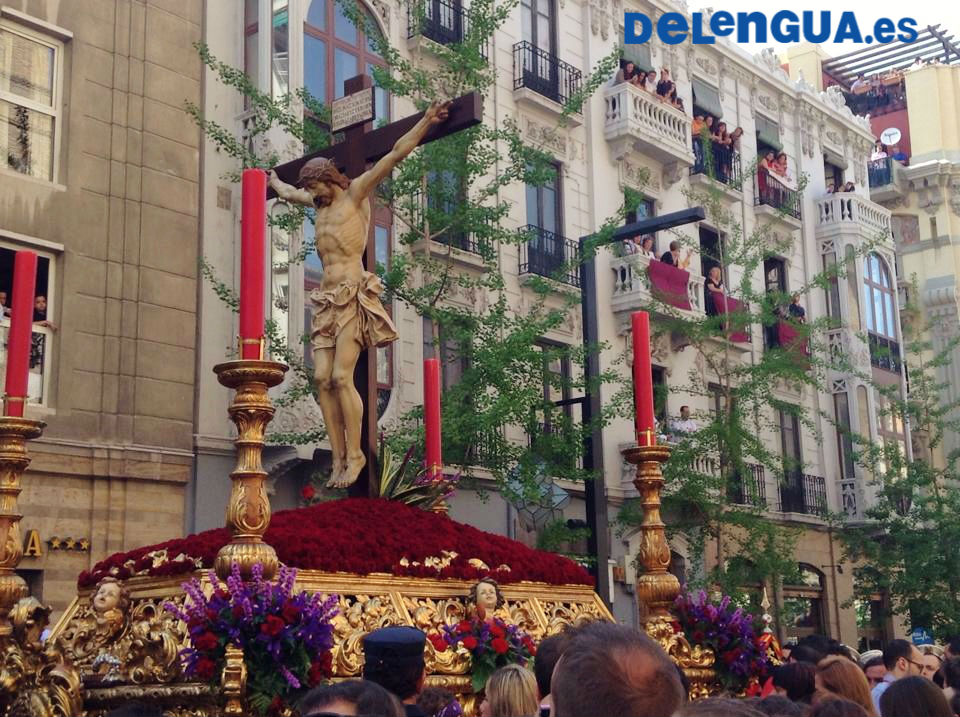
El festival ofrece un ancho de banda de espectáculos diversos como conciertos sinfónicos, música de cámara, ballet, danza contemporánea, música arcaica o destrezas del flamenco, entre otros. Y como Granada ofrece unos escenarios perfectos, estos eventos están subrayados por los bellos bastidores de la Catedral o el Monasterio de San Jerónimo, del barrio del Albaicín o las alturas del Sacromonte. Pero no sólo los bastidores apoyan unos espectáculos inolvidables. La gran diversidad que ofrece el Festival Internacional de Música y Danza brinda algo para cada uno. Además de la magia que traen las actuaciones musicales y las danzas hay actos literarios y artes escénicas que enriquecen la tradición histórico-cultural de Granada.

¡Forma parte de este momento mágico, apúntate a un curso de español con la Escuela Delengua! Con nosotros vas a aprender español y además te introducimos en la riqueza de la cultura española y, en especial, de la cultura granadina. ¡No te pierdas el Festival de Música y Danza de Granada! ¡No te pierdas un momento mágico en la ciudad de la Escuela Delengua!

The International Music and Dance Festival in Granada invites every year the fanciers of dance and music. During twenty days you can enjoy concerts and spectacles in different places in the city.

The festival has a history since 1883 when the master Arbós and the Simphony Orchestre of Madrid acted together in a concert in the Palace of Carlos V. Today the festival is part of the feast of Corpus Christi.

The festival offers a big spectrum of diverse spectacles like sinfonia concerts, chamber music, Ballett, Modern Dance, Archaic Dance or Flamenco, between others. And like Granada offers some perfect scenes, these events are amphasized by the beautiful backdrops of the Cathedral or the Monastery of San Jerónimo, the Albaycin district and the altitudes of Sacromonte. But not just the backdrops support to make these spectacles unforgettable. The bid diversity which offers the International Music and Dance Festival brings something for everyone. Besides the magic which bring the acts of music and dance there are literal and art scene performances which enrich the historic-cultural tradition of Granada.

Be part of this magic time, inscribe for a spanish programme with the language school Escuela Delengua! With us you will learn Spanish and furthermore we introduce you in the richness of the Spanish culture and the special culture of Granada. Don’t miss the Music and Dance Festival in Granada! Don’t miss a magic time in the hometown of the language school Escuela Delengua!