Festival Internacional de Música y Danza de Granada/International Music and Dance Festival in Granada

Español Inglés
El Festival Internacional de Música y Danza de Granada es una de las citas culturales más importantes y uno de los festivales con mayor tradición dentro del territorio español. Se celebra cada año y la próxima edición de 2011 es del 24 de junio al 12 de julio. Este año el Festival cumple 60 años y para celebrarlo se han programado atractivos conciertos, ópera y espectáculos de danza, recitales de flamenco, conciertos para jóvenes y teatro para niños. Tendrán lugar 20 días de diversión y fiesta.
El programa abarca diferentes géneros, cada uno celebrado en un escenario distinto: los conciertos de grandes orquestas sinfónicas se realizarán en el Palacio de Carlos V; la danza y el ballet, será en el teatro al aire libre de los Jardines del Generalife; los recitales, en el Patio de los Arrayanes de la Alhambra; los conciertos matinales, en las iglesias y edificios históricos de Granada, y el flamenco y otras músicas del mundo en los barrios típicos del Albaicín y el Sacromonte. Son muchos lo que vienen en estos días de junio y julio a la ciudad, cada año más de 30.000 personas se congregan para el festival.
En su programación siempre encontramos una combinación entre la presencia de grandes estrellas y jóvenes promesas, además de alternar obras claves de la historia de la música con otras apuestas de carácter más innovador.
Ven a Granada durante el festival y combina tu viaje con un curso de español en la Escuela Delengua, una escuela de español que se sitúa en el centro de la ciudad. Disfruta con nosotros este festival maravilloso, mientras mejoras tu español.

The International Festival of Music and Dance in Granada is one of the most important cultural dates in the diary and one of the most traditional festivals in the whole of Spain. It happens every year and the festival for 2011 will be celebrated from the 24th June to the 12th July. This year the festival reaches its 60th year and to celebrate they have scheduled concerts, the opera and dance shows, flamenco recitals, concerts for young people and the theatre for children. It will take place over 20 days of fun and celebration.
The programme covers different genres, each one celebrated in a different scenery: the great symphonic orchestra concerts are in the Palace of Carlos V; the dance and ballet, is in the open air theatre in the gardens of the Generalife; the recitals on the patio of the Arrayanes in the Alhambra; the morning concerts, in the churches and historical buildings in Granada, and the flamenco and other worldly music in the well known barrios of the Albaicín and the Sacromonte. A lot of people come to the city for these days in June and July, each year more than 30.000 people congregate for the festival.
In its programme, it has always combined the presence of great stars with young promise and it alternates key works from the history of music with other work of a more innovative character.
Come to Granada during the festival and combine your trip with a Spanish course at Escuela Delengua, a Spanish language school that is situated in the centre of the city. Enjoy this wonderful festival with us and improve your Spanish at the same time!

La fería del Corpus Christi 2011/ The festival of Corpus Christi 2011

Español Inglés
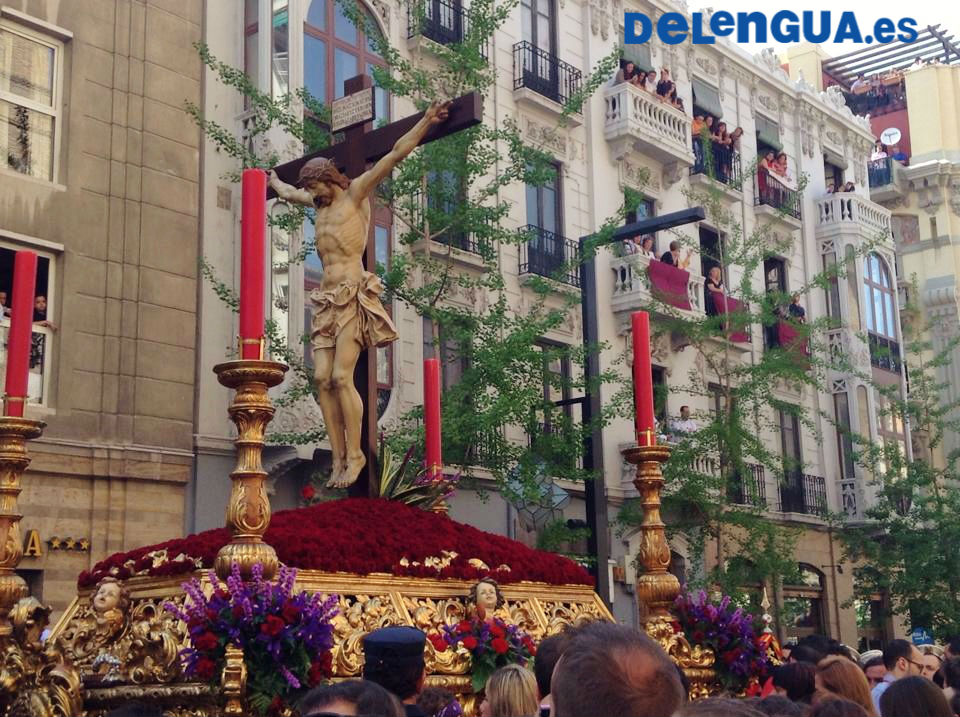
El Corpus Christi es una fiesta de la Iglesia Católica destinada a celebrar la Eucaristía. También en Granada se celebra el Corpus Christi y como todas las fiestas en Granada, la del Corpus Christi es de vivos colores. Es una fiesta tradicional con más de 500 años de historia. En Granada fue creada por los Reyes Católicos como fiesta mayor tras la conquista de la ciudad.

La feria en la ciudad andaluza no tiene fecha fija porque está ligada con el calendario católico y depende de las fechas de la Semana Santa, que varían cada año. Pero este año el Corpus Christi, será entre el lunes 20 y domingo 26 de Junio. Durante esta semana los granadinos celebran el Corpus (como se llama en el lenguaje popular). Entre otras cosas hay procesiones el miércoles, el jueves (día del Corpus), y el domingo. Todas ellas son procesiones religiosas pero también populares. La procesión del miércoles está dirigida por niños y jóvenes; también hay un maniquí sobre un dragón que debe presentar la moda actual de esta temporada. La procesión del jueves es más religiosa. Está formada por las parroquias de la ciudad y se suelen erigir altares a lo largo del camino de la procesión. La procesión del domingo es más fácil y está determinada por elementos folclóricos. La gente se viste con los típicos trajes andaluces. En las calles se dispone de casetas de tapas y hay baile Flamenco o Sevillanas.

Ven a Granada para disfrutar la fiesta del Corpus Christi y al mismo tiempo aprende español en la Escuela Delengua que está situada en el centro de la ciudad.

El maniquí sobre el dragón que presenta la moda actual de la temporada.

Corpus Christi is a festival of the Catholic Church which celebrates the Eucharist. Corpus Christi is celebrated in Granada and like all the festivals in Granada it is full of colour. It is a very traditional festival with more than 500 years of history. In Granada the festival was created by The Catholic Kings after the conquest of the city.

The festival in the Andalucian city doesn’t have a fixed date because it is attached to the Catholic calendar and it depends on the dates of Semana Santa which vary each year. But the Corpus Christi  2011 will be between Monday 20th June and Sunday 26th June. During this week the people of Granada will celebrate the Corpus (what it is called in common laguage). There are processions on the Wednesday, the Thursday (the day of the Corpus Christi) and the Sunday. They are all religious processions and are very popular. The procession on the Wednesday is lead by children and youths; there is also a mannequin on top of a dragon which must model the current fashion for the season. The procession on the Thursday is more religious. It is formed by the parishioners of the city and they usually erect altars along the route of the procession. The procession on the Sunday is easier and is defined by elements of folk music. People wear typical Andalusian dress. In the streets there are tapas stands and there is flamenco and Sevillian dance.

Come to Granada to enjoy the festival of Corpus Christi and at the same time learn Spanish at Escuela Delengua which is situated in the very centre of the city.

EXIT Festival Internacional de Cine Universitario de Granada/ EXIT, International University Short Film Festival in Granada

Español Inglés
Durante los días 4,5 y 6 de Mayo, se realizará la primera edición de EXIT Festival Internacional de Cine de Granada. Se trata de un festival que muestra obras cinematográficas producidas por universitarios de todo el mundo. Fue creado por tres estudiantes de Comunicación Audiovisual de la Universidad de Granada, Fernando Alanzor, Resu Ros y Javier López.

El objetivo del festival es encontrar a jóvenes realizadores de la comunidad universitaria internacional y difundir sus obras más recientes. También da la oportunidad a estos jóvenes de presentar sus obras a mucha gente en una ciudad tan maravillosa como es Granada. Además el festival intercultural permitirá que surjan nuevas ideas y creaciones cinematográficas. Está organizado por la organización cultural, “My Car is Mine”, la Facultad de Comunicación y Documentación y la Universidad de Granada, patrocinador oficial del evento.

Los universitarios podrán concursar en tres categorías de cortometrajes diferentes: Ficción, Documentación y Experimental, el mejor corto de cada categoría ganará un premio de 1000 euros. Los miembros del jurado serán representantes del medio audiovisual, artístico y cultural.

Este tipo de festival es bastante habitual en Sudamérica pero en España solo existía uno similar, organizado por la Universidad Juan Carlos de Madrid, conocido como “Unifest”, que ya cumple con siete años de gran éxito.

Dicen que “La filosofía de EXIT es la de crear una plataforma universitaria donde confluyan diversas realidades culturales y cinematográficas, así como fomentar el espíritu emprendedor, la creación artística grupal y la participación activa de todos aquellos que deseen formar parte del Festival.

Si te apasiona el mundo cinematográfico y audiovisual, no deberías perderte este gran evento. En la Escuela Delengua, cada semana realizamos una actividad relacionada con este maravilloso arte como es el cine.

Fernando Alanzor, Resu Ros y Javier López, posan con la camiseta de su festival

For three days in May, the 4th, 5th and 6th, the first edition of the EXIT International university short film festival of Granada will take place. It is a festival which shows the cinematography produced by universities from all over the world. It was created by three audiovisual students from the University of Granada, Fernando Alanzor, Resu Ros y Javier López.

The objective of the festival is to find young producers from the international university community and to broadcast their most recent work. It gives the opportunity to young people to present their work to lots of people in a city as amazing as Granada. The intercultural festival also allows new ideas and creation to arise. The festival is organised by the cultural organisation, “My Car is Mine”, the Documentation and Communication faculty and the University of Granada, official sponsor of the event.

The universities will compete in three different categories of short films: Fiction, Documentary and Experimental, the best short film from each category will win 1000 euros. The judges will be representatives audiovisual, artistic and cultural worlds.

This type of festival happens quite often in South America but there is only one other that exists like this in Spain, it is organised by the Juan Carlos university in Madrid, it is called “Unifest” and has already completed its seventh year of great success.

They say that “EXIT’s philosophy is to create a university platform where different cultural and cinematographic realities come together, as well as to promote spirit of entrepreneurship, collective art creation and active participation of all people willing to take part in the Festival.

If you are passionate about the world of cinematography don’t miss out on this great event. At Escuela Delengua each week we hold an activity relating to this marvelous art as it is in the cinema.

Las Cruces de mayo / “May’s crosses celebration”

Español Inglés
Como cada año, el 3 de Mayo Granada celebra el día de la Cruz. Esta fiesta se celebra en muchos lugares de España y en la mayoría de los países de Latino América, pero en ninguna ciudad se celebra con tanto fervor y entusiasmo como en Granada. Es una de las fiestas más bonitas de la provincia.

En la ciudad de origen de la Escuela Delengua el día en que se encontró la Cruz de Cristo siempre se llena de colores vivos. Autóctonos y forasteros se dan, cada año, cita en esta fiesta tradicional de la ciudad andaluza.

Muchos lugares de la ciudad se adornan con flores y cruces de flores pueblan la maravillosa ciudad. La flor típica de la fiesta es el clavel rojo, del cual van forradas las enormes cruces. Ya el día de antes ó, incluso, varios días antes del gran día, los vecinos preparan los patios para que luzcan unos más que otros. Las mujeres, jóvenes y mayores, se visten de Flamenca y en algunos bares como también en la calle se puede disfrutar de una fiesta del baile andaluz.

Se trata de un encuentro multicultural, ya que tanto Granadinos como forasteros celebran la fiesta de las Cruces juntos. La gente suele venir de todas partes del país y también del mundo. En la calle se habla español, inglés, francés, alemán y muchos idiomas más. Y también donde no hay tanta tradición triunfan las ganas de celebrar y el tinto de verano.

Si quieres vivir y celebrar con nosotros la fiesta de las Cruces, puedes compaginarla perfectamente con un curso de español impartido por la Escuela Delengua, donde además se realizarán actividades relacionadas con esta fiesta.

Every year on 3rd May, Granada celebrates the Day of the Cross. This holiday is celebrated in many places in Spain as well as in most Latin American countries,but in no other city is the day celebrated in such a way as it is in Granada. It is one of the most beautiful celebrations in the province.

Escuela Delengua’s city of origin always finds itself full of vibrant colours on the Day of the Cross. Natives and foreigners get together every year for this traditional celebration in the Andalusian city.

Many places in the city are decorated with flowers and there are crosses of flowers which populate the marvelous city. The flower typical of this holiday is the red carnation, enormous crosses are covered in them. The day before or even several days before the big day, the people of Granada prepare their patios so that they look nice for the speacial occasion. Women,old and young dress up in Flamenco dresses and in bars as well as in the streets, they celebrate the Andalusian dance.

It is a multicultural meeting, you find so many people from Granada, as well as foreigners celebrating the holiday of the Crosses together. People come not only from all over the country but also from all over the world. In the streets they speak Spanish, English, French, German and many other languages. Where there is not as much tradition, they enjoy the celebration and the Spanish drink, « el tinto de verano ».

If you want to experience and celebrate the Day of the Cross with us, you can combine it perfectly with a Spanish course at Escuela Delengua, where
they too hold activities relating to this holiday.

Navidad en España/Christmas in Spain

Español Inglés
Cuando los días se acortan y el año se va terminando, empiezan las Navidades. En España, esta época del año empieza en mediados de noviembre, cuando los centros comerciales y las tiendas empiezan a decorar con los típicos motivos navideños y ponen música de Navidad. Además hace mucho más frío, lo que indica también que el invierno y la navidad están a la vuelta de la esquina.

Después del período prenavideño, la verdadera Navidad comienza en España el día 22 de diciembre, que es el día de la Lotería de Navidad. Este sorteo es uno de los más grandes del mundo. En total se sortean varios millones de euros y la lotería se extiende por toda España. Se puede ver el sorteo completo durante todo el día en la televisión, y se puede decir que ese es la señal de salida a la Navidad.

La tradición de la Nochebuena es totalmente familiar. Normalmente se hace una cena con la familia, típicamente con platos de marisco o aves, aunque cada región tiene su cena típica. Los postres suelen consistir en turrones y mazapanes, o también postres de origen árabe hechos de almendra y miel. A las doce de la noche los católicos practicantes asisten a la Misa del Gallo. Actualmente, los jóvenes, después de las cenas y reuniones familiares, salen a celebrar la Fiesta Navideña con sus amigos.

En España, aunque recientemente se vuelve más popular la tradición de Papa Noel debido a la influencia de la cultura estadounidense y otros países extranjeros, es tradición que los regalos de Navidad los traen los Reyes Magos en la noche del 5 al 6 de enero. Antes, los niños tienen que mandarles una carta a los reyes pidiendo los regalos que quieren, así como indicar las razones por los que se merecen recibir estos regalos. El día 5 de Enero se asiste a la llegada de los Reyes Magos, que llegan en cabalgata y recorren las calles de los pueblos y ciudades tirando caramelos. También en Granada, donde se encuentra la Escuela Delengua, hay un gran desfile por la ciudad por la tarde del 5 de enero. Hay tres hombres en caballo que representan los Reyes y cada uno va acompañado por un corte de más de 90 personas.

Por la mañana del día 6 los niños reciben sus regalos o, si han sido malos, carbón dulce. Pero los niños no son los únicos que reciben regalos, entre los adultos también es tradición regalar algo. El día 6 de enero suele ser festivo en toda España. Es típico desayunar el Roscón de Reyes, un bollo circular hecho de una masa dulce que se adorna con rodajas de fruta o confitada de colores variados. En España estos roscones suelen contener una figurita navideña.

Ahora sabes como se celebra la Navidad en España. A lo mejor algunas de estas costumbres también existen en tu país. Dondequiera que estés y con quienquiera celebres, ¡la Escuela Delengua te desea FELIZ NAVIDAD!

Unas de las cosas que pertenecen a la Navidad en España:

La cabalgata de los Reyes Magos

El carbón dulce

El Roscón de Reyes


When days draw in and the year draws to a close, Christmas time begins. In Spain, this time of the year starts in mid-November, when the shopping malls and the shops start to decorate with tipical Christmas motives and play Christmas music. Furthermore, the wheater is getting colder, which also means that winter and Christmas are very close.

After the holiday season, real Christmas in Sapin starts at 22 Decemcer, the day of Christmas lottery. This draw is one of the biggest of the world. Altogether, several millions of euros are raffled and the lottery extends all over Spain. The complete draw is broadcasted in TV through the whole day, and one can say that this is the starting signal for Christmas.

The traditions for Christmas Eve are very intimate. Normally people make a family-dinner, tipically with plates of seafood or poultry, although every region has its own tipical meals. The desserts are usually turrones (a bar containing nuts or honey-coated almonds) or marzipan, or also desserts of Arab origin made of almonds and honey. At midnight, the practising Christians go to the Misa del Gallo (“Rooster’s Mass”). Nowadays, young people meet their friends after the dinner and family reunion to celebrate Christmas Eve with them.

In Spain, although recently Santa Claus becomes more popular due to influences from the USA or other countries, the gifts are traditionally brought by the Three Kings in the night from 5 to 6 January. Before, the children have to send a letter to the Kings indicating the gifts they want for Christmas, as well as the reasons for which they think they deserve the presents. On 5 January the families go to watch the arrival of the Three Kings, who arrive in a procession and parade the streets of the villages and cities throwing sweets. Also in Granada, where Delengua Spanish Language School is located, there’s a great procession through the city in the afternoon of 5 January. There are three men on horses who represent the Three Kings and each one of them is accompanied by an entourage of more than 90 persons.

In the morning of 6 January the children receive their gifts or, if they have misbehaved, they receive carbón dulce, a sweet made of water and sugar that looks like coal. But not only the children receive gifts, its also a tradition that adults give each other presents. The day 6 January is a bank-holiday all over Spain. It’s tipical to have Roscón de Reyes for breakfast, a circular bun made of a sweet dough which is decorated with slices of fruits or glacé fruit in different colours. Normally these buns contain a small Christmas figure.

Now you know how Christmas is celebrated in Spain. Perhaps some of these costumes do also exist in your country. Wherever you are and whoever you celebrate with, Escuela Delengua wishes you a MERRY CHRISTMAS!

XXXI Festival Internacional de Jazz de Granada/ 31st Granada International Jazz Festival

Español Inglés
Del 5 al 21 de noviembre se celebra el XXXI Festival Internacional de Jazz de Granada. Este festival es uno de los más antiguos e importantes de Europa y el único miembro español del “Europe Jazz Network”, la red europea de festivales de jazz. Desde que se celebró el primer festival en el año 1980, han participado artistas famosos como Miles Davis, Oscar Peterson, Charlie Haden, Art Blakey, Tete Montoliu y muchos muchos más. Mientras que el primer festival duró solamente 3 días, la duración creció con los años, así que el XXXI festival que se celebra de momento tarda más de dos semanas.

El XXXI Festival Internacional de Jazz de Granada se abre con un concierto del legendario compositor de jazz Wayne Shorter. El ganador de ocho Grammys fue miembro de los Jazz Messengers de Art Blakey, del histórico quinteto de Miles Davis y fundador de Weather Report, un grupo que creó un nuevo sonido de jazz rock. Otro músico muy conocido es Joe Lovano, que presenta el “Lovano Europa Quartet”, un proyecto novedoso integrado por músicos europeos. Aparte de Nils Petter Molvaer, que ofrece un jazz contemporáneo con elementos de break beats, hip hop y rock, los músicos exitosos de jazz Kurt Rosenwinkel y Charles Lloyd y Esperanza Spalding, que participa por primera vez en este festival, este año se presta especial atención a los músicos granadinos. En el Ciclo Granada Jazz participan entre otros la Granada Big Band y el grupo Parkerland Nonet.

Aparte de estos conciertos, durante el Festival también hay actividades paralelas, por ejemplo más de treinta conciertos en los Trasnoches de Jazz, que son organizados por los locales y clubes de la ciudad. Además hay varios conciertos gratuitos en la calle. En Puerta Real se puede ver conciertos de Potato Head Jazz Band, un grupo con miembros de distintas nacionalidades que ofrece un jazz tradicional, y conciertos del Paul Stocker Cuarteto, un músico residente en Granada que ha colaborado con artistas de todas partes del mundo y que cuenta sus experiencias a través de su música.

Este año también hay una exposición de carteles en el Teatro Alhambra. Se expone una colección de los carteles del Festival de Jazz de Granada diseñados por el artista Juan Vida. Desde el tercer festival en el año 1982, Juan Vida se dedicó cada año a crear el cartel para el festival. Tiene un estilo inconfundible; para los carteles siempre usa muchos colores para mostrar personajes y crear ambientes.

El Festival Internacional de Jazz de Granada es sin duda uno de los festivales mas grandes e importantes de España. Por supuesto, los estudiantes de la Escuela Delengua aprovechan también de este evento y van a ver al menos uno de los conciertos del festival. Entonces, si tú estás en Granada y tienes la ocasión de asistir al Festival de Jazz de Granada, ¡no te pierdas este evento único!

El cartel del XXXI Festival Internacional de Jazz de Granada

Un concierto de jazz en la calle

From 5 to 21 November, the 31st International Jazz Festival takes place in Granada. This festival is one of the oldest and most important ones in Europe and the only Spanish member of the “Europe Jazz Network”, the european network of jazz festivals. Since the first festival in 1980, there have participated famous artists like Miles Davis, Oscar Peterson, Charlie Haden, Art Blakey, Tete Montoliu and many many more. While the first festival lasted only three days, the duration has increased over the years, so that the 31st festival that takes place at the moment lasts more than two weeks.

The 31st Granada International Jazz Festival opens with a concert by the legendary jazz composer Wayne Shorter. The winner of eight Grammys was member of the Jazz Messengers of Art Blakey, of the historial quintet of Miles Davis and founder of Weather Report, a group that created a new jazz rock sound. Another famous musician is Joe Lovano who presents the “Lovano Europa Quartet”, a new type of project consisting of european musicians. Apart from Nils Petter Molvaer, who offers contemporary jazz with break beats, hip hop and rock elements, the successful jazz musicians Kurt Rosenwinkel and Charles Lloyd and Esperanza Spalding, who participates for the first time in this festival, this year the festival pays special attention to musicians from Granada. Among others, the Granada Big Band and the group Parkerland Nonet participate in the Granada Jazz Cycle.

Apart from these concerts, there are also parallel activities during the festival, for example more than thirty concerts during the “Trasnoches de Jazz”, the “Sleepless Nights of Jazz”, which are organized by the pubs and clubs of the city. Furthermore, there are various free concerts in the streets. At Puerta Real you can see a concert by the Potato Head Jazz Band, a group consisting of musicians of different nationalities that offers traditional jazz, and a concert by the Paul Stocker Quartet, a musician resident in Granada who has colaborated with artists from all parts of the world and who talks about his experiences through his music.

This year there is also an exposition in the Alhambra Theater, where posters of the Jazz Festival are exhibited. These posters have been designed by the artist Juan Vida, who has dedicated himself to create the festival’s poster every year since the third festival in 1982. His style is quite distinctive; for his posters he always uses many different colours to portray personalities and to create a certain atmosphere.

Granada International Jazz Festival is unquestionably one of the biggest and most important festivals in Spain. Of course, the students of Delengua Spanish Language School will also enjoy this festival and will go to at least one of the festival’s concerts. So, if you are in Granada and you have the opportunity to visit the Granada Jazz Festival, don’t miss this unique event!

Mundial 2010: celebración en Granada y por toda España / Worldcup 2010: festivities in Granada and all over Spain

Español Inglés
Apenas unos minutos después del partido final del mundial 2010, Holanda-España, las calles de Granada comenzaron a llenarse de aficionados. Los coches se hicieron dueños del asfalto y un montón de gente salió a la calle para celebrar este título histórico para España.
Fue increíble ver a tanta gente con la cara pintada de rojo y amarillo, gritando y cantando “A por ellos”, “Viva España” o “Yo soy español”.

En España, cuando se consiguen éxitos tan importantes, la gente se aloca un poco, y lo celebran bañándose en las fuentes. En Granada hay muchas, pero la que más destaca es la Fuente de las Batallas que se encuentra al lado del teatro y a 10 minutos andando de la escuela Delengua de aprendizaje del español .

Este año, a contrario de lo que ha pasado para la Eurocopa 2008, no se podía entrar al agua, por los policías que rodeaban las fuentes por seguridad de los ciudadanos. Sin embargo, sí que la gente se tiró al agua desde el puente del río de Paseo del Salón… un baño refrescante para una noche calurosa y cargada de emociones…

Cerca de esta fuente es como si la ciudad entera explotara por los petardos que lanzaba la gente, expresión ruidosa de su alegría y felicidad. La fiesta continuó hasta altas horas de la madrugada en Granada, y por toda España….

Es increíble lo que puede hacer el fútbol; unir a la gente de un mismo país pero de creencias distintas, opiniones y educación diferentes, unir gente de diferentes nacionalidades y de todas las generaciones.
Jóvenes, niños, ancianos paseando por las calles  compartiendo una historia común, llevando más que nunca los colores del país al que pertenecen y asumiendo los legames con cualquier otra persona de su país. Orgullosamente…

Este año los futbolistas de la selección española han realizado el sueño de miles de españoles…
¡Fútbol es emoción! Fútbol genera pasión…

españoles campeones del mundo

Spain_crowd_celebrations

por las calles de Granada

Just a few minutes after the end of the World cup 2010 final Holand-Spain, the streets of Granada got full of football fans. Cars became  the masters of the asphalt, and a crowd of people invaded the streets in order to celebrate this historical title for Spain.
It was just amazing to see such a lot of people with red and yellow faces, screaming and singing typical songs like”A por ellos”, “Viva España” o “Yo soy español”.

In Spain, when there are such special events, people go a bit crazy, and use to have baths in the foutains. In Granada, there is plenty of fountains, but the most famous is la Fuente de las Batallas, situated near the theater and 10 minutes walking from the Spanish language school Escuela Delengua.
This year, unlike 2 years ago, during The European Cup 2008, people couldn’t enter the water, because of the presence of many policemen in front of the fountains. However, it did not stop people from having their bath… they just jumped into the river near to Paseo del Salón, from the roman bridge…  a refreshing bath for a hot and exciting night…

Near to this fountain, the festive atmosphere was spread, and firecrackers exploted in the air to express the joy and happiness. Needless to say that festivities continued till the morning of the following day in Granada and all over Spain…

What can soccer do to people? It is incredible how this sport can unite a people, a country, and many nationalities. In the streets, all generations shared that historic moment, becoming closer to each others. A new bound is created and fans are proud to be Spanish, that’s why they’re still wearing now more than ever the colors of the country they are part of.

This year, Spanish footballers realized the dream of all spanish people.
Soccer is emotion and generates passion!