
La fiesta de los Verdiales/ The Festival of the “Verdiales”

Español Inglés
La Fiesta de los Verdiales es una fiesta de invierno que se celebra el 28 de diciembre en Andalucía. La historia de los Verdiales y el origen de la fiesta son gran misterio y hay muchas opiniones sobre esta tradición. Pero en algunos puntos, todos los historiadores están de acuerdo.
Por ejemplo, dicen que es una fiesta milenaria que ya existía antes del mismo cante flamenco, antes del Imperio Romano, antes del cristianismo. Hay muchas opiniones más, pero nada en concreto.Todos los conocimientos son, más o menos, ciertos pero fueron transmitiendo de padres a hijos durante siglos, como una tradición compulsiva. ¿Pero qué es esta tradición y qué se hace en esta fiesta tan especial? Aunque no hay informaciones históricas escritas se pueden particularizar algunas características.La fiesta de los Verdiales se celebra desde hace siglos. Es una fiesta de la clase humilde campesina. También la llamaron la Fiesta de los Tontos, que refiere a la clase social de los campesinos. Mejor dicho: que refiere a estos catetos, como se llamaba a los campesinos antes porque siempre han pertenecido a una clase baja en la sociedad.
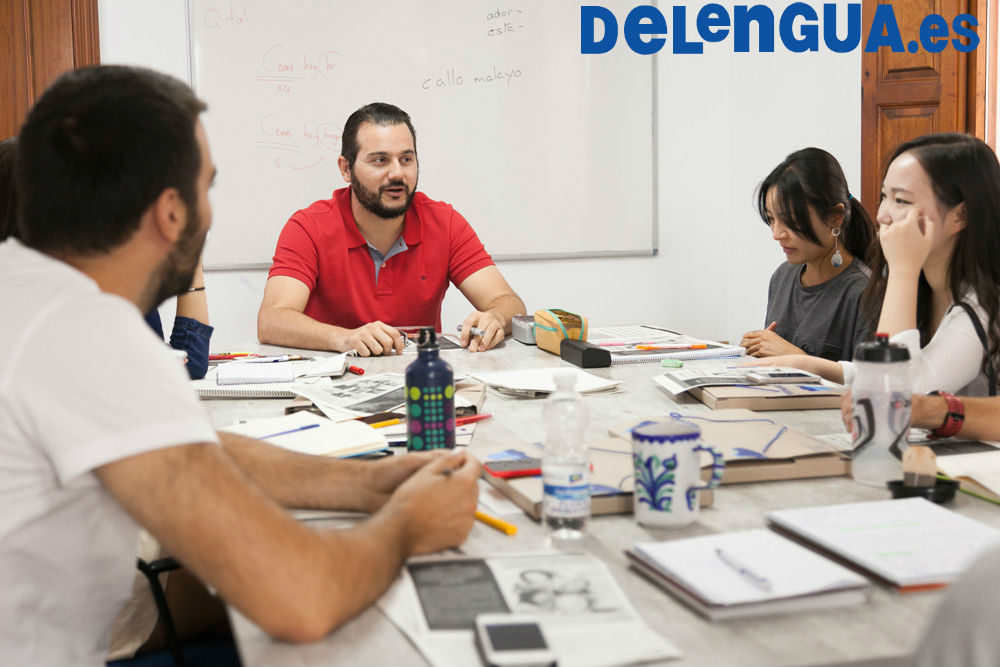
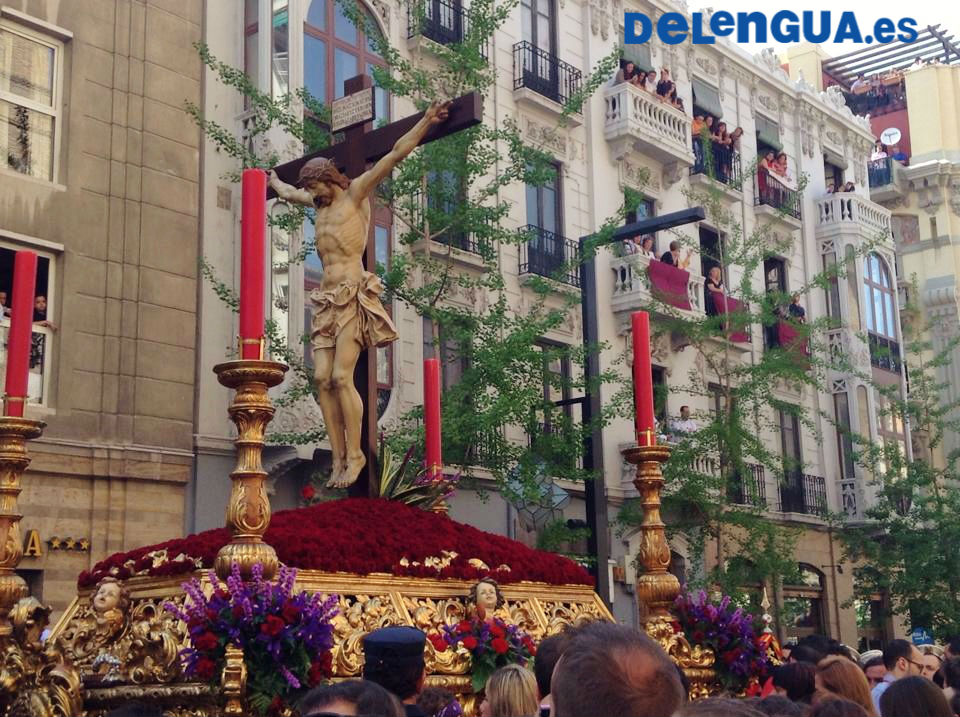
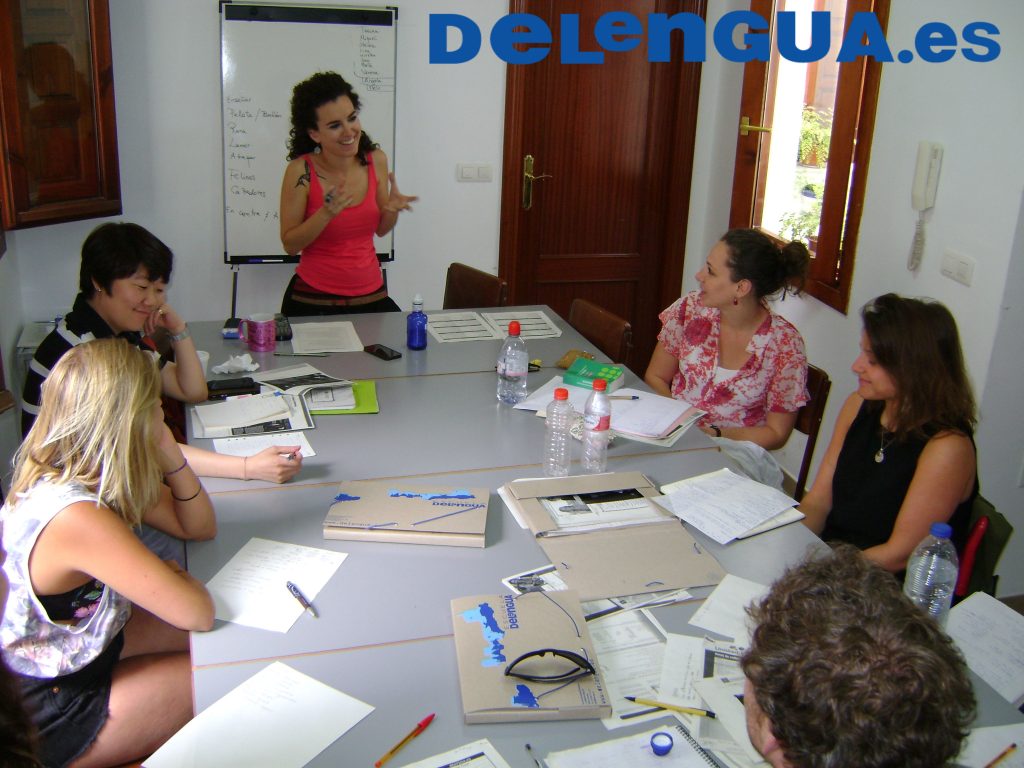
Por costumbre los verdiales todavía hoy salen el 28 de diciembre para un desfile por las calles. Suelen ir de casa en casa para cantar unas coplillas a la gente para galantearla. Además hay baile popular, representado por los “tontos”. Hoy la fiesta de los Verdiales es más que sólo una fiesta de los campesinos. Es una fiesta en que quizá sólo los campesinos participan como actores mayores, pero todo el pueblo está invitado y ayuda durante las preparaciones. Nosotros, la Escuela Delengua, te damos la posibilidad de conocer esta fiesta. Con su naturalidad, que generan las costumbres antiguas de los campesinos, entusiasma cada año a la gente. Durante un programa de español en la Escuela Delengua también queremos enseñar a nuestros estudiantes algo sobre la cultura española y granadina. La fiesta de los Verdiales es parte de nuestra cultura y absolutamente ostentoso. Apúntate a uno de nuestros cursos y aprende algo sobre las costumbres españolas. La gran ciudad Granada y laEscuela Delengua te invitan a un espectáculo que tiene una historia de más de miles de años.

The Festival of the “Verdiales” is a winter festival which is celebrated the 28th of December in Andalusia. The history of the “Verdiales” and its origin is a big mistery and there are lots of opinions about the tradition. But about some of the points, all of the historians agree. They say for example that the festival is a millennium festival which existed before the canto of Flamenco, before the Roman Empire, before the Christians. There are lots of more opinions but nothing more concrete.All of the knowledge is more or less sure but was transmitted from fathers to sons during centuries, like a compulsive tradition. But what exactly is this tradition and what makes this festival special? Although there doesn’t exist written historical information you can distinguish some caracteristics.The festival of the “Verdiales” has been celebrated since centuries. It’s a festival of the indignent class of farmers. It’s also called “Festival of the Stupid-Ones”, which refers to the social class of the farmers, or better: which refered to the country bumpkin, what the farmers were called in former times because they alwayes belonged to a lower social class.Like it’s tradition the “Verdiales” still today the 28th of December leave for a procession through the streets. They go from house to house to sing folksongs to the people and to court them. Furthermore, there are folk-dances represented by the “Stupid-Ones”. Today the festival of the “Verdiales” is more than just a festival for the farmers. It’s a festival in which maybe only the farmers participate like main actors but to which the hole village is invited and helps during the preparation. We, the language school Escuela Delengua, gives you the possibility to know this festival. With its naturality, which provokes the antic traditions of the farmers, the festival inspires the people every year. During a spanish programme in Escuela Delengua, we also want to show our students something about Spanish and Granadian culture. The festival of the “Verdiales” is part of our culture and absolutly worth seeing. Inscribe yourself for one of our courses and learn something about Spanish costums. The big city Granada and the language school Escuela Delengua invite you to a spectacel which has got more than thousand years of history.

El Parque de Ciencias de Granada/ The Science Museum in Granada

Posted on November 15th, 2011 in Cursos de español / Spanish courses,Granada,Uncategorized by Agnieszka
Español Inglés
El Parque de las Ciencias es el primer museo interactivo de ciencia de Andalucía. Fue inaugurado en mayo de 1995 ocupando en la actualidad 70.000 metros cuadrados. Es un museo donde el publico puede participar y disfrutar a cualquier edad. Tiene varios exposiciones donde la gente puede comprender mejor el mundo en que vivimos. Se puede probar fenómenos físicos como la gravedad y el movimiento de la Tierra e incluso hacer experimentos. El Parque de las Ciencias expone distintas áreas en diferentes salas desde la concepción del universo y el cosmos hasta el fascinante fenómeno de la vida que contiene la biosfera. En el planetario se puede visitar el observatorio astronómico que dispone del telescopio de 75 cm con el que se puede observar el universo. En la Sala Biosfera se puede seguir el movimiento de las pirañas o el contador de la población del mundo en tiempo real, o ver ADN humano. En la Sala Percepción es posible jugar con el sonido y la luz, también volar gracias a la reflexión de nuestra imagen en el espejo. Desde la Torre de Observación de 50 metros de altura se tiene muy buena vista sobre Granada. El Parque de Ciencias también tiene el Mariposario Tropical, el Ajedrez Gigante, módulos de acústica, juegos de agua, la Casa Distorsionada, los Recorridos Botánicos y mucho más. El Parque es una de muchas atracciones de la ciudad de Granada, una ciudad muy bonita e interesante. La Escuela Delengua se encuentra en el centro de Granada en el barrio del Albaicín y ofrece varios cursos de español. Si quiere visitar Granada, ¿por qué no combinar la visita con un curso de español en la escuela? The Science Museum in Granada is the first interactive science museum in Andalusia. It was opened in May 1995, occupying today 70.000 square metres. In this museum the public can participate and enjoy no matter what their age. It has various exhibitions where people will be able to improve there understanding of the world we live in, it allows them to try out physical phenomena like gravity and the motion of the earth and also to perform experiments. The Science Museum exhibits different areas in different rooms, from the conception of the universe and the cosmos to the fascinating phenomena of the life that is contained in the biosphere. In the planetarium you can visit the Astronomical Observatory that has the 75 cm telescope where you can observe the universe. In the biosphere room you can follow the movement of the piranhas, a meter of the population of the world in real time or see human DNA. In the perception room it is possible to play with sound and light, also to fly thanks to the reflection of our image in the mirror. There is a view point of Granada from the tower of observation of 50 metres high that you can go up. The Science Museum also has rooms with tropical Butterflies, Giant Chess, acoustic modules, water games, the distorted house and the botanical tours and much more. The park is one of many attractions in the city of Granada, a very pretty and interesting city. Escuela Delengua is found in the centre of Granada in the barrio of the Albaicín, it offers various Spanish courses. If you want to visit Granada, why not combine your visit witha Spanish course at the school?

San Cecilio

Español Inglés
San Cecilio fue el primer obispo de Granada y es el patrón de la ciudad. Bajo el lema “Granada honra a San Cecilio” se celebra cada año el primer domingo de febrero con una romería a las catacumbas donde están guardadas las reliquias del Santo.La Abadía en el Sacromonte es el destino de los romeros y para hacer el camino y la espera más agradable, el ayuntamiento de Granada ha iniciado el reparto de paquetes alimentarios. En las bolsillas encontrarás las típicas habas, pan, bacalao y agua (en lugar de vino).A continuación de la romería siempre hay actuaciones de grupos de baile y de bandas de música regionales. Y como les gusta salir de fiesta a los Granadinos, el festival normalmente dura hasta la noche y cada persona (Granadina o no) está invitada.
Para honrar a una persona que se mueve entre realidad y leyenda los granadinos se unen una vez más en un festival comunal y animado.Ven a Granada, entérate más del festivo en honor a San Cecilio y aprende español en España. Por ejemplo en un curso de español de la Escuela Delengua.

Saint Cecile was the first bishop of Granada and is the patron saint of the city. The motto is “Granada honours Saint Cecile” and he is celebrated each year on the first sunday of february with a  procession to the catacombs where the relics of the Saint have been kept.The Abbey in the Sacromonte is where the procession starts, in order to make the walk and the waiting as comfortable as possible, the council of Granada has started giving out food paquets. In these food bags you can find the typical beans, bread, cod and water (instead of wine).In continuation with the procession there are always dance groups and regional music bands playing. Because the people of Granada like to party, the festival normally lasts until the evening and everybody is invited.In order to honour someone who moves between reality and legend, the poeple of Granada get together once more for a lively town festival.

Come to Granada, take part in the festival in honour of Saint Cecile and learn Spanish in Spain. How about on a Spanish course at Escuela Delengua?

Cursos específicos en Escuela Delengua/ Specific courses at Escuela Delengua

Español Inglés
Escuela Delengua es una escuela de español en pleno centro de la ciudad andaluza de Granada. La escuela ofrece una gran variedad de cursos de español, el intensivo es el más popular pero también hay cursos individuales disponibles. Es posible hacer un curso de flamenco e igualmente de guitarra flamenca, la escuela también organiza estos cursos por grupos. Escuela Delengua tiene un amplio abanico de cursos específicos que pueden ayudar a los que trabajan en campos específicos. Por ejemplo hay un curso de Historia y Arte de España y América Latina que incluye el estudio de unos de los eventos más importantes en la historia de España y Latina América para adquirir una amplia comprensión de su historia mientras se trata las artes de cada época. Los cursos se adaptan a los intereses de los estudiantes, en este caso, a un periodo histórico específico, o un artista o movimiento artístico en concreto. También hay cursos de Literatura de España y América Latina en la Escuela Delengua que trata la literatura contemporánea y la historia de la literatura española. Además se tratan los autores más representativos incluyendo el escritor famoso de Granada, Federico Gracía Lorca. Escuela Delengua ofrece  también un curso español de negocios, español para turismo y español jurídico. Todos estos cursos ofrecen cuatro clases intensivas de español a diario y dos clases centradas en la especialidad del curso específico. Con estos cursos podrá aprender todo el español que necesite para trabajar en campos específicos en países hispanohablantes incluyendo todo la terminología y vocabulario. También hay un curso de español médico disponible en la escuela en el cual los estudiantes obtendrán un conocimiento extenso del lenguaje médico, usado tanto por los medicos y enfermeros como por los pacientes. Escuela Delengua ofrece una gran variedad de curso y se sitúa en la preciosa ciudad de Granada, sitio ideal para aprender español.  

La Alhambra de Granada

Escuela Delengua is a language school in the centre of the Andalusian city of Granada. The school offers a wide variety of Spanish courses, with the intensive course being the most popular but one-to-one courses are also offered. It is possible to do a flamenco course as well as a flamenco guitar course and the school also does courses for groups. Escuela Delengua also has a range of specific courses which may help people working in specific fields. For example there is a course on Spain and Latin American history of art which includes the study of some of the most important events in the history of Spain and Latin America to gain a broad understanding of their history while looking at artwork from each period. The course can be adapted if students have an interest in a specific historic period, artist or artistic movement. A course on Spanish and Latin American literature is also available at Escuela Delengua which covers both contemporary literature and the history of Spanish literature. The most representative authors will also be covered on the course including the famous writer from Granada, Federico García Lorca. Escuela Delengua offers a Spanish for business course, Spanish for tourism course and a legal Spanish course.All these courses offer four intensive Spanish classes daily as well as two classes focusing on the specific course subject. With this course you will be able to learn all the Spanish you need to work in the specific field in a Spanish speaking country including all the terminology and vocabulary. There is also a medical course offered by the school in which students will gain all the comprehensive knowledge of the medical language used by doctors and nurses and also by the patients. Escuela Delengua offers a great variety of courses to suit everybodys needs and set in the beautiful city of Granada, it is an ideal place to learn Spanish.

El vino de Andalucía/ Andalusian wine

Español Inglés
Andalucía tiene una tradición milenaria en el cultivo de la vid y en la elaboración de vinos que han gozado de gran prestigio y fama en todo el mundo. Hay una gran diversidad de vinos en Andalucía, aunque tienen en común un estilo propio. El sector vitícola andaluz se orienta hacia la producción de vinos de calidad. Tradicionalmente, los vinos más característicos han sido los generosos y los dulces. Son generosos en alcohol pero también delicados. No hay muchos vinos con tanta historia y originalidad como los andaluces, particularmente los vinos de Jerez. Éstos son únicos en casi todos sus sentidos vitícolas. El clima y el suelo de Andalucía es excelente para la agricultura, la tierra tiene una particular composición del suelo, además de un clima dominado por la influencia marítima del Atlántico y del Mediterráneo y una cantidad elevada de horas de sol, todos estos factores son muy propicios para que la vid se desarrolle y de por fruto una uva para vinos tan singulares. El viñedo ocupa una extensión aproximada de 40.000 hectáreas y se cultiva en todas las provincias de la región. Uno de las gran atracciones turísticas de Andalucía son las tapas, acompañadas por el vino andaluz. En Granada, una de las principiales ciudades de Andalucía hay muchos bares de tapas que sirven los mejores vinos de Andalucía. Escuela Delengua es una escuela de español que se sitúa en pleno centro de la ciudad de Granada.Puedes hacer un curso de español en la escuela, mientras disfrutas de la gastronomía andaluza.

Andalusia has a thousand-year-old tradition of growing vines and in the production of wines that have enjoyed great prestige and fame all over the world. There is a great diversity of wines in Andalusia, although they have their own style in common. The Andalusian vine-growing sector is aimed towards the production of quality wines. Traditionally, the most characteristic wines have been the full-bodied and sweet ones. They are full-bodied in alcohol but also delicate.
There aren’t many wines with so much history and originality as the Andalusian, particularly the wines from Jerez. These are unique in almost all their vine-growing senses. The climate and the soil in Andalusia is excellent for agriculture, the land has a particular composition of soil, it has a climate dominated by the influence of the Altlantic sea and by the Mediterranean and a high number of hours of sun, all these factors are very favourable to the development of the vine and to fruit a grape for such unique wines. The vinyard occupies an extention of approximately 40,000 acres and is grown in all the provinces of the region.
One of the great tourist attractions in Andalusia is the tapas, accompanied by the Andalusian wines. In Granada, one of the main cities in Andalusia, there are many tapas bars that serve the best of Andalusian wines. Escuela Delengua is a Spanish language school that is situated in the heart of the city of Granada, you can do a Spanish course at the school and enjoy the Andalusian gastronomy.

La Reconquista

Posted on September 26th, 2011 in Granada,Historia/ History,Monumentos/ Monuments,Uncategorized by Agnieszka
Español   Inglés
La Reconquista duró 700 años y marca el proceso histórico en que los reinos cristianos tomaron el poder de los musulmanes de la península ibérica. Tuvo lugar entre los años 722 y 1492 cuando el último Reino musulmán, el Reino nazarí de Granada fue reconquistado por los Reinos cristianos.

La primera invasión de los musulmanes en la península ibérica pasó en el año 711, procedentes de África del Norte y entrando por Gibraltar. La conquista del Reino visigodo fue un proceso bastante rápido, del 711 al 725 años los dirigentes árabes llegaron a ocupar todo el actual territorio de España y Portugal.

En el año 718 se sublevó un noble llamada Pelayo pero fracasó y le enviaron a Córdoba, donde fue prisionero. Sin embargo consiguió escapar y organizar una segunda revuelta en los montes de Asturias, que empezó con la batalla de Covadonga en 722. Esta batalla está considerada como el comienzo de la Reconquista. Tomaron la victoria pero fue solo una victoria cristiana sobre un pequeño contingente de exploración y los cristianos no representaban un gran peligro porque en la opinión de los árabes era una región montañosa sin recursos e inviernos extremos. El proceso del avance de los Reinos cristianos fue lento con muchos conflictos y negociaciones con poderes musulmanes.

El fin de la Reconquista fue el 2 enero 1492 cuando los Reyes Católicos acabaron tomando Granada y expulsando la dinastía nazarí. Acabó del todo un siglo después cuando expulsaron los moriscos, homogeneizando así toda la península.

Todavía hoy en día la influencia de los árabes es muy evidente en Granada, en particular en la arquitectura. El monumento más conocido de Granada es la Alhambra, es un palaciego y fortaleza que fue construida durante el siglo XIV por el gobernante árabe del reino nazarí de Granada en Al-Ándalus. El barrio del Albaicín muestra mucha influencia del periodo nazarí con calles estrechas y monumentos distintos de la época.

Escuela Delengua se encuentra en este barrio histórico del Albaicín donde existe todavía la influencia Árabe, unas tiendas árabes adornan las calles estrechas y huele al humo de las cachimbas. Es un bueno sitio para quedarse y aprovechar de todo lo que ofrece la ciudad.


The Alhambra
The Reconquista lasted 700 years and marks the histrorical process in which the Christian Kings took power from the Muslims of the Iberian Peninsular. It took place between the years 722 and 1492 when the final Muslim kingdom, the Emirate of Granada was recaptured by the Christian Kings.

The first invasion of the Muslims in the Iberian Peninsular happened in the year 711, they came from North Africa and entered through Gibraltar. The conquest of the Visigothic Kingdom was quite a quick process, from the year 711 to 725 the Arab leaders arrived and occupied all of the territory which is now Spain and Portugal.

In the year 718 a noble named Pelayo started up a revolt but he failed and was sent to Córdoba where he was imprisoned. However he continued to escape and he organised a second revolt in the mountains of Asturias, which started with the Battle of Covadonga in 722. This battle is considered as the start of the Reconquista. They took the victory but it was only a Christian victory of a small contingent of exploration and the christians weren’t considered very dangerous to the Arab’s because in their opinion, it was a mountanous region without resources and with extreme winters. The advance of the Christian Kings was slow with many conflicts and negociations with Muslim powers.

The end of the Reconquista was on the 2nd January 1492 when the Catholic Kings ended it by taking Granada and expelling the Nasrid Dynasty. It ended completely a century after when they expelled the Moors, and therefore hermogenizing the whole Penisular.

Nowadays the Arab influence is still evident in Granada, particularly with the architecture. The best known monument in Granada is the Alhambra, it is a palace and Fort that was built during the 14th century by the Arab government of the Emirate of Granada in Al-Andaluz. The Albaicín district shows influences from the Nasrid period with the winding streets and monuments distinctive of the era.

Escuela Delengua is found in this historic district of the Albaicín where the Arab influence still exists, Arab shops line the winding streets and it smells of the smoke from shisha pipes. It is a great location to be in to make the most out of all that Granada has to offer.

La guitarra flamenca/ The flamenco guitar

Español Inglés
Una guitarra flamenca se parece a una guitarra clásica. La guitarra flamenca tradicional está hecha de ciprés, sicomoro o palo de rosa español al dorso y a los lados, y picea para la parte superior. Las guitarras flamencas pesan menos que las guitarras clásicas, y produce un sonido más fuerte y más de percusión. Tradicionalmente el volumen es muy importante para los guitarristas, ya que deben oirse por encima del sonido de los zapatos de las bailaoras. Para aumentar el volumen, las maderas más duras, como el palo de rosa pueden usarse en el dorso y a los lados, con la madera blanda en la parte superior. Diferente a la guitarra clásica es, que a menudo la flamenca está dotada con un golpeador, hecho en general por plástico transparente, para proteger la guitarra de los golpes.

Se toca diferente la guitarra flamenca que la guitarra clásica. Tocadores practican una postura, los rasgueos y unas técnicas diferente. Mientras que un guitarrista clásico pone la guitarra en la pierna izquierda y la tiene inclinada, el guitarrista flamenco suele cruzar las piernas y la tiene en la pierna encima de la otra, con el cuello de la guitarra casi en paralelo al suelo. Las posiciones diferentes de tener la guitarra satisface las diferentes técnicas de tocando. Flamenco es un forma de musica de improvisación que usa estructuras común y secuencias de acordes.

Flamenco originó en Andalucía y por eso puede verlo y también las guitarristas flamencas por todo de Andalucía. Escuela Delengua es una escuela española en la ciudad andaluz de Granada, donde puede ver las guitarristas flamencas tocando por las calles. La escuela ofrece varios cursos de español y también ofrece cursos de baile flamenco y de guitarra flamenca.

A flamenco guitar is similar to a classical guitar. The traditional flamenco guitar is made of Spanish cypress, sycamore, or rosewood for the back and sides, and spruce for the top. Flamenco guitars are built lighter in weight than classical guitars, which produces a brighter and more percussive sound quality. Volume has traditionally been very important for flamenco guitarists, as they must be heard over the sound of the dancers’ nailed shoes. To increase volume, harder woods, such as rosewood, can be used for the back and sides, with softer woods for the top. Unlike the classical guitar, the flamenco is often equipped with a tap plate (a golpeador), commonly made of transparent plastic, which is used to protect the body of the guitar from the rhythmic finger taps, orgolpes.

The flamenco guitar is played somewhat differently from the classical guitar. Players use different posture, strumming patterns, and techniques. While a classical guitarist supports the guitar on the left leg, and holds it at an incline, flamenco guitarists usually cross their legs and support the guitar on whichever leg is on top, placing the neck of the guitar nearly parallel to the floor. The different positions of holding the guitars accommodate the different playing techniques. Flamenco is an improvisational musical form that uses common structures and chord sequences.

Flamenco originated in Andalusia and so it can be seen along with flamenco guitarists throughout Andalusia. Escuela Delengua is a Spanish language school in the Andalusian city of Granada where you can see flamenco guitarists playing in the streets. The school offers a range of Spanish courses and also offers a flamenco dance course and a flamenco guitar course.

Abadía del Sacromonte/ Sacromonte Abbey

Español Inglés
La Abadía del Sacromonte, sita al Noreste de la ciudad de Granada, se denomina el Valle de Sacromonte. Se sitúa en el cumbre del Monte Valparaíso al final del camino de las siete cuestas. El 15 de marzo de 1594, dos hombres estaban buscando tesoro, y dice que hallaron unas placas de plomo dentro de una cueva. Estaban escritas en árabe y relataban el martirio de San Tesifón. El Arzobispo encargó más excavaciones, y entonces se encontraron más placas que describían el martirio de San Cecilio, ejecutado durante el reino de Nerón durante el siglo III, de San Tesifón y San Hiscio. Durante las excavaciones encontraron también un horno y unas cenizas. El 6 de junio de 1598, se construyó una casa para guardar las reliquias, y en 1600 empezó la construcción de una colegiata. Se estableció una fundación para la abadía con un abad y 20 canónigos. El símbolo de esta fundación era la Estrella de Salomón que todavía se puede ver por toda la abadía. En 1610, se paro la construcción cuando el arzobispo se mudó a Sevilla, aunque solamente habían construido el patio, la nave del sur, y la iglesia que existe hoy en día. Se puede ver los planes originales para la construcción que nunca se llevó a cabo en la biblioteca. Al principio del siglo 20, se realizaron más extensiones y hoy en día se puede ver el edificio con tres partes: la Abadía, el Seminario y la Colegiata.

En total, unos veinticinco libros plúmbeos fueron descubiertos. Se los mandaron a Madrid y después a Roma para su estudio, y se decidió que no eran auténticos y que deberían destruirse. Afortunadamente, no se destruyeron los libros, y en junio de 2000, fueron devueltos por fin a Granada.

Escuela Delengua es una escuela de español en el centro de la ciudad de Granada, muy cerca del Sacromonte. Hay mucho que hacer y ver en la ciudad de Granada, ya que tiene tanta historia y es muy bonita. Escuela Delengua es un sitio ideal para aprender español y conocer la cultura española.

The Sacromonte abbey, located in the northeast of the city of Granada, dominates the valley of Sacromonte. It is situated at the top of Mount Valparaíso at the end of the path of the seven bends. On the 15th March 1594, two men were looking for treasure and it is said that they found lead plaques inside a cave. They were written in Arabic and they recounted the martyrdom of San Tesifón. The Archbishop ordered more excavations and then they found more plaques that described the martyrdom of San Cecilio, executed during the reign of Nero in the 3rd century, of San Tesifón and San Hisco. During the excavations they also found an oven and some ashes. On the 6th June 1598, a house was built to guard the relics and in 1600 the construction of a collegiate church begun. The foundation was established for the abbey with an abbot and 20 canons. The symbol of this foundation was the star of Solomon that can still be seen throughout the abbey. In 1610 they stopped building when the Archbishop moved to Seville, although they had only built the patio, the southern nave and the church that exists today. The original plans of the construction that they never actually completed can be seen in the library. At the beginning of the 20th century they carried out more extentions and nowadays we can see the building with three parts: the abbey, the seminary and the collegiate church.

In total, some twenty five lead books were discovered. They were sent to Madrid and after to Rome to be studied and it was decided that they were not authentic and they should be destroyed. Fortunately they didn’t destroy the books and in June 2000 they were returned to Granada.

Escuela Delengua is a Spanish language school in the centre of the city of Granada, not far from the Sacromonte. There is a lot to do and see in the city of Granada because it has so much history and is very beautiful. Escuela Delengua is an ideal place to learn Spanish and get to know the Spanish culture.


Cristóbal Colón / Christopher Columbus

Español Inglés
Fue un navegante, explorador y colonizador, famoso por haber realizado el descubrimiento de América, en 1492. Cristóbal Colón nació en Génova, Italia pero no se sabe exactamente la fecha de su nacimiento aparte de que fue en el año 1451. Se casó con Felipa Muñiz de Perestrello cuando vivía en Lisboa, Portugal y tuvieron un hijo, Diego en 1482.Se interesó desde niño por la navegación y, desde muy joven, trabajó como grumete. Impulsado por sus intereses, leyó tratados y conoció los mapas que circulaban en su época, deseaba llegar a las Indias Orientales, tierra en las que suponía que iba a encontrar grandes riquezas. Su proyecto descubridor fue rechazado por el rey de Portugal, Juan II en 1484 y también cuando lo presentó en 1486 a los Reyes Católicos de España. En 1488 conoció a Beatriz Enríquez de Arana, con quien tuvo a su segundo hijo, Fernando. Finalmente con la ayuda de uno de los religiosos del convento, Fray Juan Pérez, logró el apoyo de los reyes de España, Fernando de Aragón e Isabel de Castilla, quienes solventaron económicamente la organización de la expedición.

El 3 de agosto de 1492, Colón partió de Puerto de Palos en España y el 12 de octubre de ese año desembarcó por primera vez la tripulación en la Isla Guanahaní (luego bautizada como San Salvador). Cuando ya de vuelta en España relató sus experiencias en las Indias y tuvo una excelente recepción por parte de los reyes católicos. A partir de entonces, Colón realizó otros viajes, pero ninguno tuvo tanto éxito como el primero. El gran navegante falleció el 20 de mayo de 1506 en Valladolid, España.

Cristóbal Colón tuvo una reunión con la Reina Isabel la Católica y consiguió el apoyo para el descubrimiento de América en Granada, España. En el centro de la ciudad de Granada hay una escultura muy conocida de la Reina Isabel concediendo permiso a Colón para disponer de los barcos y las provisiones necesarias para su viaje hacia las Indias. Mucha de la historia de España se encuentra en Granada, lo que hace que sea una de las ciudades más interesantes de España para visitar y aprender español. Escuela Delengua se sitúa en pleno centro de la ciudad y ofrece mucha variedad de cursos de español.

He was a navigator, explorer and colonizer, famous for having made the discovery of America in 1492. Christopher Columbus was born in Genoa, Italy but the exact date of his birth isn’t known apart from that it was in the year 1451. He was married to Felipa Muñiz de Perestrello when he lived in Lisbon, Portugal and they had a son, Diego in 1482. Since he was a child he had been interested in navigation and since he was very young he had worked as a cabin boy. Driven by his interest, he read treatise and studied the maps that were circulated in his time, he wanted to go to the East Indies, lands that he supposed he would find great wealth. His prject of discovery was rejected by the King of Portugal, Juan II in 1484 and again when he presented it in 1486 to the Catholic Kings of Spain. In 1488 he et Beatriz Enriquez of Arana with whom he had his second son, Fernando. Finally with the help of the friars from the convent, Brother Juan Pérez, he acheived the support of the Kings of Spain, Fernando of Aragon and Isabel of Castille, who setlled the payment for the organisation of the great expedition.

On the 3rd of August 1492, Columbus left from Puerto de Palos in Spain and on the 12th October of that year he disembarked the crew for the first time onto the island of Guanahani ( later named San Salvador). When he had returned to Spain he related his experiences in the Indies and he received an excellent reception from the Catholic Kings. After that first expedition, Columbus made three other trips but none achieved as much succes as the first. The great explorer died on th 20th May 1506 in Valladolid, Spain.

Christopher Columbus met with the Catholic queen Isabel and obtained the support for his discovery of America in Granada, Spain. In the centre of the city of Granada the is a well known sculture of the queen Isabel granting her permission for Columbus to arrange the boats and necessary provisions for his voyage to the Indies. There is a lot of Spain’s history in Granada which makes it one of the most interesting cities in Spain to visit and to learn Spain, Escuela Delengua is situated in the heart of the city and offers many Spanish courses.

El Mercadillo Zaidín/ The Zaidín Market

Posted on August 8th, 2011 in Cursos de español / Spanish courses,Granada,Uncategorized by Agnieszka
Español Inglés
El mercadillo Zaidín tiene lugar en el Bulevar de Torre de la Pólvora en Granada. Es un mercadillo de ropa que también tiene puestos de zapatos, de accesorios, de ropa interior e incluso puestos de frutas y verduras. Toda la ropa es muy barata, hay puestos que venden ropa de Zara, Bershka y otras tiendas de moda bien conocidas por tan solo 2 o 3 euros. Se trata de la mejor manera para ahorrar en compras los sábados por la mañana en Granada y la mejor manera de encontrar una ganga.

El mercadillo es cada sábado por la mañana pero es mejor no ir cada sábado porque toda la ropa será la misma que la semana anterior, es mejor ir cada mes o cada mes siguiente para encontrar las mejores compras. La mejor hora para ir al mercadillo es sobre las 10 de la mañana cuando aún no está lleno de gente pero ya están todos los puestos montados. El mercadillo termina a las 2 de la tarde antes de que haga demasiado calor.

La compras en Granada están muy bien con las buenas tiendas pero estas pueden ser muy caras, en el mercadillo del Zaidín es posible encontrar ropa buena a un precio de oferta y además es divertido. Escuela Delengua es una escuela de español en pleno centro de la ciudad de Granada, ven y haz un curso de español en nuestra escuela y vive el mercadillo Zaidín durante tu tiempo con nosotros.

The Zaidín market takes place at Bulevar de Torre de la Pólvora in Granada. It is a clothes market which also has shoe stalls, accessories stalls, underwear stalls and even fruit and vegetable stalls. All the clothes are very cheap with stalls selling everything at just 2 or 3 euros, there are clothes from Zara, Bershka and other well known fashion stores. It is the best way to save on your Saturday morning shopping in Granada and the best way to find a bargain.

The market is held every Saturday morning but it is best not to go every Saturday because all the clothes will be the same as the week before, it is best to go once a month or every other month to find the best purchases. The right time to go to the market is at 10 in the morning when it isn’t yet crammed and all the stall are mounted with items. The market starts to close down after 2 in the afternoon before it gets too hot.

The shopping is really good in Granada with all the best high street shops but these shops can be very expensive, with the Zaidín market it is possible to hunt around for some great clothes for a bargain price and it’s fun! Escuela Delengua is a Spanish language school in the heart of the city of Granada, come and do a Spanish course at our school and experience the market of Zaidín on your stay with us.