

Festival Internacional de Música y Danza de Granada/ International Music and Dance Festival

Español Inglés
El Festival Internacional de Música y Danza de Granada invita cada año a los amantes de la danza y la música. Durante veinte días se puede disfrutar de conciertos y espectáculos en diversos lugares en la ciudad.

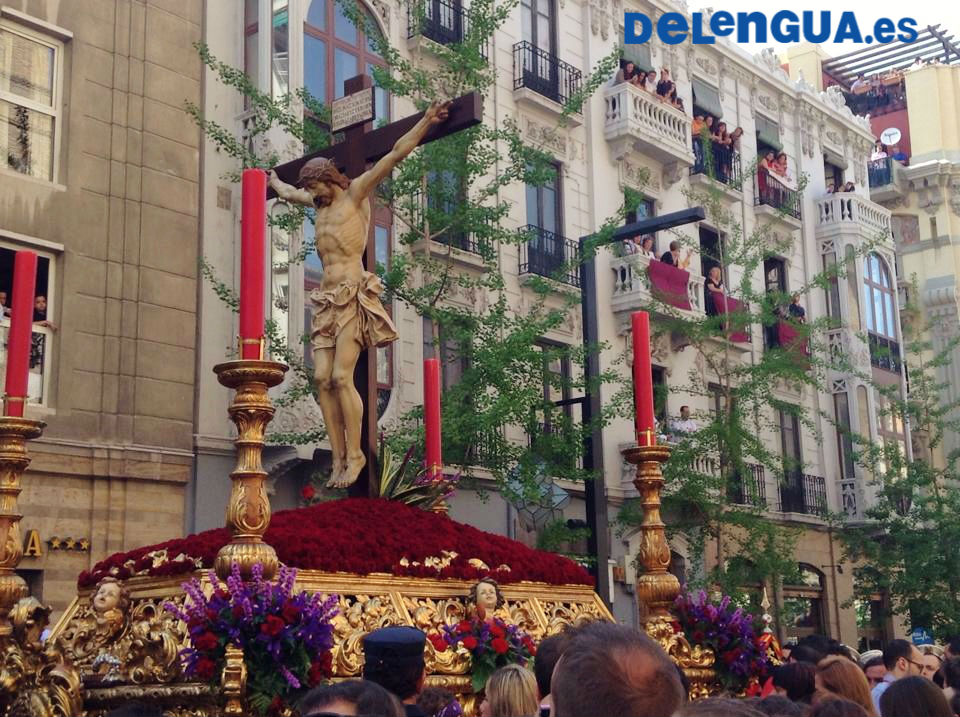
La historia del Festival se remonta al año 1883 cuando, en el Palacio de Carlos V, el maestro Arbós y la Orquesta Sinfónica de Madrid actuaron juntos en un concierto. Hoy el festival forma parte de la feria del Corpus Christi.

El festival ofrece un ancho de banda de espectáculos diversos como conciertos sinfónicos, música de cámara, ballet, danza contemporánea, música arcaica o destrezas del flamenco, entre otros. Y como Granada ofrece unos escenarios perfectos, estos eventos están subrayados por los bellos bastidores de la Catedral o el Monasterio de San Jerónimo, del barrio del Albaicín o las alturas del Sacromonte. Pero no sólo los bastidores apoyan unos espectáculos inolvidables. La gran diversidad que ofrece el Festival Internacional de Música y Danza brinda algo para cada uno. Además de la magia que traen las actuaciones musicales y las danzas hay actos literarios y artes escénicas que enriquecen la tradición histórico-cultural de Granada.

¡Forma parte de este momento mágico, apúntate a un curso de español con la Escuela Delengua! Con nosotros vas a aprender español y además te introducimos en la riqueza de la cultura española y, en especial, de la cultura granadina. ¡No te pierdas el Festival de Música y Danza de Granada! ¡No te pierdas un momento mágico en la ciudad de la Escuela Delengua!

The International Music and Dance Festival in Granada invites every year the fanciers of dance and music. During twenty days you can enjoy concerts and spectacles in different places in the city.

The festival has a history since 1883 when the master Arbós and the Simphony Orchestre of Madrid acted together in a concert in the Palace of Carlos V. Today the festival is part of the feast of Corpus Christi.

The festival offers a big spectrum of diverse spectacles like sinfonia concerts, chamber music, Ballett, Modern Dance, Archaic Dance or Flamenco, between others. And like Granada offers some perfect scenes, these events are amphasized by the beautiful backdrops of the Cathedral or the Monastery of San Jerónimo, the Albaycin district and the altitudes of Sacromonte. But not just the backdrops support to make these spectacles unforgettable. The bid diversity which offers the International Music and Dance Festival brings something for everyone. Besides the magic which bring the acts of music and dance there are literal and art scene performances which enrich the historic-cultural tradition of Granada.

Be part of this magic time, inscribe for a spanish programme with the language school Escuela Delengua! With us you will learn Spanish and furthermore we introduce you in the richness of the Spanish culture and the special culture of Granada. Don’t miss the Music and Dance Festival in Granada! Don’t miss a magic time in the hometown of the language school Escuela Delengua!

Escuela granadina de Pintura/ The painting-school of Granada.

Español Inglés
La Escuela granadina de Pintura es parte de la época artística del Barroco durante el siglo XVI. Se refiere al estilo de pintura que inventó Alonso Cano, un pintor, escultor y arquitecto de Granada.

El siglo XVI está marcado por las pinturas de pintores internacionales que vivían en Granada o que pasaron un tiempo en la ciudad. Estos pintores fueron parte de la Escuela granadina de Pintura y sobresalen en la pintura de este siglo.

La primera mitad del siglo XVI está marcada por el miniaturista Juan Ramírez, que es conocido por sus retatablos de la ermita de los Mártires en el Museo granadino. Pero la gran talla de esta época es Pedro Machuca, un gran arquitecto español. Él marcó la época del triunfo por el retablo de Santa Ana en la Capilla de Pulgar, en 1531. También trabajó junto con Jacobo Florentini en el retablo de la Capilla Real.

Desde 1532 hasta 1546 las pinturas de los italianos Julio Aquiles y Alejandro Mayner llamaban la atención. Hechas en fresco, en el peinador de la reina en la Alhambra, estas obras abundantes muestran escenas de la conquista de Túnez.

Nombres importantes para la Escuela de Pintura en Granada fueron, en la segunda etapa del siglo, Juan de Aragón o Sánchez Cotán. Juan de Aragón era un verdadero manierista. El manierismo se preocupaba por solucionar problemas artísticos intrincados, como desnudos retratados en posturas complicadas.

El arte español y también el de Latinoamérica son parte de un curso de la Escuela Delengua. Si te interesa conocer más sobre este tema, ¡apúntate y sumérgete en la historia del arte español!. Granada ofrece más que Tapas-Bars y la Alhambra. Descubre los detalles de esta ciudad antigua y aprende todo sobre la Escuela granadina de Pintura con nosotros, la Escuela Delengua.

The painting-school of Granada is part of the baroque era during the 16th century. It refers to the painting style which invented Alonso Cano, a painter, sculptor and architect in Granada.

The 16th century was marked by the paintings of international painters who lived in Granada or who just passed some time in the city. This painter were part of the painting-school of Granada and protrude from the painting of this century.

Half of the 16th century was marked by the miniaturist Juan Ramirez which is known for his plaque in the chapel of Mártires in the Museum of Granada. But the big size of this era is Pedro Machuca, a grand spanish architect. He marked the era of triumph with the altarpiece of Santa Ana in the Capel of Pulgar in 1531. Also he worked together with Jacobo Florentini on the altarpiece of the Royal Chapel.

Since 1532 till 1546 the paintings of the italians Julio Aquiles and Alejandro Mayner attracted the interest. Made as Fresco, in the boudoir of the Queen in the Alhambra, these abundant works show scenes of the capture of Tunisia.

Important names for the painting school of Granada in the second part of the century were Juan de Arabón or Sánchez Cotán. Juan de Aragón was a real Mannerist. The Mannerism worked on a solution for problems which tangled artists, like portaits of nakeds in complicated postures.

The spanish art as well as the art of Latinoamerica is part of one of the spanish courses of the Escuela Delengua. If you are interested in knowing more about this topic, just inscribe yourself and submerge in the history and art of Spain. Granada offers more than Tapas-Bars and the Alhambra. Discover the details of this antique city and learn more about the painting-school of Granada with us, the Escuela Delengua.

Pablo Picasso

Posted on June 12th, 2009 in Arte/ Art,Historia/ History,Spanish Courses Blog (english-spanish) by Laurie
Español English
Pablo Picasso, uno de los mayores pintores del siglo veinte, nació en 1881 en Málaga, en la plaza de la Merced. También su padre era pintor y profesor de dibujo.  Comienza a pintar sus primeras obras de arte muy temprano: a los ocho años realiza « El Picador », una obra de la que nunca quiso separarse. Pero no va a quedarse mucho tiempo en Andalucía.
En 1895 se muda a Coruña, descubre Madrid y Barcelona y a la edad de dieciséis años es recibido en la Academia de San Fernando, en Madrid.
En 1901 se instala en París.
Empieza el periodo « azul » en sus obras, porque pinta con matices de este color dominante, y después ha pasado por el periodo « rosa » caracterizado por el uso de colores rosa-naranja, y la aparición de personajes de circo.
Desde 1907 hasta 1914, pinta con Georges Braque obras “cubistas”, que se caracterizan por formas geométricas simples, como cuadrados. La obra fundadora de este movimiento es Las damas de Avignon, que se puede ver en la imagen.
En 1925 hace una ruptura radical con sus antiguas obras y pinta cuadros violentos, con personas deformes, y vuelve a ser un jefe de filas del movimiento surrealista. En 1936, a principios de la guerra civil española, es nombrado director del Museo del Prado en Madrid.
En 1937, indignado por el bombardeo de la ciudad española de Guernica, pinta una de sus obras más famosas: Guernica. La define como « una herramienta de guerra ofensiva y defensiva contra el enemigo ». Es un símbolo del horror de la guerra y de las víctimas inocentes.
Después de la Segunda Guerra Mundial, realiza obras mas optimistas y alegres. Se afilia al partido comunista en 1944, prueba de que tiene convicciones políticas fuertes.
Desde 1947 y hasta su muerte, se instala en el sur de Francia, en un pueblo llamado Vallauris. Se vuelve un escritor de obras de teatro, entre otras « Las cuatro niñas », realiza esculturas de madera, de cerámica y de hierro.
Se murió el 8 de abril de 1973 en Mougins, un pueblo cerca de Cannes, en Francia mientras había invitado a unos amigos a cenar.
Existen numerosos museos sobre Pablo Picasso en el mundo, y uno está en Málaga, su ciudad de nacimiento.
En la Escuela Delengua, se puede estudiar la pintura española en el curso « Historia y Arte de España y América Latina », y descubrir la vida y las obras de tus artistas españoles preferidos.

Les demoiselles d\'Avignon

Pablo Picasso, one of the major painters of the 20th century, was born in 1881, in Malaga, in the “Plaza de la Merced”. His father was also a painter and a drawing teacher. He began to paint his first works of art when he was a child : at 8 he did “El Picador”, a work of art of which he would never be separated from. He did not stay in Andalusia, however he moved to a Coruña in 1895, then he discovered Madrid and Barcelona. When he was 16, he went to Madrid’s Royal Acadeñy of San Fernando, the country’s foremost art school.
In 1901, he moved to Paris, and Picasso’s Blue Period began (consists of somber paintings rendered in shades of blue and blue-green, only occasionally warmed by other colors, and later he passed to his “Rose period” (characterized by a more cheery style with orange and pink colors, and circus people)
Analytic cubism is a style of painting Picasso developed from 1907 to 1914, along with Georges Braque, using monochrome brownish and neutral colors and taking apart objects and “analyzing” them in terms of their shapes. « Les demoiselles d’Avignon » that you can see on the picture is the first inspiring work. In 1925, a radical break-down with his previous works and he began to paint violent and bloody paintings, with distrorted characters : he  pioneered the Surrealism. In 1936, at the beginning of the civil war he was headed Director of the Prado Museum in Madrid.
One year later his depiction of the German bombing of Guernica during the Spanish Civil War was born : Guernica. It was “an ofensive and defensive war tool towards the enemy”. his large canvas embodies for many the inhumanity, brutality and hopelessness of war.
Later on the World War 2, his works were more optimistic and joyful.
In 1944 Picasso joined the French Communist Party.

From 1947 to his death he was living in the South of France, in Vallauris village. He became a drama writer (las cuatro niñas), realized wood sculptures, and ceramic and iron works.
Pablo Picasso died on 8 April 1973 in Mougins (near Cannes) while he and his wife Jacqueline entertained friends for dinner.

Many many museums dedicated to Picasso’s works and life exist in the world. In Málaga, his birth place, of course there is one too.
You can study spanishworks of Art in the “History and Art from Spain and Latinamerica” course in the Delengua School in Granada, and learn about daily life and anecdotes of your favorite and famous Spanish artists.

El Flamenco / Flamenco

Español Inglés

Aunque existen varias interpretaciones sobre el origen de la palabra “Flamenco”, la teoría más difundida es la que dice que “Flamenco” deriva del árabe “Felah-Mengus” (campesino errante).

Sin alguna duda , el Flamenco nos recuerda el pueblo gitano; este pueblo originario de la India y que llegó a España en el s.XV. Encontraron en Andalucía (una tierra donde se mezclaron árabes, judíos y cristianos) un lugar perfecto para desarrollar su musicalidad. La tradición nómada de los gitanos hace que recojan formas musicales distintas para reinterpretarlas a su manera, de ahí el carácter mestizo del Flamenco. Los gitanos llegaron a España en un momento difícil ya que los Reyes Católicos expulsaban a todos los no-católicos. Así que los gitanos desarrollaban su arte en secreto. Con el tiempo se fueron integrando cada vez más y el Flamenco empezó a tener sitio entre los bailes españoles.

A partir del s. XVIII, destacan 3 ciudades como focos de mayor importancia para el Flamenco: Cádiz, Jérez de la Frontera y el barrio de Triana en Sevilla. En esta época “Flamenco” es sinónimo de gitano andaluz. También aparece la guitarra flamenca como acompañamiento, ya que el Flamenco empezó sólo con voz y palmas.

A fines del s. XIX, el arte flamenco está muy extendido por toda Andalucía. Con la creación del primer Café Cantante impulsado por Silverio Franconetti en Sevilla, el Flamenco se profesionaliza y se convierte en género musical. Es un periodo muy prolífico que se ha llegado a llamar “ La Edad de Oro del Flamenco”.

Pero esta profesionalización no gustó a los puristas como Manuel de Falla (compositor) y Federico García Lorca (poeta), los dos de Granada. Así que crearon un concurso en Granada en 1922 para el cual exigían que los concursantes fueran desconocidos, gente del pueblo que no hubiera pisado los Cafés Cantantes. Para ellos el flamenco nace del pueblo. Ganó un niño de 13 años que se convirtió en el grande Manolo Caracol. A pesar de eso, el Flamenco siguió teniendo fama mundial y nacieron los primeros festivales.

A partir de los años 50, nos encontramos con un Renacimiento del Flamenco, siendo Antonio Mairena su figura principal. En lo que se refiere a la guitarra flamenca, ha sido gran protagonista Paco de Lucía, dando a su arte una dimensión universal. Incorporó sonidos e instrumentos de otras músicas como el jazz, la salsa o la bossa nova. Para el cante flamenco, destacan las figuras de Enrique Morente (de Granada), que trabajó con músicos hindúes y fusionó flamenco y rock; y la de Camarón de la Isla que con su estilo propio tuvo muchos seguidores.

El Flamenco hoy sigue evolucionando y manteniendo su carácter mestizo.

Aunque tenga fama mundial, sigue siendo Andalucía la capital del Flamenco. En Granada por ejemplo, se puede disfrutar de espectáculos de Flamenco en el Sacromonte (el barrio gitano de la ciudad). Sigue perdurando un estilo folclórico: la Zambra. La Zambra puede ser el espectáculo o la sala donde se desarrolla. También en el Albaicín hay muchos tablaos flamenco; destaca la Peña Platería fundada en 1949. A los pies del Albaicín, se encuentra la escuela Delengua que, además de ofrecer cursos de español todo el año, permite vivir tu pasión flamenca a través de su curso de flamenco. Además de mejorar tu nivel gracias a nuestros cursos de español, si quieres, podrás disfrutar también aprendiendo el baile flamenco y, por qué no, aprender a tocar la guitarra flamenca.

Baile Flamenco

There is a lot of theories about the origin of the word “Flamenco”. The most popular theorie says that “Flamenco” stems from the arabic word “Felah-Menguas” (“The wandering farmer).

Without any doubt,  we associate Flamenco with the Gipsy community; this people that originates from India and arrived in Spain in the 15th century. With Andalusia, a melting point of arabic, jewish and catholic culture, they found the perfect place to develop their music. Being nomadic people, the Gipsies used to pick up diffrent types of music and reinterpreted them. This  explains the mixed caracter of Flamenco. The Gipsies reached Spain in a difficult moment, when the Catholic Kings were expelling all non-catholic people. That is why they had to hide and could only develop their art secretly. With time passing by they more and more integrated Flamenco into their own music and also they started to dance spanish dances.

In the 18th century,  three cities became the most important centers for Flamenco: Cadiz, Jerez de la Frontera and the Triana neighbourhood in Seville. During that time, Flamenco was synonym for andalusian Gipsy. Also the Flamenco guitarre as acompayning instrument was introduced whilst before Flamenco consisted only of singing and hand clapping.

In the end of the 19th century the Art of Flamenco had spread all over Andalusia.With the creation of the first Flamenco bars, so called “Cafés Cantantes”, Flamenco was played more and more professionally and became an actual music genre. We call this very prolific period today the “Golden age of Flamenco”.

However, flamenco purists like the composer Manuel de Falla or the poet Frederíco García Lorca, both from Granada, did not apreciate the professionalisation of Flamenco. In 1922 they organised a competition for unknown flamenco musicians from the countryside who had never entered a “Café Cantante”. The purists saw Flamenco tightly connected to the villages in the countryside. A 13 year old boy, who would later become famous as the grand Manolo Caracol,  won the competition. However the professionalisation was not to stop. Flamenco became famous in the whole world and there were more and more Flamenco festivals.

In the 50ies Flamenco experienced a renaissance. Antonio Mairena and the guitarre player Paco de Lucía were its protagonists. The included new instruments and with them influences from other types of music like jazz, salsa or bossa nova  in traditional Flamenco. Enrique Morente and Camarón de la Isla were two of the most popular Flamenco singers. They developped what later was called Flamenco fusion, a fusion of Flamenco and other types of music.

Today Flamenco is still developping and maintaining ist mixed caracter.

Even though it is world famous, Andalusia is still the Capital of Flamenco. In Granada you can enjoy amazing flamenco shows in the Sacromonte, the Gipsy neighboorhood of Granada. Also in the Albaycin, in the arabic quarter, you can find a lot of flamenco bars. The Spanish school Escuela Delengua is situated in this beautiful, historic neighbourhood. Delengua offers not only regular Spanish courses, but also Flamenco dance classes. If you would like to improve your Spanish and at the same time live your passion for Flamenco or even learn how to play Flamenco guitarre, you should join us and do a Spanish course at Delengua.