
Festival de Granada “Cines del Sur”/ Film Festival of Granada “Cines del Sur”

Español Inglés
Este año por 5º año consecutivo, del 4 al 10 de junio, Granada celebra el Festival “Cines del Sur”, que tiene como objetivo las obras cinematográficas de los países adscritos normalmente como el sur geopolítico. Países como Georgia, Kazajstán, Israel, Cuba, Taiwan, Irak, Palestina, Australia, Irán o México, entre otros, han participado con sus producciones cinematográficas en el festival de Granada.
Con un estilo muy especial, pero no menos interesante  que el cine de otros países, “Cines del Sur” presenta obras cinematográficas animadas, de ficción o de comedia, películas de amor o de horror, para pensar o sólo para disfrutar. Pero casi siempre con un mensaje que puede enriquecer nuestra vida.
Entre inauguración y clausura los espectadores y también el jurado esperan muchas películas de varios países en escenarios bonitos de la ciudad. Por ejemplo delante de la catedral en la Plaza de las Pasiegas o en varios cines de la ciudad.
El jurado elige ganadores en siete categorías. El premio Alhambra de Oro, al mejor largometraje, está dotado con 50.000 euros y Trofeo, el premio Alhambra de Plata, al mejor guionista de largometraje, con 30.000 euros y Trofeo, y el premio Alhambra de Bronce, el premio especial del jurado, está dotado con 15.000 euros y Trofeo. Además, el Premio del Público a la mejor película, dotado con 5.000 euros y Trofeo, la mención del Jurado al mejor actor/actriz y el Premio RTVA Mediterráneos, patrocinado por Cajasol y dotado con 6.000 euros. El último Premio es el Premio Netpac que debe premiar a las dos mejores películas asiáticas.
Si quieres enriquecer tu vida con un festival de cine muy particular y también aprender español en la ciudad del festival “Cines del Sur”, ven a Granada y a la Escuela Delengua. Con nosotros aprenderás español de la manera más rápida, además de disfrutar de la vida y cultura granadina.

This year for the 5th consecutive year, from 4th to the 10th June, Granada is celebrating the “Cines del Sur” Festival. The main purpose is casting films from the countries of the geopolitical South. Countries  like Georgia, Kazakstan, Israel, Cuba, Taiwan, Irak, Palestine, Australia, Iran or Mexico take part each year in the Granada’s Festival.
With a special style but not less interesting than the cinema of other countries, “Cines del Sur” shows different genres of films: cartoons, comedies, action, adventure, romance, drama, horror,… for reflection or just enjoying.
However, there is almost always a message to enrich our daily life.
Spectators as well as the judges are hoping for a variety of films coming from different countries being shown in beautiful settings in the city of Granada. For example like in the Plaza de las Pasiegas, in front of the Cathedral, or in some of the cinemas of the city.
The judges choose winners from seven categories. The Gold Alhambra prize goes to the best feature-length film, they win a 50 000 euros prize and a trophy. The Silver Alhambra Prize goes to the best supervision of  feature-lenght film with a 30 000 Prize and a trophy, and the Bronze Prize is the special prize decided by the judges with a 15 000 euros prize and a trophy.
Moreover, the Award from the Public to the best film is awarded (with a prize of 5000 euros and a trophy), which goes to the best actor/actress who receive a prize too, and the RTVA Meditrráneos Award sponsorized by Cajasol, with a 6000 euros prize. The last but not the least of awards is called Netpac and awards the two best asian films.
If you want to go to a very special cinema festival, and also improve or learn Spanish, come to the city of the “Cines del Sur”, Granada…
The Delengua School will help you to learn Spanish quickly and give you the opportunity to enjoy and discover the granadin’s daily life and culture.

Festival Internacional de Poesía/ International Poetry Festival

Español Inglés
El FIP es un festival de Poesía tradicional, vanguardista y también político. Es un evento cultural dedicado a la poesía celebrado anualmente en la ciudad de Granada, a mediados de  mayo. En el festival participan los mejores autores del panorama poético internacional y se desarrolla en lugares emblemáticos de la ciudad. En el año 2009, la cantante famosa, Suzanne Vega, enriqueció el festival con un recorrido por sus grandes éxitos. Otro invitado de prestigio fue Wole Soyinka, el primer Nobel nigeriano que ha sido el primer autor africano en ganar el Premio Nobel de Literatura. Wole Soyinka es un símbolo de la lucha del desarrollo en África. Durante la Guerra Civil, el nigeriano pasó más de veinte meses en la cárcel. La mayoría de sus poemas más famosos fueron escritos durante su encarcelamiento. El FIP no sólo abarca a autores adultos: los directores también quieren incluir a los niños y jóvenes en el evento. Para que los adolescentes no olviden que no sólo hay Pokemon y Shin Chan, han inventado como novedad un Concurso Escolar de Poesía. Los ganadores de este concurso pueden participar en el festival y tienen la posibilidad de presentar sus obras en escena.

También los alumnos de varias facultades de la Universidad de Granada (UGR) pueden inscribirse en las Jornadas Académicas del FIP para ganar tres créditos de libre configuración. Las facultades de Filosofía y Letras, Ciencias de la Educación y Medicina participan en este concepto del festival.

Si te interesa la poesía o la literatura en general, puedes aprender más de este tema con la Escuela Delengua. Aparte de nuestros cursos intensivos de lengua española, también ofrecemos cursos del español relacionados con la literatura española o latinoamericana, o también historia, arte y negocios.

Festival Internacional de Poesía 2011

del 9 al 13 de mayo

The FIP is a festival of traditional, vanguard and as well political poetry. It’s a cultural event dedicated to Poetry, celebrated each year in Granada, in mid-May. All the best poets from the International poetry scene take part in it, and the Festival takes place in the most emblematic places in the city. In 2009, the famous singer Suzanne Vega enriched the festival with a look into all her greatest successes. Another guest was Wole Solyinka, the Nigerian Nobel Prize winner who was the first african author to win the Nobel Prize of Litterature. Wole Soyinka is a symbol of the fight for progress and development in Africa. During the Civil War the Nigerian spent more than twenty months in prison. The majority of his most famous poems were written during his captivity.

The FIP is not only aimed at adult authors, the directors also want to include children and young people in the event. Just so that the teens don’t forget that there is more than just Pókemon and Chin Chan, they have invented the School Competition for Poetry. The winners of this competition can participate in the festival and have the opportunity to present their poems.

The students from the University of Granada (UGR), too, can enroll in the Academic Department of the FIP to get three credit points for free configuration.
The faculties of Philosophy and Letters, Science and Education and the Medical Faculty participate in this part that the festival offer.

If you are interested in poetry or literature in general, you can learn more about this subject with the language school Escuela Delengua. Besides our intensive courses we offer spanish courses about spanish and latinamerican litterature or another option is our course about history and art.

Las Cruces de mayo / “May’s crosses celebration”

Español Inglés
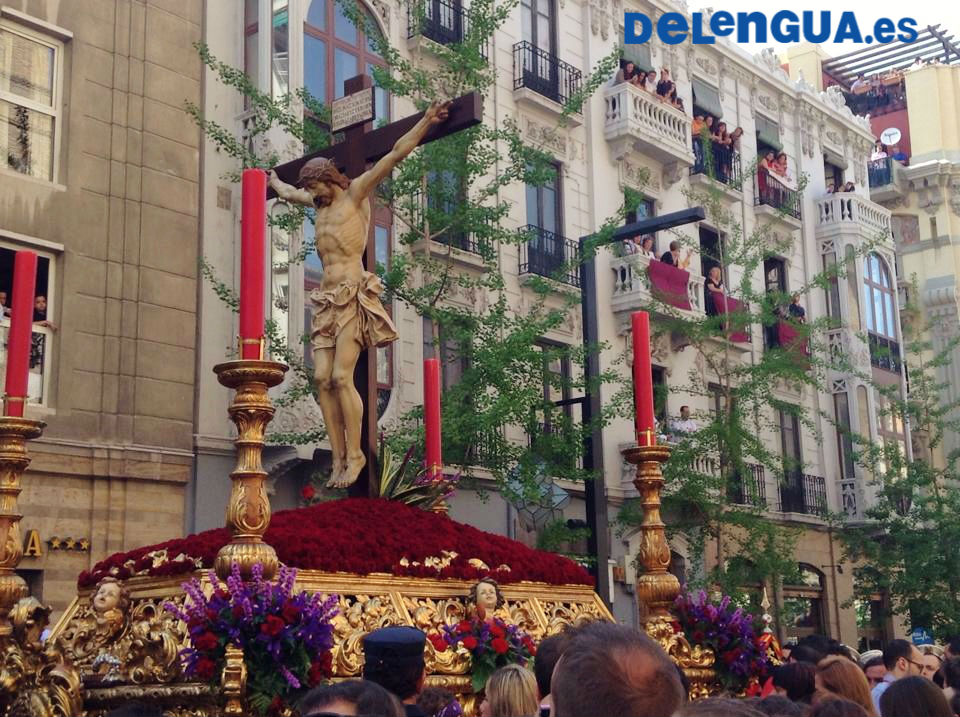
Como cada año, el 3 de Mayo Granada celebra el día de la Cruz. Esta fiesta se celebra en muchos lugares de España y en la mayoría de los países de Latino América, pero en ninguna ciudad se celebra con tanto fervor y entusiasmo como en Granada. Es una de las fiestas más bonitas de la provincia.

En la ciudad de origen de la Escuela Delengua el día en que se encontró la Cruz de Cristo siempre se llena de colores vivos. Autóctonos y forasteros se dan, cada año, cita en esta fiesta tradicional de la ciudad andaluza.

Muchos lugares de la ciudad se adornan con flores y cruces de flores pueblan la maravillosa ciudad. La flor típica de la fiesta es el clavel rojo, del cual van forradas las enormes cruces. Ya el día de antes ó, incluso, varios días antes del gran día, los vecinos preparan los patios para que luzcan unos más que otros. Las mujeres, jóvenes y mayores, se visten de Flamenca y en algunos bares como también en la calle se puede disfrutar de una fiesta del baile andaluz.

Se trata de un encuentro multicultural, ya que tanto Granadinos como forasteros celebran la fiesta de las Cruces juntos. La gente suele venir de todas partes del país y también del mundo. En la calle se habla español, inglés, francés, alemán y muchos idiomas más. Y también donde no hay tanta tradición triunfan las ganas de celebrar y el tinto de verano.

Si quieres vivir y celebrar con nosotros la fiesta de las Cruces, puedes compaginarla perfectamente con un curso de español impartido por la Escuela Delengua, donde además se realizarán actividades relacionadas con esta fiesta.

Every year on 3rd May, Granada celebrates the Day of the Cross. This holiday is celebrated in many places in Spain as well as in most Latin American countries,but in no other city is the day celebrated in such a way as it is in Granada. It is one of the most beautiful celebrations in the province.

Escuela Delengua’s city of origin always finds itself full of vibrant colours on the Day of the Cross. Natives and foreigners get together every year for this traditional celebration in the Andalusian city.

Many places in the city are decorated with flowers and there are crosses of flowers which populate the marvelous city. The flower typical of this holiday is the red carnation, enormous crosses are covered in them. The day before or even several days before the big day, the people of Granada prepare their patios so that they look nice for the speacial occasion. Women,old and young dress up in Flamenco dresses and in bars as well as in the streets, they celebrate the Andalusian dance.

It is a multicultural meeting, you find so many people from Granada, as well as foreigners celebrating the holiday of the Crosses together. People come not only from all over the country but also from all over the world. In the streets they speak Spanish, English, French, German and many other languages. Where there is not as much tradition, they enjoy the celebration and the Spanish drink, « el tinto de verano ».

If you want to experience and celebrate the Day of the Cross with us, you can combine it perfectly with a Spanish course at Escuela Delengua, where
they too hold activities relating to this holiday.

Cursos de español para todas las edades/Spanish courses for all ages

Español Inglés

La Escuela Delengua es una escuela de español con un ambiente muy internacional. Hay una buena mezcla entre estudiantes provenientes de países europeos como Alemania, Gran Bretaña, Países Bajos, Francia, Dinamarca o Italia, o incluso de países lejanos como Japón, Australia o Estados Unidos. También la edad de los estudiantes varía mucho. Normalmente, los estudiantes tienen una edad entre 20 y 30 años, pero por supuesto hay también estudiantes más jóvenes y más mayores.

Un estudiante bastante especial era el Sr. Knut Osterhelt, un danés de 79 años que hizo un curso de español en la Escuela Delengua durante una semana en noviembre. Al profesor de alemán jubilado, que también tiene conocimientos de francés e italiano, le encantan las lenguas romances en general y por eso se decidió hace unos años a estudiar español.

Empezó con autoaprendizaje en casa, porque dice que con un cierto conocimiento de un idioma se aprende mucho más en el curso. Durante los últimos tres años ha hecho 4 cursos de español, uno en Salamanca, otro en Dinamarca y dos en la Escuela Delengua en Granada. Aunque había pausas largas entre los cursos, siempre siguió estudiando en casa, por ejemplo a través de la lectura. A Knut Osterhelt le gusta mucho la literatura sudamericana, sobre todo las novelas de Mario Vargas Llosa.

Decidió inscribirse de nuevo en un curso de español con el fin de mejorar su español de uso diario para sentirse más seguro cuando viaja por España, y además para mejorar la pronunciación, que es lo que le cuesta más de la lengua española y que le parece mucho más difícil que, por ejemplo, la pronunciación del francés.

Durante su estancia vivió con una familia española, junto a una pareja holandesa que también hizo un curso de español en la Escuela Delengua. Se decidió por esa forma de alojamiento para conocer la vida diaria de una familia española y para poder practicar el español también fuera de las clases.

Escogió la ciudad de Granada para hacer un curso de español porque a él le interesa mucho Andalucía y su historia, en particular las ciudades Granada y Córdoba. Lo que le gusta más de Granada es que la ciudad no es demasiado grande ni demasiado pequeña, y que hay muchos monumentos y lugares maravillosos como la Alhambra, el Albaicín, la Catedral, etc. Sin embargo hay también una cosa que no le gusta: que hay muchos perros en la calle y por eso hay que tener mucho cuidado de dónde se pisa… Al fin y al cabo, recomendaría en todo caso hacer un curso de español, o en España o donde sea, y ya está planeando su próxima visita a Granada.

El estudiante Knut Osterhelt con su profesor de español

Escuela Delengua is a Spanish Language School that has an international environment. There is a great mix of students coming from european countries like Germany, Great Britain, the Netherlands, France, Denmark and Italy, or even from distant countries like Japan, Australia and the USA. The students are always a variety of ages. Normally, the students are between 20 and30 years old, but there are of course also older or younger students.

A very special student was Mr. Knut Osterhelt, a 79 year old Dane who did a Spanish language course at Escuela Delengua for one week in November. The retired German teacher, who has also some knowledge of French and Italian, has a great interest in roman languages in general, and therefore he decided to start studying Spanish a few years ago.

He started by studying on his own, because he said that with a certain knowledge of a language you can learn a lot more in the course. In the last three years he has done four Spanish courses, one in Salamanca, one in Denmark and two at Escuela Delengua in Granada. Although he had big breaks between the courses, he always continued studying at home, by reading for example. Mr Osterhelt likes Latin American literature a lot, most of all he likes the novels by Mario Vargas Llosa.

He decided to enrol again for a Spanish course with the aim of improving his everyday Spanish to feel more confident while travelling through Spain, and furthermore to improve the pronunciation, which he considers the most difficult aspect of the Spanish language and more complicated than for example the pronunciation of French.

During his stay he lived in a Spanish host family, together with a Dutch couple who also did a Spanish course at Escuela Delengua. He chose this type of accomodation to get to know the everyday life in a Spanish family and to be able to practise his Spanish outside the classroom.

He chose the city of Granada to do a Spanish course because he is very interested in Andalusia and its history, especially in the cities Granada and Cordoba. What he likes most about Granada is the fact that the city is neither too big nor too small, and that there are many wonderful monuments and places like the Alhambra, the Albaicin, the Cathedral etc. Nevertheless, there’s also one thing he doesn’t like: that there are so many dogs in the streets and so you have to watch your step… In the end, he would always recommend doing a Spanish course, in Spain or wherever, and he’s already planning his next visit to Granada.

Spanglish: Un “idioma” moderno/A modern “language”

Español Inglés
«Hola, good morning, ¿cómo estás?

«Fine, ¿y tú?»

«Todo bien. Pero tuve problemas parqueando my car this morning.»

«Sí, I know. Siempre hay problemas parqueando in el área at this time».

Aunque suena raro, esto es una conversación típica en “spanglish”. Esta mezcla del inglés y español se usa mucho, sobre todo en los Estados Unidos, en estados con una población grande de hispanohablantes como California, Texas, Nuevo México o Florida.

El spanglish no es un idioma oficial, sino coloquial, y los hablantes usan esta mezcla de idiomas inconscientemente. De esa manera, la lengua puede cambiar varias veces durante una sola frase. Este fenómeno se llama code-switching. Normalmente, eso indica que el hablante tiene conocimientos de más de una lengua, pero con dominio limitado de una de ellas, lo que le obliga a cambiar -inconscientemente- los idiomas para poder expresar todo lo que quiere decir. Además, los “spanglishhablantes” usan muchos “falsos amigos”, como por ejemplo “vacunar la carpeta” en vez de “aspirar la alfombra”, que deriva del ingles “vacuum the carpet”. Otro fenómeno del spanglish es la adaptación de palabras o expresiones de origen inglés al español. Se dice por ejemplo “Te veo” (“See you”) en vez de “Hasta luego”, “parquear el carro” (“to park a car”) en vez de “estacionar el coche” o “arguar” (“to argue”) en vez de “discutir”.

El spanglish ya está tan establecido en la vida cotidiana que hay numerosos libros sobre ese tema. Uno de los más conocidos es “Spanglish: The Making of a New American Language” de Ilan Stavans. Incluso hay algunos que están escritos en spanglish, como por ejemplo la novela “Yo-Yo Boing!” de la autora puertorriqueña Giannina Braschi. Además hay diccionarios del spanglish, como por ejemplo “El Diccionario Del Español Chicano” de Roberto Galvan donde se explican palabras y expresiones que normalmente no se encuentra en un diccionario estándar.

En Escuela Delengua no hay clases de spanglish, pero cursos de cultura de España y América Latina donde se trata también del fenómeno de “spanglish”.


La bandera oficial del “Spanglish”
«Hola, good morning, ¿cómo estás?

«Fine, ¿y tú?»

«Todo bien. Pero tuve problemas parqueando my car this morning.»

«Sí, I know. Siempre hay problemas parqueando in el área at this time».

Although it sounds strange, this is a tipical conversation in “Spanglish”. This mixture of English and Spanish is quite common, most of all in the USA, in those states that have a high number of inhabitants of Latin origin, like California, Texas, New Mexico or Florida.

Spanglish is not an official but colloquial language, and speakers mix up the two languages unconsciously. Because of this, the language can change several times within one sentence. This phenomenon is called code-switching. Normally, this indicates that the speaker has a knowledge of more than one language, but with a limited mastery of one of them, which forces him two switch -unconsciously- between two languages to be able to express everything. Furthermore, Spanglish speakers make much use of “false friends”, like “vacunar la carpeta” instead of “aspirar la alfombra”, which derives from the English expression “to vacuum the carpet”. Another phenomenon is the assumption of English words or expressions. For example, Spanglish speakers say “Te veo” (“See you”) instead of “Hasta luego”, “parquear el carro” (“to park a car”) instead of “estacionar el coche” or “arguar” (“to argue”) instead of “discutir”.

Nowadays, Spanglish is so established in everyday life that there are numerous books about this topic. One of the most known is “Spanglish: The Making of a New American Language” by Ilan Stavans. There are even some books written in Spanglish, for example the novel “Yo-Yo Boing!” written by the Puerto Rican author Gianna Braschi. Furthermore, there are also dictionaries of Spanglish, for example “The Dictionary of Chicano Spanish” by Roberto Galvan containing Spanglish words and expressions you normally can’t find in a standard dictionary.

At Delengua Spanish Language School you can’t learn Spanglish, but you can participate in a specific course about Spanish and Latin American culture, where you also learn something about the phenomenon of “Spanglish”.

La Universidad de Granada: una Universidad española con ambiente internacional/The University of Granada: a Spanish University with international atmosphere

Español Inglés
La Universidad de Granada es una de las universidades más grandes e importantes de España. Fue fundada en el año 1531 por una iniciativa del emperador Carlos V, que quería reinstaurar los estudios universitarios que tienen una larga tradición en Granada, sobre todo durante el Reino Nazarí.

La UGR tiene siete Campus Universitarios: cinco en Granada, un campus en Ceuta y otro en Melilla en el norte de África. En total la universidad dispone de 28 centros docentes (22 facultades y 6 escuelas), donde se ofrecen 75 titulaciones diferentes.

Granada siempre fue una ciudad de encuentro de culturas, y hoy más que nunca, sobre todo gracias a su universidad. La Universidad de Granada es de hecho el primer destino de los estudiantes del programa Erasmus provenientes de toda Europa, y la segunda universidad española en envío de estudiantes propios. Con más de 80.000 estudiantes, de los cuales aproximadamente 2.500 son extranjeros, la universidad de Granada  es una de las universidades españolas más internacionales.

Aparte de los acuerdos hechos con las universidades europeas por el programa Erasmus, la universidad de Granada tiene acuerdos con muchas universidades extranjeras en todo el mundo. De hecho hay muchos estudiantes que vienen de América Latina, de Europa del Este, del norte de África, EEUU y Canadá. Además hay mucha gente de Japón, China, Israel, Australia, países de la antigua Unión Soviética, Palestina, etc.

La gran ventaja de tener un número tan alto de estudiantes extranjeros de todo el mundo es que siempre hay oportunidades y ofertas de intercambio de idiomas. En el tiempo libre se puede ir de bares, de tapas, al cine, a las discotecas, y mucho más para mantener una conversación en todos los idiomas del mundo.

Cuando paseas por Granada de día o de noche te darás cuenta de que esta ciudad es muy joven, también gracias a la universidad. Granada es una ciudad donde siempre pasa algo y donde nunca te aburres. Entonces, si tienes pensado irte de Erasmus o pasar una estancia lingüística en España, Granada será la ciudad perfecta.

La Facultad de Bellas Artes de la UGR

El emblema de la UGR

The University of Granada is one of Spain’s biggest and most important universities. It was founded in 1531 on initiative of the emperor Charles V, who wanted to reestablish the studies at university that have a long tradition in Granada, most of all during the Emirate of Granada.

The UGR has seven campuses: five in Granada, one in Ceuta and another in Melilla in the north of Africa. Altogether, the universty dispones of 28 teaching centres (22 faculties and 6 schools), where one can obtain 75 different titles.

Granada has always been a cultural melting pot, today even more than ever, most of all thanks to its University. The University of Granada is in fact the favourite destination of Eramus students from all over Europe, and Spain’s second university in sending its own students. With more than 80,000 students, of which approximately 2,500 are exchange students, the University of Granada is one of Spain’s most international universities.

Apart from the contracts with the eurpean universities through the Erasmus program, the University of Granada has agreements with many other universities all over the world. In fact there are many students coming from Latin America, Eastern Europe, the north of Africa, the USA and Canada. Furthermore there are many students from Japan, China, Israel, Australia, the former Sovjet Union, Palestine etc.

The great advantage of having such a high number of exchange students from all over the world is that there are always opportunities and offers for a language exchange. During the free time you can go out to have a drink or to eat tapas, go to the cinema, to a disco and many other things to hold a conversation in all the languages in the world.

If you go for a walk through Granada by day or by night you will notice that this city is quite young, also thanks to its university. Granada is a city where there´s always happening something and where you never get bored. So, if you have planned to go on Erasmus exchange or to do a language stay in Spain, Granada will be the perfect city.

La cultura gitana: un componente esencial de Granada/The Gypsy culture: an essential part of Granada

Español Inglés
Granada es y siempre ha sido una ciudad multicultural. Aparte de influencias cristianas, árabes, y judías hay otra población que caracteriza la cultura de Granada: los romaníes. Pero, ¿quiénes son los romaníes y de dónde vienen? No se puede imaginar la ciudad de Granada sin los gitanos, como son llamados también, pero sin embargo no se sabe mucho sobre ellos.

Mucha gente asocia a los gitanos con la Europa Oriental. No obstante, originalmente son del norte de la India. Hay una teoría que dice que los romaníes (y los sinti) dejaron su país en el siglo XIV y marcharon como artesanos hacía Europa. Así se convirtieron de un pueblo sedentario a un pueblo errante. Hasta el día de hoy hay grupos de romaníes que van de un lugar a otro vendiendo artesanía.

Los gitanos llegaron a España en el siglo XV. Al principio, las relaciones entre la población local y los gitanos fueron en general buenas. Sin embargo, con la llegada al trono de los Reyes Católicos en 1469, la situación cambió radicalmente. Los gitanos tenían un plazo de dos meses para buscar un domicilio, trabajo y para abandonar su forma de vestir y sus costumbres. Si no cumplían esto, les amenazaron con la expulsión del país. Durante los siglos siguientes hubo varios intentos de extinguir la raza de los gitanos en España. Con el tiempo, la situación ha mejorado y los gobiernos han introducido varias medidas para una integración mejor. Sin embargo, hasta el día de hoy, aunque hay una ley contra la discriminación de los romaníes, este pueblo sigue siendo discriminado.

En Granada y toda Andalucía, los gitanos forman hoy en día una parte importante de la vida cultural. Por comunidades autónomas, Andalucía cuenta con la mayor población de gitanos con cerca de 300.000, casi un 5% del total de la población de la comunidad. Una parte de la cultura andaluza que siempre se asocia con los romaníes es el flamenco. Los gitanos siempre habían sido un pueblo cantante, y encontraron en Andalucía el lugar perfecto para desarrollar su música porque esta región disfrutaba de un impresionante auge cultural, artístico y científico, debido a casi ochocientos años de mezcla de culturas árabes, judías y cristianas. Después de su llegada a Andalucía, los romaníes retomaron el flamenco para ganarse la vida, y con el tiempo lo desarrollaron y se volvieron los representantes generales del flamenco. Uno de los cantaores del flamenco moderno más influyentes era Camarón de la Isla, y su álbum más vendido se llama “Soy gitano”.

Cuando estás en Granada, la influencia de la cultura gitana es algo que salta a la vista. Un ejemplo es el barrio Sacromonte, que es también conocido como el barrio de las cuevas o de los gitanos. En este barrio hay muchas casas cueva que en su mayoría están habitadas por gitanos. Lo especial de este barrio es que se puede dar un paseo por allí y encontrar a gente dando un concierto de flamenco. En la Escuela Delengua se ofrecen muchas actividades extraescolares, entre otras cosas visitas guiadas por el Sacromonte o la visita a un espectáculo de flamenco, algo que no te deberías perder si vienes a Granada.

Un espectáculo de flamenco

Las casas cueva del Sacromonte

Una casa típica del Sacromonte

Granada is and has always been a multicultural city. Apart from Christian, Arab and Jewish influences, there is another population that characterizes Granada’s culture: the Roma. But, who are the Roma and where do they come from? One can’t imagine the city of Granada without the gypsies, like they are also called, but nevertheless there’s not much common knowledge about these people.

Normally the gypsies are associated with Eastern Europe. Nevertheless, they are originally from the North of India. There’s a theory that says that the Roma (and Sinti) left their country in the 14th century and went to Europe as craftsmen. So they converted from a sedentary to a wandering people. Until today there are still groups of Roman who go from one place to another selling craftsmanship.

The gypsies reached Spain in the 15th entury. At the beginning, the relations between the local people and the gypsies were quite good. Nevertheless, when the Catholic Monarchs mounted the throne in 1469, the situation changed radically. The gypsies had a time limit of two months to find a residence, a job and to abandone their way of dressing and their costumes. If they didn’t keep to this, they were threatened with being expelled from the country. During the following centuries there were several attempts to extinguish the gypsies in Spain. In the course of time, the situation improved and the governments have introduced various measurements for a better integration. Nevertheless, although there is a law that prohibits the discrimination against the Roma, they still suffer from many disadvantages.

In Granada and whole Andalusia, the gypsies form an important part of the cultural life. Andalusia is the autonomous community with the biggest share in Roman population. The 300.000 Roma living there form 5% of the complete population. One part of the Andalusian culture that is always associated with the Roma is Flamenco. The gypsies have always been a singing folk, and in Andalusia they found the perfect place to develop their music, due to the cultural, artistic and scientific heights this region enjoyed during almost 800 years of a mixture of Arab, Jewish and Christian culture. After their arrival to Granada, the Roma took up the Flamenco to earn their keep, and in the course of time they developed it and became the main represantatives of Flamenco. One of the most influential “cantaores”, how the Flamenco-singers are called, was Camerón de la Isla, and his best-selling album was called “Soy gitano” (“I’m a Gypsy”).

When you are in Granada, you will directly perceive the influence of the gypsy-culture. One example is the district Sacromonte, which is also known as the district of the caves or of the gypsies. In this district there are many cave houses which are mostly inhabited by gypsies. What is special about this district is that you can go there for a walk and find people giving a Flamenco concert. At Delengua Spanish Language School you can participate in many activities, for example guided tours through the Sacromonte or visiting a Flamenco show, something you shouldn’t miss when you come to Granada.

Pablo Picasso: Un andaluz muy famoso/ A very famous Andalusian

Español Inglés
En Andalucía nacieron muchos artistas, entre ellos Pablo Picasso, uno de los pintores más importantes del siglo XX. Nacido en Málaga, el andaluz luego se hizo famoso y halló aprobación en todo el mundo.

Su padre también era pintor y empezó pronto a incentivar el talento de su hijo. Con ocho años, Picasso pintó su primer cuadro que es famoso hasta el día de hoy. El “Picador”, que muestra una escena en una plaza de toros, fue el principio de la carrera de un niño excepcionalmente dotado.

Tras estudiar en las Escuelas de Bellas Artes de Barcelona y Madrid y estancias en París, a principios del siglo XX empezó el así llamado período azul. Lo característico de este período era la reducción de la forma y de los colores a un mínimo. Por los dominantes colores azulados que Picasso solía usar, algunos críticos describieron sus cuadros como melancólicos. Al mismo tiempo elogiaron al pintor por sus creaciones innovadoras. Con sus obras de este período, Picasso causó por primera vez mucha sensación en el mundo del arte.

Continuó con el período rosa durante el cual Picasso se ocupó de nuevos tonos de colores, sobre todo tonos rosa y naranja. Junto con Georges Braque fundó el cubismo, un estilo que al principio se criticó mucho. En el cubismo el objeto se reduce a formas geométricas y cubos. Luego, en sus obras Picasso también usó elementos africanos, así como elementos neoclásicos y surrealistas.

Lo que siempre había fascinado a Picasso era el motivo del toro y más tarde también el minotauro. Ya su primera obra mostró una escena en una arena de toros, y después siempre de nuevo retomaba este motivo en sus cuadros.

Durante la Guerra Civil Española Picasso pintó la obra “Guernica”. Guernica es una ciudad en el norte de España que fue bombardeada durante la Guerra Civil y causó grandes estragos en la población civil. Picasso, que en aquel tiempo vivía en el exilio en Francia, se quedó horrorizado por los acontecimientos en España e intercedió a favor de los republicanos y en contra del régimen de Franco. La obra gigantesca de “Guernica” pasó a la historia como uno de los cuadros antiguerra más importantes.

Aunque nació en Málaga, Picasso nunca volvió a esa ciudad después de marcharse. Sin embargo, para los aficionados de sus obras Málaga vale un viaje, porque ahí está el Museo Picasso que expone muchos de sus cuadros. En la Escuela Delengua también se ofrecen cursos de historia y arte de España y América Latina, así como excursiones a museos de arte en los alrededores de Granada.

El pintor malageño Pablo Picasso

“El Picador”, el primer cuadro de Picasso

“Guernica”

Esta obra tiene unas  dimensiones de    3,5 x 7,8 metros

Andalusia is the birhtplace of many artists, among others Pablo Picasso, one of the most important painters of the 20th century. The Andalusian born in Málaga became famous and gained recognition all over the world.

His father was an artist as well and began early to further his son’s talent. By the age of 8, Picasso did his first painting which is still famous today. The “Picador”, which shows a scene from a bullring, was the beginning of the career of an extremely talented boy.

After having studied at the Universities of Fine Arts of Barcelona and Madrid and stays in Paris, at the beginning of the 20th century the so called Blue Period started. It was characteristic of this period to reduce the form and the colours to a minimum. Due to the dominant blues he normally used, critics described his paintings as melancholy. At the same time, they praised the painter for his innovative creations. With the works from this period, Picasso caused sensation in the art scene for the frist time.

He continued with the Rose Period in which he tackled new tones of colour, most of all tones of rose and orange. Together with Goerges Braque he pioneered cubism, a style that was criticized a lot at the beginning. In cubist artworks, objects are reduced to geometric and cubic forms. Later, Picasso used in his paintings also African elements as well as neoclassic and surrealistic elements.

A motive that had always fascinated Picasso was the bull and later also the minotaur. Yet his first painting showed a scene from a bullring, and he kept taking up this topic in his works during his career.

During the Spanish Civil War Picasso painted the work “Guernica”. Guernica is a city in the north of Spain which was bombed during the Civil War and claimed the lives of many civilists. Picasso, who lived in exile in France at that time was shocked about what was happening in Spain and was active on behalf of the Republicans and against the system of Franco. The huge painting of “Guernica” went down in history as one of the most important anti-war-paintings.

Although he was born in Málaga, Picasso never came back after he had left the city. Nevertheless, for people who are keen on his works the city is definitely worth a visit, because there’s the Picasso Museum where a great number of his paintings is exhibited. At Delengua Spanish Language School you can also participate in a specific course about Spanish and Latin American history and art, as well as in the excursions to art museums that are offered regularly.

Todos valen una visita: Los museos de Granada/They are all worth a visit: The Museums of Granada

Español Inglés
Granada tiene mucho que ofrecer. La ciudad cuenta con una historia larga y turbulenta, con un paisaje único con mar y montañas cubiertas de nieve cerca de la ciudad al mismo tiempo, y también con mucha cultura. En relación con eso, en Granada hay una multitud de museos. Sería demasiado mencionarlos todos, pero a continuación se presentan los museos mas importantes de Granada.

Museo de la Alhambra y Museo de Bellas Artes: Este magnifico museo del arte barroco se encuentra en el Palacio de Carlos V. Aquí se pueden admirar obras de Alonso Cano, Pedro Raxis, Pedro de Mena, y muchos más. Aparte de la exposición permanente también hay exposiciones temporales. En la biblioteca del museo se puede encontrar lecturas especializadas en arte y restauración, además de un gran archivo documental. El museo se encuentra en un lugar excepcional, en pleno recinto de la Alhambra en un palacio renacentista.

Museo Arqueológico: Este museo fue creado oficialmente en 1879 y ha cambiado de sede varias veces. Desde 1923, se encuentra en la Casa de Castril, que impresiona con una magnifica fachada plateresca del siglo XVI. El museo esta dividido en siete salas, donde se expone artefactos de diferentes etapas de la prehistoria humana, como por ejemplo el paleolítico, el neolítico y la Edad del Cobre, la Edad del Bronce, la antigüedad tardía y también de la historia de Andalucia.

Casa Museo Federico García Lorca: Este museo se encuentra en la Huerta de San Vicente, la casa de verano de la familia Lorca. Aquí, Lorca realizó una gran parte de su obra, por ejemplo Romancero Gitano, Poema del Cante Jondo, La Casa de Bernarda Alba y Bodas de Sangre. La Fundación García Lorca ha conseguido restaurar la casa como estaba en vida del poeta, así que un paseo por la Casa-Museo de la Huerta de San Vicente permite recordar y comprender aspectos como el ambiente y la decoración de una casa de campo granadina de principios del siglo XX, elementos concretos de la vida cotidiana de la familia Lorca, las obras escritas en la Huerta por Lorca entre 1926 y 1936, los acontecimientos que tuvieron lugar entre el 14 de julio y el 9 de agosto de 1936 y mucho más.

Museo Casa de los Tiros: Este museo es el museo de historia de la ciudad, biblioteca y además archivo de temas locales. Fue inaugurado en 1929 para servir como oficina de turismo, mientras que el resto de las salas se utilizaron para desarrollar un museo dedicado a la historia de la ciudad. El Museo está dividido en doce salas temáticas donde se exponen muestras del paisaje granadino, fotografías de la época y elementos distintivos de la artesanía granadina, barros, carteles y retratos de costumbres.

Museo del Parque de las Ciencias: Este museo, que fue fundado en 1995, es el más visitado de Granada y uno de los más relevantes del sur de Europa. Tiene una superficie de más de 70.000 metros cuadrados y es un museo interactivo para todas las edades. Consta de cuatro edificios con varias salas interactivas, de las cuales cada una tiene su propia tema científica, por ejemplo física, percepción, biosfera, astronomía, un planetario, el cuerpo humano etc. Además, el museo cuenta con áreas exteriores (con varias jardines, esculturas etc), exposiciones temporales y un Torre de Observación de 37 metros que ofrece al visitante una panorámica de la ciudad y diversas experiencias científicas y tecnológicas.

En esta ciudad llena de cultura y museos se encuentra la Escuela Delengua. Aquí se da gran importancia a que los estudiantes que hacen un curso de español no solo aprenden el idioma, sino que también conocen a la ciudad y sus peculiaridades. Por eso, se ofrecen muchas actividades a los alumnos, entre otras cosas visitas de los museos que hay en Granada.

El Palacio Carlos V, sede del Museo de Bellas Artes

El Museo Arqueológico de Granada

La fachada del Museo Casa de los Tiros

El Parque de las Ciencias

Granada has a lot to offer. The city disposes of a long and turbulent history, of a unique landscape with sea and snow covered mountains near the city at the same time, and also a lot of culture. In connection with this, in Granada there is a large number of museums. It would bee too much to mention them all, but in the following you can read about the most important museums of Granada.

Museum of the Alhambra and Museum of Fine Arts: This magnificent museum of baroque art is housed in the Palace of Charles V. Here one can look at works by Alonso Cano, Pedro Raxis, Pedro de Mena, and many more. Apart from the permanent expositions there are also temporary expositions. In the museum’s library you can find reading matters specialized in art and restauration, in addition to great documentary archives. The museum is housed in a exceptional place, inside the Alhambra in a renaissance palace.

Archaeological Museum: This museum was oficially created in 1879 and has changed its place several times. Since 1923 it is located in the Castril Palace, which impresses by its magnificent façade from the 16th century. The museum is divided into seven halls where there are hosted artefacts from the different ages of human prehistory, for example the paleolithic, the neolithic and the Chalcolithic, the Bronze Age, the late antiquity as well as the history of Analusia.

Museum House of Federico Garcia Lorca: This museum is located in Huerta de San Vicente, the summer home of Lorca’s family. Here, Lorca has composed a great part of his works, for example Romancero Gitano, Poema del Cante Jondo, The House of Bernarda Alba and Blood Wedding.The Lorca Foundation has succeeded in restoring the house as it was in Lorca’s lifetime, so that a walk through the Museum House of Huerta de San Vicente permits to remember and to understand aspects like the atmosphere and the decoration of a country house in Granada at the beginning of the 20th century, concrete elements of the everyday life of Lorca’s family, the works he wrote in this house between 1926 and 1936, the incidents that have occurred between 14 July and 9 August 1936 and a lot more.

Museum Casa de los Tiros: This museum is the city’s history museum, library and also an archives of local subjects. It was inaugurated in 1929 to serve as an office of tourism, while the other halls were used to develop a museum dedicated to the city’s history. The museum is divided into twelve thematic halls were you can look at examples of Granada’s landscape, fotographies of the age and different elements of Granada’s craftsmanship, pottery, posters and descriptions of customs.

The Science Park Museum: This museum that was founded in 1995 is Granada’s most visited museum and one of the most relevant ones in Southern Europe. It has a surface of 70,000 squaremetres and is an interactive museum for people of all ages. It consists of 4 buildings with several interactive halls, of which everyone has its own scientific theme, for example physics, perception, biosphere, astronomy, a planetarium, the human body etc. Furthermore, the museum has an outside area (with several gardens, sculptures etc), temporary expositions and an Observation Tower of 37 metres that offers a viewpoint over the City of Granada where one can experience science and technology.

In this city full of culture, there is Delengua Spanish Language School. In the school it is very important that the students who do a spanish course do not only learn the language, but also get to know the city and its special qualities. Therefore, the students can participate in many activities offered by the school, among other things visits of Granada’s museums.

Navidad en España/Christmas in Spain

Español Inglés
Cuando los días se acortan y el año se va terminando, empiezan las Navidades. En España, esta época del año empieza en mediados de noviembre, cuando los centros comerciales y las tiendas empiezan a decorar con los típicos motivos navideños y ponen música de Navidad. Además hace mucho más frío, lo que indica también que el invierno y la navidad están a la vuelta de la esquina.

Después del período prenavideño, la verdadera Navidad comienza en España el día 22 de diciembre, que es el día de la Lotería de Navidad. Este sorteo es uno de los más grandes del mundo. En total se sortean varios millones de euros y la lotería se extiende por toda España. Se puede ver el sorteo completo durante todo el día en la televisión, y se puede decir que ese es la señal de salida a la Navidad.

La tradición de la Nochebuena es totalmente familiar. Normalmente se hace una cena con la familia, típicamente con platos de marisco o aves, aunque cada región tiene su cena típica. Los postres suelen consistir en turrones y mazapanes, o también postres de origen árabe hechos de almendra y miel. A las doce de la noche los católicos practicantes asisten a la Misa del Gallo. Actualmente, los jóvenes, después de las cenas y reuniones familiares, salen a celebrar la Fiesta Navideña con sus amigos.

En España, aunque recientemente se vuelve más popular la tradición de Papa Noel debido a la influencia de la cultura estadounidense y otros países extranjeros, es tradición que los regalos de Navidad los traen los Reyes Magos en la noche del 5 al 6 de enero. Antes, los niños tienen que mandarles una carta a los reyes pidiendo los regalos que quieren, así como indicar las razones por los que se merecen recibir estos regalos. El día 5 de Enero se asiste a la llegada de los Reyes Magos, que llegan en cabalgata y recorren las calles de los pueblos y ciudades tirando caramelos. También en Granada, donde se encuentra la Escuela Delengua, hay un gran desfile por la ciudad por la tarde del 5 de enero. Hay tres hombres en caballo que representan los Reyes y cada uno va acompañado por un corte de más de 90 personas.

Por la mañana del día 6 los niños reciben sus regalos o, si han sido malos, carbón dulce. Pero los niños no son los únicos que reciben regalos, entre los adultos también es tradición regalar algo. El día 6 de enero suele ser festivo en toda España. Es típico desayunar el Roscón de Reyes, un bollo circular hecho de una masa dulce que se adorna con rodajas de fruta o confitada de colores variados. En España estos roscones suelen contener una figurita navideña.

Ahora sabes como se celebra la Navidad en España. A lo mejor algunas de estas costumbres también existen en tu país. Dondequiera que estés y con quienquiera celebres, ¡la Escuela Delengua te desea FELIZ NAVIDAD!

Unas de las cosas que pertenecen a la Navidad en España:

La cabalgata de los Reyes Magos

El carbón dulce

El Roscón de Reyes


When days draw in and the year draws to a close, Christmas time begins. In Spain, this time of the year starts in mid-November, when the shopping malls and the shops start to decorate with tipical Christmas motives and play Christmas music. Furthermore, the wheater is getting colder, which also means that winter and Christmas are very close.

After the holiday season, real Christmas in Sapin starts at 22 Decemcer, the day of Christmas lottery. This draw is one of the biggest of the world. Altogether, several millions of euros are raffled and the lottery extends all over Spain. The complete draw is broadcasted in TV through the whole day, and one can say that this is the starting signal for Christmas.

The traditions for Christmas Eve are very intimate. Normally people make a family-dinner, tipically with plates of seafood or poultry, although every region has its own tipical meals. The desserts are usually turrones (a bar containing nuts or honey-coated almonds) or marzipan, or also desserts of Arab origin made of almonds and honey. At midnight, the practising Christians go to the Misa del Gallo (“Rooster’s Mass”). Nowadays, young people meet their friends after the dinner and family reunion to celebrate Christmas Eve with them.

In Spain, although recently Santa Claus becomes more popular due to influences from the USA or other countries, the gifts are traditionally brought by the Three Kings in the night from 5 to 6 January. Before, the children have to send a letter to the Kings indicating the gifts they want for Christmas, as well as the reasons for which they think they deserve the presents. On 5 January the families go to watch the arrival of the Three Kings, who arrive in a procession and parade the streets of the villages and cities throwing sweets. Also in Granada, where Delengua Spanish Language School is located, there’s a great procession through the city in the afternoon of 5 January. There are three men on horses who represent the Three Kings and each one of them is accompanied by an entourage of more than 90 persons.

In the morning of 6 January the children receive their gifts or, if they have misbehaved, they receive carbón dulce, a sweet made of water and sugar that looks like coal. But not only the children receive gifts, its also a tradition that adults give each other presents. The day 6 January is a bank-holiday all over Spain. It’s tipical to have Roscón de Reyes for breakfast, a circular bun made of a sweet dough which is decorated with slices of fruits or glacé fruit in different colours. Normally these buns contain a small Christmas figure.

Now you know how Christmas is celebrated in Spain. Perhaps some of these costumes do also exist in your country. Wherever you are and whoever you celebrate with, Escuela Delengua wishes you a MERRY CHRISTMAS!