

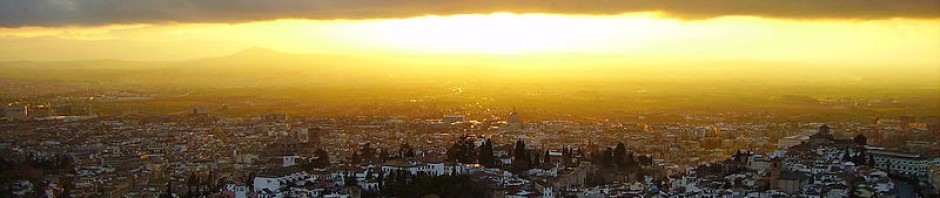
Granada y sus alrededores de costas y playas bonitas // Granada and its surrounding beautiful beaches and Coasts

Español Inglés
Los alrededores del Sur Granada son famosos por sus preciosas playas.Situada entre la famosísima Costa del Sol y Almería, la banda de arena fina de la costa Tropical, de sólo unos 60 kms, se ubica al Sur de la ciudad histórica de Granada, que también es conocida por Costa de Granada.

La Costa Tropical de Granada tiene mucho que ofrecer:
El clima, muy agradable, unido a unas maravillosas playas andaluzas y las numerosas ofertas hoteleras y gastronómicas conciben un destino turístico de mucho éxito.

Esta costa posee tantos atractivos turísticos y lugares insólitos que cada año son elegidos por numerosos viajeros de todas partes del mundo para disfrutar de sus vacaciones de verano en un bello entorno.

Es más, todos los que una vez hayan venido, quieren volver, y volverán.

Por supuesto, en el programa de actividades de la Escuela Delengua hay excursiones organizadas para descubrir playas tan bonitas como las de las imágenes de este artículo.

Para descansar después de un curso intensivo de español, irse a la playa con los compañeros de clase y amigos para disfrutar del buen tiempo es lo ideal. Los destinos de una excursión pueden ser Salobreña, Nerja, Almuñécar…

Salobreña está ubicada en el medio de la Costa Tropical de Granada que se extiende hacia el Oeste (localidades de Almuñécar y La Herradura) y hacia el Este (Motril, puerto).
Salobreña es la localización más cercana a Granada.
Aproximadamente unos 45 minutos en coche y una hora en autobús.

Costas de Andalucía // Andalusian coasts

Costa Tropical: la Herradura

Costa del Sol : Nerja

Costa Tropical : Salobreña

The south of Granada is very famous for its beautiful beaches.
Situated between the Costa del Sol and Almeria, the strip of fine sand of the Tropical Coast is just 60 km south of the historic city of Granada and is also known as the Granada Coast.

The Tropical Coast of Granada has a lot to offer:
A very pleasant climate , combined with marvellous  andalusian beaches, and numerous hotels and restaurants, it is also known as a very successful tourist destination.

This Coast has many tourist attractions and unusual places full of charm that each year are chosen by many travellers from all over the world, to enjoy their summer holidays  in a beautiful setting.

It’s more, those who come once and who want to come back again, and again.

Of course, in the activities program of Escuela Delengua, there are excursions organised so that you can discover beaches as beautiful as the ones you can see in the pictures.

To relax after an Intensive Spanish course, going to the beach with your classmates and friends to enjoy the scorching weather, is ideal. The excursions can be to Salobreña, Almuñecar, Nerja…

Salobreña is situated on the coast in the centre of the Tropical Coast of Granada which extends to the west to Almuñecar & La Herradura, and to the east to the Spanish working town and port of Motril.
It is the closest coast from Granada, no more than 45 minutes by car and one hour by bus.

Energía Solar en Andalucía, España / Solar Energy in Andalucia, Spain

Español Inglés
La energía solar es la energía obtenida directamente del sol, la cual podemos utilizar para crear electricidad y producir agua caliente sanitaria. De hecho, la cantidad de energía que recibimos del sol en 30 minutos equivale a la consumida por los humanos en un año. El uso de la energía solar tiene muchas ventajas para la preservación del medio ambiente porque es un recurso natural inagotable y no contaminante, lo que ayuda a disminuir los efectos del cambio climático.

España es uno de los países de Europa que más horas de sol tiene, además de ser uno de los más avanzado en el mundo en cuanto al desarrollo de la energía solar que se sitúa por delante de Estados Unidos y de la India. Hay dos tipos principales de placas solares, las más habituales son las fotovoltáicas, que generan electricidad y las otras son las térmicas que permiten obtener agua caliente de uso doméstico, calentar piscinas y hacer funcionar sistemas de calefacción.

Andalucía es la que más sol tiene de toda España y puede presumir de ser la comunidad autónoma española que concentra el mayor número de instalaciones solares térmicas en el país. Le región cuenta con seis de las diez centrales que ya funcionan en España,  dos de ellas se sitúan en la provincia de Granada. Con la energía que se obtiene en Andalucía pueden abastecerse de agua caliente más de 207.200 hogares. La comunidad andaluza está a favor de este recurso energético renovable y ecológico ya que proporciona garantías medioambientales y apuesta por desarrollar la sostenibilidad de la región.

En Mayo la Escuela Delengua realiza un curso sobre medio ambiente y sostenibilidad en Granada, España. Los estudiantes podrán mejorar su vocabulario y fluidez verbal en español y al mismo tiempo aprender sobre la situación actual del medio ambiente en Granada y de los progresos de sostenibilidad que han sido lanzados en esta ciudad de Andalucía.

Solar Energy is the energy that we obtain directly from the sun, we can use this energy to create electricity and to produce sanitary hot water. In fact, the amount of energy that we can recieve on earth in 30 minutes from the heat from the sun is the same as the amount consumed by humanity in a year. The use of solar energy has many advantages for the conservation of the environment because it is inexhaustible and non-pollutant and therefore it helps to lower the affects of climate change.

Spain is one of the countries in Europe that has the most hours of sun and now it is one of the most advanced in the world in the development of solar energy, putting itself ahead of the United States and India. There are two main types of solar panels, the most frequently used are the photovoltaic that generate electricity. The others are thermal that allow us to get hot water for domestic use, to heat swimming pools and to work heating systems.

Andalucia gets the most sun in Spain and it can presume to be the Spanish autonomous region that has the largest number of thermal solar installations in Spain. The region has six of the ten stations that are already working in the country, two of which are in the province of Granada. With the energy that is obtained in Andalucia, they can supply hot water for more than 207.200 homes. The Andalucian community is very much in favor of this renewable and clean energy that provides environmental guarantee and is sure to develop the sustainability of the region.

In May, at Escuela Delengua, there is a course on the environment and sustainability of Granada, Spain. The students will be able to improve their vocabulary and fluidity in Spanish while at the same time learning about the current environmental situation in Granada and about the progresses in sustainability that have been reached in this city of Andalucia.

Pablo Picasso: Un andaluz muy famoso/ A very famous Andalusian

Español Inglés
En Andalucía nacieron muchos artistas, entre ellos Pablo Picasso, uno de los pintores más importantes del siglo XX. Nacido en Málaga, el andaluz luego se hizo famoso y halló aprobación en todo el mundo.

Su padre también era pintor y empezó pronto a incentivar el talento de su hijo. Con ocho años, Picasso pintó su primer cuadro que es famoso hasta el día de hoy. El “Picador”, que muestra una escena en una plaza de toros, fue el principio de la carrera de un niño excepcionalmente dotado.

Tras estudiar en las Escuelas de Bellas Artes de Barcelona y Madrid y estancias en París, a principios del siglo XX empezó el así llamado período azul. Lo característico de este período era la reducción de la forma y de los colores a un mínimo. Por los dominantes colores azulados que Picasso solía usar, algunos críticos describieron sus cuadros como melancólicos. Al mismo tiempo elogiaron al pintor por sus creaciones innovadoras. Con sus obras de este período, Picasso causó por primera vez mucha sensación en el mundo del arte.

Continuó con el período rosa durante el cual Picasso se ocupó de nuevos tonos de colores, sobre todo tonos rosa y naranja. Junto con Georges Braque fundó el cubismo, un estilo que al principio se criticó mucho. En el cubismo el objeto se reduce a formas geométricas y cubos. Luego, en sus obras Picasso también usó elementos africanos, así como elementos neoclásicos y surrealistas.

Lo que siempre había fascinado a Picasso era el motivo del toro y más tarde también el minotauro. Ya su primera obra mostró una escena en una arena de toros, y después siempre de nuevo retomaba este motivo en sus cuadros.

Durante la Guerra Civil Española Picasso pintó la obra “Guernica”. Guernica es una ciudad en el norte de España que fue bombardeada durante la Guerra Civil y causó grandes estragos en la población civil. Picasso, que en aquel tiempo vivía en el exilio en Francia, se quedó horrorizado por los acontecimientos en España e intercedió a favor de los republicanos y en contra del régimen de Franco. La obra gigantesca de “Guernica” pasó a la historia como uno de los cuadros antiguerra más importantes.

Aunque nació en Málaga, Picasso nunca volvió a esa ciudad después de marcharse. Sin embargo, para los aficionados de sus obras Málaga vale un viaje, porque ahí está el Museo Picasso que expone muchos de sus cuadros. En la Escuela Delengua también se ofrecen cursos de historia y arte de España y América Latina, así como excursiones a museos de arte en los alrededores de Granada.

El pintor malageño Pablo Picasso

“El Picador”, el primer cuadro de Picasso

“Guernica”

Esta obra tiene unas  dimensiones de    3,5 x 7,8 metros

Andalusia is the birhtplace of many artists, among others Pablo Picasso, one of the most important painters of the 20th century. The Andalusian born in Málaga became famous and gained recognition all over the world.

His father was an artist as well and began early to further his son’s talent. By the age of 8, Picasso did his first painting which is still famous today. The “Picador”, which shows a scene from a bullring, was the beginning of the career of an extremely talented boy.

After having studied at the Universities of Fine Arts of Barcelona and Madrid and stays in Paris, at the beginning of the 20th century the so called Blue Period started. It was characteristic of this period to reduce the form and the colours to a minimum. Due to the dominant blues he normally used, critics described his paintings as melancholy. At the same time, they praised the painter for his innovative creations. With the works from this period, Picasso caused sensation in the art scene for the frist time.

He continued with the Rose Period in which he tackled new tones of colour, most of all tones of rose and orange. Together with Goerges Braque he pioneered cubism, a style that was criticized a lot at the beginning. In cubist artworks, objects are reduced to geometric and cubic forms. Later, Picasso used in his paintings also African elements as well as neoclassic and surrealistic elements.

A motive that had always fascinated Picasso was the bull and later also the minotaur. Yet his first painting showed a scene from a bullring, and he kept taking up this topic in his works during his career.

During the Spanish Civil War Picasso painted the work “Guernica”. Guernica is a city in the north of Spain which was bombed during the Civil War and claimed the lives of many civilists. Picasso, who lived in exile in France at that time was shocked about what was happening in Spain and was active on behalf of the Republicans and against the system of Franco. The huge painting of “Guernica” went down in history as one of the most important anti-war-paintings.

Although he was born in Málaga, Picasso never came back after he had left the city. Nevertheless, for people who are keen on his works the city is definitely worth a visit, because there’s the Picasso Museum where a great number of his paintings is exhibited. At Delengua Spanish Language School you can also participate in a specific course about Spanish and Latin American history and art, as well as in the excursions to art museums that are offered regularly.

Los Piononos: una dulce especialidad de Granada/a sweet speciality from Granada

Español Inglés
El pionono es un pastel de tamaño pequeño que se elabora tradicionalmente en Santa Fe, una población muy cerca de la ciudad de Granada.

Está compuesto de dos partes. La base del pastel es una fina lámina de bizcocho enrollado en forma de cilindro. Esto se empapa con un líquido muy dulce que le da su textura especial. Después se llena la base con crema tostada y se los espolvorea con canela. El pionono es un pastel dulce y muy rico, y por su consistencia líquida se debería comer de uno o dos bocados. Es muy conocido por los granadinos y los andaluces en general y se suele servir como postre durante todo el año. No obstante, fuera de la región estos pastelitos normalmente no se conocen.

El origen de los piononos no se sabe exactamente y las historias que se cuentan sobre sus orígenes son muy confusas. Los primeros indicios de aparición de un pastelillo parecido al pionono proceden de la España hispano-musulmana entre los siglos X y XI. En esta época de mestizaje cultural había muchas innovaciones en el sector de la política, literatura, arte y por supuesto también en la gastronomía. Por eso, la procedencia mas probable es que la receta sea un resultado de la influencia árabe, por los ingredientes típicos de la repostería de la época hispano-musulmana como la canela o la miel, que llevan también los piononos.

La creación del pionono como lo conocemos hoy se debe a los habitantes de Santa Fe que conservaron la receta como parte de su herencia árabe por encima de los cambios religiosos y políticos que sobrevenían en la región de Granada, y que todavía mantienen el secreto de este dulce.

Por cierto, todavía hay que explicar por qué los piononos se llaman piononos. Se dice que Ceferino Isla, un pastelero de Santa Fe y muy devoto de la Virgen de las Angustias, la patrona de Granada, fue la persona que creó en 1897 este dulce como lo conocemos hoy día. Con este pastel quería rendir homenaje al Papa que había proclamado el dogma de la Inmaculada Concepción de María, y ese Papa era Pío IX o Pío Nono.

Además existen cuentos que dicen que esos dulces ya existían en 1857 y fueron creados en Andalucía, pero no en Santa Fe, sino en Cádiz, y otros dicen que provienen de Madrid. Pero sea de donde sea, es cierto que el pionono es un dulce muy rico y sin duda uno de los mejores pasteles de España. Si tú te vas a Granada, ¡no te pierdas probar esta especialidad andaluza!

Piononos típicos de Santa Fe


The pionono is a small pastry which is traditionally made in Santa Fe, a village near the city of Granada.

It consists of two parts. The pastry’s basis is a thin layer of pastry rolled into a cylinder. The basis is soaked with a sweet syrup which gives the pionono its special texture. After this the basis is filled with toasted cream and sprinkled with cinnamon. The pionono is a sweet and very delicious pastry, and because of its consistency it is typically eaten in one or two bites. In Granada and Andalusia in general everybody knows the piononos and they are usually served as a dessert all over the year. Nevertheless, outside of the region people normally don’t know this pastry.

It is not known exactly where the piononos come from and the stories that are told abouts its origin are quite confused. The first traces of a pastry similar to the pionono come from the hispanic-muslim epoch between the 10th and 11th century. In this epoch of cultural mixture there were many innovations in areas like politics, literature, art and of course also in gastronomy. Therefore, the most probable origin of the recipe is that it is a result of the Arab influence, because the piononos contain also typical ingredients of pastries from the hispanic-muslim epoch like cinnamon or honey.

For the creation of the pionono like we know it nowadays we have to thank the inhabitants of Santa Fe who conserved the recipe as a part of their Arab inheritance above the religious and political changes that came over the region of Granada, and who still maintain the secret of the recipe.

By the way, we still have to settle the question why the piononos are called piononos. It is said that Ceferino Isla, a pastry cook from Santa Fe and very devout about Virgin Mary, the patroness of Granada, created the pastry like it is nowadays in 1897. By this sweet he wanted to pay homage to the Pope who had proclaimed the dogma of the Immaculate Heart of Mary, and this Pope was Pius IX, in Spanish Pio Nono.

Furthermore there are stories saying that these sweets have existed already in 1857 and were created in Andalusia, but in Cadiz and not in Santa Fe, and others say that their origin is in Madrid. But wherever they may come from, the pionono is definitely a very delicious sweet and without doubt one of the best pastries in Spain. If you go to Granada, don’t miss to try this Andalusian speciality!

¿Qué se puede hacer en Granada en invierno?/What can you do in Granada during winter?

Español Inglés
A sólo 40 kilómetros de Granada se encuentra Sierra Nevada. Ahí está la cumbre más alta de la Península Ibérica, el Mulhacén, que se eleva a 3480 metros. Su nombre viene de Mulay Hasan, que fue el penúltimo rey de Granada en el siglo XV. Se dice que este rey fue enterrado en las montes del Mulhacén.

Sierra Nevada se puede ver también desde el centro de Granada. Desde los miradores, por ejemplo el mirador de San Nicolás, que se encuentra a sólo 10 minutos de la Escuela Delengua, se tiene una vista maravillosa a las montañas cubiertas de nieve.

Quizás te sorprenda que se pueda esquiar tan cerca del centro de Granada, una ciudad que es conocida por el sol y el buen tiempo. Pero la verdad es que en Granada puedes esquiar en Sierra Nevada por la mañana y pasar la tarde tomando el sol en las playas de la Costa Tropical.

Cada fin de semana, las estaciones de esquí en Sierra Nevada acogen a más de siete mil personas que quieren disfrutar de la nieve. Y si a ti no te gusta esquiar, ¿por qué no disfrutas de la nieve con un tobogán o un paseo en un trineo de perros? Se puede hacer todo esto y mucho más aquí en Granada, puesto que practicar el esquí no es lo único que se puede hacer en Sierra Nevada en invierno. Aparte de las estaciones de esquí existen numerosas rutas de senderismo para los apasionados de la naturaleza. Así que, si te gusta la naturaleza y el senderismo, no te pierdas la ocasión de caminar en la montaña ya que está sólo a una hora de Granada. Con la nieve, Sierra Nevada se convierte en un lugar completamente diferente, y no creerás que estés en España.

La Escuela Delengua también ofrece muchas actividades extraescolares para sus estudiantes. En invierno, Sierra Nevada es uno de los destinos favoritos de los estudiantes. Si quieres hacer un curso de español en Granada, ves que la ciudad tiene mucho que ofrecer incluso en invierno.

La Sierra Nevada en invierno

Estudiantes de la Escuela Delengua en la Sierra Nevada

At only 40 kilometres from Granada there is Sierra Nevada. There is the Iberian Peninsula’s highest summit, the Mulhacén, with a height of 3480 metres. Its name derives from Mulay Hasan, who was the penultimate king of Granada in the 15th century. It is said that he was buried in the mountains of the Mulhacén

Sierra Nevada can also be seen from the centre of Granada. From the “miradores”, the viewpoints, for example the mirador of San Nicolás, which is located only 10 minutes from Delengua Spanish Language School, you have a wonderful view over the snow-covered mountains.

It might surprise you can do skiing so close by the centre of Granada, a city that is known for the sun and the good weather. But the truth is that in Granada you can go skiing in Sierra Nevada in the morning and spend the afternoon sunbathing at the beaches of Costa Tropical.

Every weekend, the ski stations in Sierra Nevada welcome more than seven thousand people who want to enjoy the snow. And if you don’t like skiing, why don’t you enjoy the snow by going tobogganing or dog sledding? You can do all this and even more here in Granada, because skiing is not the only thing you can do in Sierra Nevada in winter. Apart from the ski stations there are numerous hiking routes for nature lovers. Therefore, if you like nature and hiking, don’t miss this opportunity to go hiking through the mountains since they are only one hour from Granada. By the snow, Sierra Nevada turns into a completely different place, and you won’t believe that you are in Spain.

Delengua Spanish Language School offers as well many extracurricular activities for the students. In winter, Sierra Nevada is one of the students’ favourite destinations. If you want to do a Spanish course in Granada, you see that the city has to offer a lot even in winter.

Caminando por Sierra Nevada / Walking in the Sierra Nevada

Español Inglés
Entre Granada y la Costa del Sol, sólo a una hora de distancia de los dos lugares, se encuentra Sierra Nevada. Unas montañas como no se espera en el sur de la Península.

Con unos 100 kilómetros de largo, Sierra Nevada ofrece un paisaje salvaje, con muchísima nieve durante el invierno y prados amplios y verdes en verano. Aquí se encuentran pueblos pequeños, cuevas en las que ha vivido gente ya hace mucho tiempo, animales diferentes y gente independiente y consciente de vivir lejos de las grandes ciudades.

Una vez hayas estado en estas montañas impresionantes, no te quedará ninguna duda sobre por qué los árabes se escondían en Sierra Nevada durante la Reconquista.

Desde Granada basta con una hora para llegar a Sierra Nevada. Queda lo bastante cerca como para pasar una tarde, hasta ir de picnic, en las montañas. Hay autobuses que salen regularmente desde Granada y que regresan por la noche.  Monachil es por ejemplo un destino famoso y con éxito para los granadinos y también conocido de algunos turistas. El pueblo al pie de la Sierra Nevada ofrece montañas para escalar, un río con agua fresca de las montañas, y en verano multitud de arboles llenos de cerezas e higos.

Se puede ir quizás después de un día de estudios lingüísticos en un curso de español en la Escuela Delengua. En los numerosos caminos se puede esconder de la rapidez y del bullicio de la ciudad grande y disfrutar un apacible descanso con un picnic traído, con Jamón Serrano, Queso Manchego y pan fresco.

¡No te pierdas este milagro de la naturaleza, Sierra Nevada! Ven a Granada y disfrútalo con un curso de español en la Escuela Delengua, y actividades/excursiones para descansar y conocer más de la región!

Sierra Nevada

sierra-nevada-

Between Granada and the Costa del Sol, just one hour from these two places, you find Sierra Nevada. Some mountains you don’t expect in the South of the Peninsula.

Some 100 kilometers of length the Sierra Nevada offers a savage landscape with lots of snow in winter and wide meadows in summer. You find small villages, caves in which lived people a long time ago, different animals and people who live far away from the next bigger town.

One time you’ve visited these impressive mountains, there won’t last any question why the Moors hide in Sierra Nevada during the Reconquista.

From Granada it’s just about one hour till Sierra Nevada. Near enough to pass one afternoon in the mountains. There are buses which leave regularly from Granada and  which go back in the evening, too. For example Monachil is a favorite place where people from Granada and as well some tourists know and appreciate. The small village at the beginning of the Sierra Nevada offers mountains to climb, a river with fresh water from the mountains, in summer you can find trees full of cherries and figs.

You can go there, maybe after one day of Spanish studies in a language course in the language school Escuela Delengua. In the different paths you can escape from the running and fast-paced life of the big city and enjoy a sunset with a picnic partly made of Jamón Serrano, Cheese from the Mancha and fresh bread.

Don’t miss this miracle of  nature, the Sierra Nevada. Come and enjoy it with a language course in the language school Escuela Delengua and then relax during the activities!

Vacaciones en Granada / Holidays in Granada

Español Inglés

A parte de ser una ciudad muy hermosa, Granada tiene muchas ventajas gracias a su ubicación. Para divertirse no falta nada, es una ciudad muy animada y joven, y todas las generaciones  se unen en la calle.
Hay muchísimas cosas que puedes hacer para pasarlo bien durante todo el verano.

En Granada podrás disfrutar de muchos eventos culturales y celebraciones que son la oportunidad para relajarse y divertirse. Entre los eventos más famosos y típicos, destacan el Festival Internacional de Música y Danza, un Festival de Jazz,  y festival de música y teatro… El festival de cine de verano tiene lugar en general en monumentos históricos, lugares bonitos y cargados de historia como el “Corral del Carbón” o delante de la Catedral.

Durante el verano la Escuela de español Delengua, que ofrece cursos de español en Granada, organiza excursiones en el Sacromonte donde se pueden ver espectáculos de Flamenco de óptima calidad y al aire libre. Así se disfruta de un espectáculo original, con buen ambiente, y en un lugar privilegiado.

La provincia de Granada también ofrece muchas posibilidades de divertirse y de descansar y mientras puedes aprender español en un curso intensivo de español, tienes la oportunidad de participar en excursiones organizadas con un profesor y actividades. Por ejemplo, a tan solo unos minutos de Granada, está el parque acuático “Aqua Ola”, que tiene muchas piscinas y toboganes para pasarlo bien en vacaciones y refrescarse.

Hay también pueblos muy bonitos y rústicos en la Alpujarra a partir de los que se puede hacer senderismo con vistas maravillosas. Se puede aprovechar para subir al Mulhacén (el pico más alto de Sierra Nevada, y de la Península Ibérica).

En la provincia de Granada, la montaña está muy cerca del mar, en tan sólo un par de horas puedes bajar del sitio más alto de la Península, a la playa.
¡Por eso Granada tiene una ubicación perfecta!
La costa tropical es muy chula ya que goza de paisajes maravillosos y arena blanca… lo ideal para relajarte…
Salobreña es un pueblo encantador y el mar es muy bonito. En Almuñécar tiene lugar el Festival de Jazz en la Costa, donde podrás escuchar muchos músicos de fama internacional.

Como ves, Granada y su provincia ofrecen muchas cosas interesantes que hacer para pasarlo bien todo el verano. Si además, vienes a hacer un curso de español en la Escuela Delengua, disfrutarás y aprenderás mucho al mismo tiempo. Quedarse en Granada para las vacaciones y tener clases de español es la opción más relevante para disfrutar de tu estancia y hacerla inolvidable.

Parque AquaOla cerca de Granada

Parque acuático “Aqua Ola”

Delengua-actividades-Guëjar SierraGuëjar Sierra

Playa de Nerja

Playa de Nerja

Except from being a beautiful city, Granada has a lot offer thanks to its localization.
If you want to have fun, there is a large range of activities and wonderful places to visit. Granada is a dynamic and young city, and all generations meet in the street.
You can do a lot of diferent activities, trips or simply having a rest in a quiet and preserved area.

During summer, many festivals and celebrations take place, and it is the perfetc occasion to relax and have fun. Typical cultural events as The International Music and Dance Festival, or the Jazz Festival have a lot of success. The summer festival of cinema is also a good opportunity to attend an outdoor show in a gret Historical monument as “Corra ldel Carbón” or just in front of the Cathedral.

During summer, the Spanish language school Delengua -offering intensive spanish courses all year long- organizes excursions to the Sacromonte, the typical flamenco district where you can attend top quality flamenco shows, outdoors. So you enjoy an original show in a priviledged place and with a friendly atmosphere.

Granada’s vicinity has also a lot to propose to the visitors, in order to relax and enjoy the holidays.
When you enroll in an intensive spanish course, you can also take part in the activity programm and in the  organized excursions.
Very near to Granada, the acquatic park “Acqua Ola” is offering more than swimming pools, toboggans…

In the Alpujarra mountain/region you can visit and fall in love with rustic and authentical villages. From these villages you can go backpacking, and reach the Mulhacén (the highest peak in Sierra Nevada and of all the Iberian Peninsula).

You will discover that the moutains are very close to the sea, you only need a couple of hours to climb down from the highest place in the Peninsula to the beach.
That is why Granada is the perfect location!
The Tropical Coast is beautifully impressive… with great landscapes and white sand… ideal to relax!
Salobreña, very close to Granada, is a charming place and the sea is just beautiful. In Almuñecar (one hour from Granada), the Jazz Festival on the Coast takes place, where you will see world-famous musicians.

To put it in a nutshell, Granada and its region really offer a wide range of amazing activities to do in summer…
If you also enroll in an intensive spanish course, it is obvious that you will improve your Spanish skills and more… you will really enjoy Granada and its people. Coming to Granada and having spanish lessons is the best way to enjoy and make your stay unforgettable.

La Costa del Sol / The Sun Coast

Español English
La Costa del Sol es la región costera de la provincia de Málaga.
Es un motor económico de Andalucía y de España por el turismo que se ha desarrollado aquí (la concentración de hoteles es la más grande de toda Andalucía). Los turistas vienen principalmente de Inglaterra, Alemania y Francia.

Este crecimiento de la actividad en esta región tiene consecuencias: el desarrollo de las construcciones de hoteles y de residencias. Así los hoteles son tan numerosos que se puede encontrar precios muy bajos para hoteles de 4 estrellas. Muchas personas son alarmistas sobre este desarrollo porque piensan que ha destruido el paisaje de antes, sobre todo en Torremolinos, por ejemplo.

Sin embargo la Costa del Sol tiene todavía muchas ventajas y lugares muy bonitos y preservados.
Primero, la capital de la región, Málaga, es una ciudad que cuenta con muchos museos (por ejemplo el museo Picasso) y acoge con regularidad acontecimientos culturales como conciertos, teatro o baile.
Pero el lugar más famoso de la costa del sol es Marbella, ciudad costera que también ha conocido un crecimiento muy importante: ¡hay 10 veces más habitantes ahora que en 1960! Hoy día vive sobre todo de la actividad hotelera.
La ventaja más importante de la Costa del Sol son las playas. En Marbella, se cuentan más de 27 kilómetros de playas, en las que se pueden practicar numerosos deportes de agua, como la vela, el submarinismo, la tabla de windsurf, el motociclismo acuático… ¡Hay muchas ofertas para que no te aburras!

La Escuela Delengua ya ha organizado visitas a la Costa del Sol, a la playa de Nerja y a Málaga, por ejemplo, durante las actividades complementarias a los cursos de español.

The Costa del Sol is the coast region of Malaga’s province. It’s an economic motor for Andalusia and Spain thanks to the big development of the tourism here (it’s the highest concentration of hotels in Andalusia). The tourists mainly come from England, Germany and France.

This expansion of the activity in this region has consequences: The construction development of hotels and residencies. There are so many hotel vacancies that the prices are very low, even for a 4 star hotel. Many people think this development is very dangerous for the region because it has destroyed the former landscapes of the region, above all in Torremolinos.

Anyway, the Costa del Sol still has many assets and very charming and preserved places. First of all, the capital of the province, Malaga, is a very cultural city with a lot of museums (Pablo Picasso for example) and events such as ballet, theatre, and concerts.
But the most famous place in Costa del Sol is Marbella, a city near the coast which also has developed very quickly: In 1960 there were 12 000 inhabitants, and now there is 10 times more inhabitants in the city! The city’s development nowadays is above all based on the hotel activity.
The main asset of Costa del Sol is its beaches. In Marbella, we count more than 27 kilometers of beach, where you can practice various watersports such as sailing, snorkelling, windsurfing board, jetski… You can’t get bored here!

Delengua school organizes activities in the Costa del Sol, complementary to the Spanish courses, in Nerja beach or in Malaga for instance.

Ruta de los Pueblos blancos/ Route of the White Villages

Español Inglés
Además de las bonitas y grandes ciudades, Andalucía tiene mucho más que ofrecer. Su paisaje impresionante, la naturaleza virgen, las montañas y, escondida en Sierra Nevada, la Ruta de los Pueblos blancos. Estos pueblos blancos descienden en parte de la época árabe. Sobre todo cuando los árabes se escapaban a Sierra Nevada para esconderse de los cristianos que amenazaban no sólo su dominio sino también su vida.

El nombre de la ruta deriva de las casas que en parte están construidas en cuevas y todas están pintadas de color blanco. Así parecen como pequeñas manchas blancas en la naturaleza, sobre todo de color beige, de las montañas.

Pequeñas y medianas poblaciones en las provincias de Granada, Málaga o Cádiz invitan a pasar un día en las montañas. Con un guía y una excursión organizada o con un coche alquilado, los pueblos bonitos ofrecen muchas cosas que descubrir.

Aunque muchos turistas no quieren perderse esto, y pasan cada año por los bellos pueblos, la mayoría de las aldeas todavía tienen su garbo antiguo. Es un viaje ostentoso que dirige en varios caminos por la sierra y al lado de los pueblos blancos.
Una ruta muy conocida y querida es la de las Alpujarras. Sólo a una hora de la ciudad Granada, hay pueblos como Lanjarón, Capileira o Bubión. Allí, como en los otros pueblos de las montañas, la población es muy urbana y vive lejos de la vida ciudadana. La gente vive con sencillez y necesita muy poco.

Descubre con la Escuela Delengua la ruta blanca de Sierra Nevada. La escuela de español te ofrece cursos de lengua e incluido en el precio organizamos excursiones a Sierra Nevada. Participa en uno de nuestros cursos de español y ven con nosotros a excursiones por el bello paisaje de Andalucía.

The region Andalusia offers more than the beautiful and big cities. Its landscape, the virgin nature, the mountains and, hidden in Sierra Nevada: The Route of the white Villages.These villages have got their origin partly in the arabic era. Mainly when the arabs had to escape to Sierra Nevada to hide from the christians who didn’t just threaten their dominion but their lives.

The route got its name because of the houses, which are partly constructed in caves and which are all painted in white colour. So they seem like little white spots in the mainly sandy coloured landscape of the mountains.

Small and midsized villages in the provinces of Granada, Málaga or Cádiz attract people to spend one day in the mountains. With a guide and an organized excursion or with a rented car, the villages offer lots of things which can be discovered.

Although lots of tourists don’t want to miss them and pass by every year, the majority of the villages still has got its antigue charm. It’s a lovely journey which leads in various routes through the ridge and along the white villages.
A well known and prefered route would be the one through the Alpujarras. Just one hour away from the city of Granada there are villages like Lanjaron, Capileira or Bubión. There, like in other villages in the mountains, you find an urban population that lives far away from the city life. The people live easy and need few things.

Discover the white route of Sierra Nevada with the language school Escuela Delengua. The Spanish language school offers you a language programme which includes organized excursions to Sierra Nevada. Participate one of our Spanish courses and come with us to an excursion to the wonderful landscape of Andalusia.

La Costa Tropical/ The Tropical Coast

Español English
La Costa Tropical se sitúa al sur de Granada, dentro de la provincia de Granada. Limita al Oeste con la provincia de Málaga (costa del sol), y al Este con la provincia de Almería. La Costa Tropical, muy irregular, ofrece muchos paisajes diferentes. En la primera parte del litoral, al pie de la sierra de La Contraviesa, la carretera que bordea el mar pasa por montañas que vuelven los caminos difíciles de pasar.

Aquí se pueden visitar algunos puertos de pescadores como La Rábita, con su pequeño castillo, o La Mamola, con su extensa playa.

Más allá, en Castell de Ferro, se puede encontrar una torre de vigía, indicio de la presencia de los piratas en otro tiempo. Aquí empieza la parte mas turística de la costa. Aquí están las playas de Poniente, del Puerto y de las Azucenas que forman el littoral de Motril y en a las que los granadinos suelen venir en verano.

Salobreña, la playa más próxima a Granada (a sólo 30 minutos en coche), se sitúa un poco mas lejos. Este pueblo está en una colina rematada por un castillo árabe. Sus casas blancas, que se parecen a las del barrio del Albaícin en Granada, son muy bonitas. El lugar es tan bonito por su ambiente como por sus playas. La vieja fortaleza nos ofrece un panorama sobre las tierras cultivadas de cañas de azúcar del Guadalfeo, que se extienden hasta Sierra Nevada.

Escuela Delengua organiza a menudo excursiones a las playas, especialmente a las de la Costa Tropical porque son las más cercanas a Granada. Nos vamos por la mañana y regresamos por la tarde, después de haber visitado los pueblos y, por supuesto, disfrutado del mar. En solo 30 minutos se puede ir ahí. Así se dice que en Granada se puede esquiar por la mañana y disfrutar de la playa por la tarde.

The Costa Tropical is situated in the south of Granada, within the province of Granada. It is limited in the west by the province of Malaga and in the east by the province of Almeria. The Costa Tropical is very irregular and offers very different landscapes . In the first part of the coast, at the foot of Sierra de la Contraviesa, the road which borders the coast is very uneve, due to the mountains that it crosses.
Here, you can visit some little fishing ports like La Rabita with its small castle or La Mamola with its large beach.

Further, in Castell de Ferro, you can see a watchtower, proof of the existence of pirates in the area in old times. Here begins the most touristic part of the coast: the beaches of Poniente, the Puerto, and the Azucenas which form Motril’s coast. That’s the place where the inhabitants of Granada go to enjoy the mediterranean beaches.

Salobreña, the closest beach from Granada (just 30 minutes long in car), is a little further. It’s situated in a hill surmounted by an old arabic castle. Its white houses, reminding the Albaicin area in Granada, are very lovely. This place is charming for its atmosphere as well as for its beaches. The old fortress offers a panorama of sugar cane fields extending to the Sierra Nevada.

Delengua Spanish school often organizes trips to the beach, especially those of Costa Tropical because they are the closest from the Granada. We usually go in the morning and we come back at the end of the day, after having visited the villages and of course enjoying the sea. You can go there in only 30 minutes, and that’s why in Granada we say that in the morning you can go skiing in the Sierra Nevada, and in the afternoon taking some rest on the beach.