El vino de Andalucía/ Andalusian wine

Español Inglés
Andalucía tiene una tradición milenaria en el cultivo de la vid y en la elaboración de vinos que han gozado de gran prestigio y fama en todo el mundo. Hay una gran diversidad de vinos en Andalucía, aunque tienen en común un estilo propio. El sector vitícola andaluz se orienta hacia la producción de vinos de calidad. Tradicionalmente, los vinos más característicos han sido los generosos y los dulces. Son generosos en alcohol pero también delicados. No hay muchos vinos con tanta historia y originalidad como los andaluces, particularmente los vinos de Jerez. Éstos son únicos en casi todos sus sentidos vitícolas. El clima y el suelo de Andalucía es excelente para la agricultura, la tierra tiene una particular composición del suelo, además de un clima dominado por la influencia marítima del Atlántico y del Mediterráneo y una cantidad elevada de horas de sol, todos estos factores son muy propicios para que la vid se desarrolle y de por fruto una uva para vinos tan singulares. El viñedo ocupa una extensión aproximada de 40.000 hectáreas y se cultiva en todas las provincias de la región. Uno de las gran atracciones turísticas de Andalucía son las tapas, acompañadas por el vino andaluz. En Granada, una de las principiales ciudades de Andalucía hay muchos bares de tapas que sirven los mejores vinos de Andalucía. Escuela Delengua es una escuela de español que se sitúa en pleno centro de la ciudad de Granada.Puedes hacer un curso de español en la escuela, mientras disfrutas de la gastronomía andaluza.

Andalusia has a thousand-year-old tradition of growing vines and in the production of wines that have enjoyed great prestige and fame all over the world. There is a great diversity of wines in Andalusia, although they have their own style in common. The Andalusian vine-growing sector is aimed towards the production of quality wines. Traditionally, the most characteristic wines have been the full-bodied and sweet ones. They are full-bodied in alcohol but also delicate.
There aren’t many wines with so much history and originality as the Andalusian, particularly the wines from Jerez. These are unique in almost all their vine-growing senses. The climate and the soil in Andalusia is excellent for agriculture, the land has a particular composition of soil, it has a climate dominated by the influence of the Altlantic sea and by the Mediterranean and a high number of hours of sun, all these factors are very favourable to the development of the vine and to fruit a grape for such unique wines. The vinyard occupies an extention of approximately 40,000 acres and is grown in all the provinces of the region.
One of the great tourist attractions in Andalusia is the tapas, accompanied by the Andalusian wines. In Granada, one of the main cities in Andalusia, there are many tapas bars that serve the best of Andalusian wines. Escuela Delengua is a Spanish language school that is situated in the heart of the city of Granada, you can do a Spanish course at the school and enjoy the Andalusian gastronomy.

La guitarra flamenca/ The flamenco guitar

Español Inglés
Una guitarra flamenca se parece a una guitarra clásica. La guitarra flamenca tradicional está hecha de ciprés, sicomoro o palo de rosa español al dorso y a los lados, y picea para la parte superior. Las guitarras flamencas pesan menos que las guitarras clásicas, y produce un sonido más fuerte y más de percusión. Tradicionalmente el volumen es muy importante para los guitarristas, ya que deben oirse por encima del sonido de los zapatos de las bailaoras. Para aumentar el volumen, las maderas más duras, como el palo de rosa pueden usarse en el dorso y a los lados, con la madera blanda en la parte superior. Diferente a la guitarra clásica es, que a menudo la flamenca está dotada con un golpeador, hecho en general por plástico transparente, para proteger la guitarra de los golpes.

Se toca diferente la guitarra flamenca que la guitarra clásica. Tocadores practican una postura, los rasgueos y unas técnicas diferente. Mientras que un guitarrista clásico pone la guitarra en la pierna izquierda y la tiene inclinada, el guitarrista flamenco suele cruzar las piernas y la tiene en la pierna encima de la otra, con el cuello de la guitarra casi en paralelo al suelo. Las posiciones diferentes de tener la guitarra satisface las diferentes técnicas de tocando. Flamenco es un forma de musica de improvisación que usa estructuras común y secuencias de acordes.

Flamenco originó en Andalucía y por eso puede verlo y también las guitarristas flamencas por todo de Andalucía. Escuela Delengua es una escuela española en la ciudad andaluz de Granada, donde puede ver las guitarristas flamencas tocando por las calles. La escuela ofrece varios cursos de español y también ofrece cursos de baile flamenco y de guitarra flamenca.

A flamenco guitar is similar to a classical guitar. The traditional flamenco guitar is made of Spanish cypress, sycamore, or rosewood for the back and sides, and spruce for the top. Flamenco guitars are built lighter in weight than classical guitars, which produces a brighter and more percussive sound quality. Volume has traditionally been very important for flamenco guitarists, as they must be heard over the sound of the dancers’ nailed shoes. To increase volume, harder woods, such as rosewood, can be used for the back and sides, with softer woods for the top. Unlike the classical guitar, the flamenco is often equipped with a tap plate (a golpeador), commonly made of transparent plastic, which is used to protect the body of the guitar from the rhythmic finger taps, orgolpes.

The flamenco guitar is played somewhat differently from the classical guitar. Players use different posture, strumming patterns, and techniques. While a classical guitarist supports the guitar on the left leg, and holds it at an incline, flamenco guitarists usually cross their legs and support the guitar on whichever leg is on top, placing the neck of the guitar nearly parallel to the floor. The different positions of holding the guitars accommodate the different playing techniques. Flamenco is an improvisational musical form that uses common structures and chord sequences.

Flamenco originated in Andalusia and so it can be seen along with flamenco guitarists throughout Andalusia. Escuela Delengua is a Spanish language school in the Andalusian city of Granada where you can see flamenco guitarists playing in the streets. The school offers a range of Spanish courses and also offers a flamenco dance course and a flamenco guitar course.

Abadía del Sacromonte/ Sacromonte Abbey

Español Inglés
La Abadía del Sacromonte, sita al Noreste de la ciudad de Granada, se denomina el Valle de Sacromonte. Se sitúa en el cumbre del Monte Valparaíso al final del camino de las siete cuestas. El 15 de marzo de 1594, dos hombres estaban buscando tesoro, y dice que hallaron unas placas de plomo dentro de una cueva. Estaban escritas en árabe y relataban el martirio de San Tesifón. El Arzobispo encargó más excavaciones, y entonces se encontraron más placas que describían el martirio de San Cecilio, ejecutado durante el reino de Nerón durante el siglo III, de San Tesifón y San Hiscio. Durante las excavaciones encontraron también un horno y unas cenizas. El 6 de junio de 1598, se construyó una casa para guardar las reliquias, y en 1600 empezó la construcción de una colegiata. Se estableció una fundación para la abadía con un abad y 20 canónigos. El símbolo de esta fundación era la Estrella de Salomón que todavía se puede ver por toda la abadía. En 1610, se paro la construcción cuando el arzobispo se mudó a Sevilla, aunque solamente habían construido el patio, la nave del sur, y la iglesia que existe hoy en día. Se puede ver los planes originales para la construcción que nunca se llevó a cabo en la biblioteca. Al principio del siglo 20, se realizaron más extensiones y hoy en día se puede ver el edificio con tres partes: la Abadía, el Seminario y la Colegiata.

En total, unos veinticinco libros plúmbeos fueron descubiertos. Se los mandaron a Madrid y después a Roma para su estudio, y se decidió que no eran auténticos y que deberían destruirse. Afortunadamente, no se destruyeron los libros, y en junio de 2000, fueron devueltos por fin a Granada.

Escuela Delengua es una escuela de español en el centro de la ciudad de Granada, muy cerca del Sacromonte. Hay mucho que hacer y ver en la ciudad de Granada, ya que tiene tanta historia y es muy bonita. Escuela Delengua es un sitio ideal para aprender español y conocer la cultura española.

The Sacromonte abbey, located in the northeast of the city of Granada, dominates the valley of Sacromonte. It is situated at the top of Mount Valparaíso at the end of the path of the seven bends. On the 15th March 1594, two men were looking for treasure and it is said that they found lead plaques inside a cave. They were written in Arabic and they recounted the martyrdom of San Tesifón. The Archbishop ordered more excavations and then they found more plaques that described the martyrdom of San Cecilio, executed during the reign of Nero in the 3rd century, of San Tesifón and San Hisco. During the excavations they also found an oven and some ashes. On the 6th June 1598, a house was built to guard the relics and in 1600 the construction of a collegiate church begun. The foundation was established for the abbey with an abbot and 20 canons. The symbol of this foundation was the star of Solomon that can still be seen throughout the abbey. In 1610 they stopped building when the Archbishop moved to Seville, although they had only built the patio, the southern nave and the church that exists today. The original plans of the construction that they never actually completed can be seen in the library. At the beginning of the 20th century they carried out more extentions and nowadays we can see the building with three parts: the abbey, the seminary and the collegiate church.

In total, some twenty five lead books were discovered. They were sent to Madrid and after to Rome to be studied and it was decided that they were not authentic and they should be destroyed. Fortunately they didn’t destroy the books and in June 2000 they were returned to Granada.

Escuela Delengua is a Spanish language school in the centre of the city of Granada, not far from the Sacromonte. There is a lot to do and see in the city of Granada because it has so much history and is very beautiful. Escuela Delengua is an ideal place to learn Spanish and get to know the Spanish culture.


Alhama de Granada/ Alhama de Granada

Español Inglés
Alhama esta enclavado en la Sierra de Tejeda en la provincia de Granada en Andalucía. Es más conocida por sus baños termales árabes (de los que procede su propio nombre, al-Hama, que significa “el baño” en árabe). Ya fueron usados por los romanos y árabes y hoy en día los baños ofrecen modernos tratamientos contra la artritis, el reúma y el estrés.Durante el siglo XIX, el balneario antiguo de la ciudad gozó de gran popularidad, llegando a convertirse en el más importante de toda Andalucía. Actualmente, nuevas construcciones han modernizado el balneario y debido a su naturaleza medicinal, los baños son continuamente visitados por enfermos reumáticos y por turistas en busca de descanso.Los Romanos legaron algunos restos a su paso como la calzada romana, el puente romano y algunas villas pero los árabes influyeron más en el carácter de la ciudad que los romanos, como los restos de muralla, las torres vigía y, lo más importante, el Baño Fuerte, con sus espléndidos arcos de herradura. Después de la conquista cristiana, en 1482, se construyó la iglesia de la Encarnación levantada por orden de los Reyes Católicos en 1505. También la ciudad cuenta con un castillo, de origen árabe y reconstruido a principios del siglo XX; la iglesia del Carmen, edificio renacentista del siglo XVI con decoración barroca; la Casa de la Inquisición, de estilo gótico isabelino, que sólo conserva original la fachada; el Hospital de la Reina; y la fuente conocida como Caño Wamba, erigida en 1533. Existen también en la ciudad numerosas casas solariegas, todas dotan a la ciudad de un rico patrimonio monumental de gran belleza y se hace un destino turístico de Andalucía.Hay varios lugares interesantes para visitar en Andalucía, situado en el sur de España. Escuela Delengua se ubica en Granada, una ciudad muy bonita en pleno centro de la región y 50km de Alhama, ofrece cursos de español y durante los fines de semana, la escuela organiza excursiones a algunas de las ciudades más conocidas de Andalucía.
El balneario
La Iglesia del Carmen
Alhama is located in the heart of the Sierra de Tejeda in the province of Granada in Andalusia. The city is best known for its thermal Arabic baths (from which comes its own name, al-Hama, that means “bath” in Arabic). They have been used by the Romans and the Arabs and nowadays the baths offer modern treatments against arthritis, rheumatism and stress. During the 19th century, the old spa in the city was hugely popular, making itself the most important in all of Andalusia. Today the spa has new modernized contructions and thanks to its medicinal nature, the baths are continually visited by rheumatic patients and by tourists looking for a relaxing break.There remains some of the Roman influences in the city, like the Roman road, the Roman bridge and some villas but the Arabs influenced the character of the city more than the Romans, as with the remains of the mural, the watchtower and, the most important, the “Baño Fuerte” (one of the baths) with its splendid horseshoe arch. After the Christian conquest in 1482, the church of the Incarnation was built, constructed by the order of the Catholic Kings in 1505. Also the city has a castle, of Arabic origin and reconstructed at the beginning of the 20th century; the church of Carmen, renaissance building from the 16th century with barroque decoration; the house of the Inquisition, of Elizabethan gothic style, that has only conserved the original front; el Hospital de la Reina; and the fountain known as the “Caño Wamba”, erected in 1533. There are also many ancestral homes in the city, all these mentioned above give the city a rich monumental heritage of great beauty and makes it a top tourist destination in Andalusia.There are various interesting places to visit in Andalusia, situated in the south of Spain. Escuela Delengua is located in Granada, a very beautiful city in the heart of the region, 50km from Alhama, it offers Spanish courses and during the weekend the school organizes excursions to some of the best known cities in Andalusia.

Cristóbal Colón / Christopher Columbus

Español Inglés
Fue un navegante, explorador y colonizador, famoso por haber realizado el descubrimiento de América, en 1492. Cristóbal Colón nació en Génova, Italia pero no se sabe exactamente la fecha de su nacimiento aparte de que fue en el año 1451. Se casó con Felipa Muñiz de Perestrello cuando vivía en Lisboa, Portugal y tuvieron un hijo, Diego en 1482.Se interesó desde niño por la navegación y, desde muy joven, trabajó como grumete. Impulsado por sus intereses, leyó tratados y conoció los mapas que circulaban en su época, deseaba llegar a las Indias Orientales, tierra en las que suponía que iba a encontrar grandes riquezas. Su proyecto descubridor fue rechazado por el rey de Portugal, Juan II en 1484 y también cuando lo presentó en 1486 a los Reyes Católicos de España. En 1488 conoció a Beatriz Enríquez de Arana, con quien tuvo a su segundo hijo, Fernando. Finalmente con la ayuda de uno de los religiosos del convento, Fray Juan Pérez, logró el apoyo de los reyes de España, Fernando de Aragón e Isabel de Castilla, quienes solventaron económicamente la organización de la expedición.

El 3 de agosto de 1492, Colón partió de Puerto de Palos en España y el 12 de octubre de ese año desembarcó por primera vez la tripulación en la Isla Guanahaní (luego bautizada como San Salvador). Cuando ya de vuelta en España relató sus experiencias en las Indias y tuvo una excelente recepción por parte de los reyes católicos. A partir de entonces, Colón realizó otros viajes, pero ninguno tuvo tanto éxito como el primero. El gran navegante falleció el 20 de mayo de 1506 en Valladolid, España.

Cristóbal Colón tuvo una reunión con la Reina Isabel la Católica y consiguió el apoyo para el descubrimiento de América en Granada, España. En el centro de la ciudad de Granada hay una escultura muy conocida de la Reina Isabel concediendo permiso a Colón para disponer de los barcos y las provisiones necesarias para su viaje hacia las Indias. Mucha de la historia de España se encuentra en Granada, lo que hace que sea una de las ciudades más interesantes de España para visitar y aprender español. Escuela Delengua se sitúa en pleno centro de la ciudad y ofrece mucha variedad de cursos de español.

He was a navigator, explorer and colonizer, famous for having made the discovery of America in 1492. Christopher Columbus was born in Genoa, Italy but the exact date of his birth isn’t known apart from that it was in the year 1451. He was married to Felipa Muñiz de Perestrello when he lived in Lisbon, Portugal and they had a son, Diego in 1482. Since he was a child he had been interested in navigation and since he was very young he had worked as a cabin boy. Driven by his interest, he read treatise and studied the maps that were circulated in his time, he wanted to go to the East Indies, lands that he supposed he would find great wealth. His prject of discovery was rejected by the King of Portugal, Juan II in 1484 and again when he presented it in 1486 to the Catholic Kings of Spain. In 1488 he et Beatriz Enriquez of Arana with whom he had his second son, Fernando. Finally with the help of the friars from the convent, Brother Juan Pérez, he acheived the support of the Kings of Spain, Fernando of Aragon and Isabel of Castille, who setlled the payment for the organisation of the great expedition.

On the 3rd of August 1492, Columbus left from Puerto de Palos in Spain and on the 12th October of that year he disembarked the crew for the first time onto the island of Guanahani ( later named San Salvador). When he had returned to Spain he related his experiences in the Indies and he received an excellent reception from the Catholic Kings. After that first expedition, Columbus made three other trips but none achieved as much succes as the first. The great explorer died on th 20th May 1506 in Valladolid, Spain.

Christopher Columbus met with the Catholic queen Isabel and obtained the support for his discovery of America in Granada, Spain. In the centre of the city of Granada the is a well known sculture of the queen Isabel granting her permission for Columbus to arrange the boats and necessary provisions for his voyage to the Indies. There is a lot of Spain’s history in Granada which makes it one of the most interesting cities in Spain to visit and to learn Spain, Escuela Delengua is situated in the heart of the city and offers many Spanish courses.

El Mercadillo Zaidín/ The Zaidín Market

Posted on August 8th, 2011 in Cursos de español / Spanish courses,Granada,Uncategorized by Agnieszka
Español Inglés
El mercadillo Zaidín tiene lugar en el Bulevar de Torre de la Pólvora en Granada. Es un mercadillo de ropa que también tiene puestos de zapatos, de accesorios, de ropa interior e incluso puestos de frutas y verduras. Toda la ropa es muy barata, hay puestos que venden ropa de Zara, Bershka y otras tiendas de moda bien conocidas por tan solo 2 o 3 euros. Se trata de la mejor manera para ahorrar en compras los sábados por la mañana en Granada y la mejor manera de encontrar una ganga.

El mercadillo es cada sábado por la mañana pero es mejor no ir cada sábado porque toda la ropa será la misma que la semana anterior, es mejor ir cada mes o cada mes siguiente para encontrar las mejores compras. La mejor hora para ir al mercadillo es sobre las 10 de la mañana cuando aún no está lleno de gente pero ya están todos los puestos montados. El mercadillo termina a las 2 de la tarde antes de que haga demasiado calor.

La compras en Granada están muy bien con las buenas tiendas pero estas pueden ser muy caras, en el mercadillo del Zaidín es posible encontrar ropa buena a un precio de oferta y además es divertido. Escuela Delengua es una escuela de español en pleno centro de la ciudad de Granada, ven y haz un curso de español en nuestra escuela y vive el mercadillo Zaidín durante tu tiempo con nosotros.

The Zaidín market takes place at Bulevar de Torre de la Pólvora in Granada. It is a clothes market which also has shoe stalls, accessories stalls, underwear stalls and even fruit and vegetable stalls. All the clothes are very cheap with stalls selling everything at just 2 or 3 euros, there are clothes from Zara, Bershka and other well known fashion stores. It is the best way to save on your Saturday morning shopping in Granada and the best way to find a bargain.

The market is held every Saturday morning but it is best not to go every Saturday because all the clothes will be the same as the week before, it is best to go once a month or every other month to find the best purchases. The right time to go to the market is at 10 in the morning when it isn’t yet crammed and all the stall are mounted with items. The market starts to close down after 2 in the afternoon before it gets too hot.

The shopping is really good in Granada with all the best high street shops but these shops can be very expensive, with the Zaidín market it is possible to hunt around for some great clothes for a bargain price and it’s fun! Escuela Delengua is a Spanish language school in the heart of the city of Granada, come and do a Spanish course at our school and experience the market of Zaidín on your stay with us.

Iglesia de Santa Ana de Granada/ Church of Santa Ana in Granada

Español Inglés
La Iglesia de Santa Ana de Granada es una de las iglesias mudéjares más interesantes de la ciudad y se sitúa al lado del Río Darro y en la Plaza Nueva, próxima a la Real Chancillería y al pie de La Alhambra.
Fue construida en el año 1537, siguiendo los proyectos de Diego de Siloé, el artista más famoso de la época en su zona. La construyeron en el solar, donde anteriormente se encontraba un oratorio islámico, la mezquita Al-jama Almanzora. La iglesia tiene una sola nave a la que se le adosan capillas laterales y una excelente Capilla Mayor. De aquella anterior mezquita se conserva hoy su alminar, una bella torre de ladrillo.
Tiene interiormente elementos artísticos de incalculable valor, con grupos escultóricos muy interesantes en cada una de las cinco capillas. También son notables las pinturas que se conservan en sus muros, obra de los siglos XVI y XVII y en la Sacristía se conserva un cáliz, obra de Francisco Téllez de 1568. Otro de los grandes valores arquitectónicos de esta interesante iglesia está en su portada principal, que da a la plaza, realizada en estilo renacentista.
Mariana Pineda, la popular heroína ejecutada se casó en la Iglesia de Santa Ana, y además se conservan allí los restos del historiador granadino Francisco Bermúdez de Pedraza (siglo XVI) y del escultor y pintor local José Risueño (1665 – 1732).
La Iglesia de Santa Ana es una de las muchas iglesias que hay en Granada, la ciudad tiene un gran numero de monumentos interesantes y bellos. Escuela Delengua es una escuela de español en la ciudad de Granada. Es posible hacer un curso de español durante las semanas que quieras. Desde una semana hasta un año y durante este tiempo puedes conocer la ciudad de Granada y todo lo que ofrece.

Su portada

The church of Santa Ana in Granada is one of the interesting mudejar churches in the city and it is situated next to the Darro river and in the Plaza Nueva, next to the Real Chancillería and walking distance from the Alhambra.
It was built in 1537 following the plans of Diego de Siloé, the most renowned artists of the era in that area, they built it on the site where an Islamic oratory had previously been, the Al-jama Almanzora mosque. The church has just one nave with chapels coming off from it and an excellent main chapel. The minaret from the old mosque still stands today, a beautiful tower of brick.
Inside it has artistic elements of incalculable value, with groups of interesting sculptures in each of its five chapels. Also notable are the paintings that have been preserved on the walls, work from the 16th and 17th centuries and in the sacristy there is a chalice, work of Francisco Téllez form 1568. Another of the architectural valuables from this interesting church is its main door to the plaza, made in Renaissance style.
Mariana Pineda, the popular executed heroine was married in the church of Santa Ana and further more it has the remains of the historian from Granada, Francisco Bermúdez de Pedraza (16th century) and of the local sculptor and painter José Risueño (1665 – 1732).
The church of Santa Ana is one of many churches in Granada, the city has a large number of beautiful and interesting monuments. Escuela Delengua is a Spanish language school in the city of Granada, it is possible to do a Spanish course at the school for just one week or for up to a year, for as long as you want, and during this time you can get to know the city of Granada and all that it has to offer.

Caballos Andaluces/ Andalusian Horses

Español Inglés
Los caballos andaluces son una raza de caballo pura española originaria de Andalucía. Son una de las razas más antiguas de caballo en el mundo, descienden de los caballos Ibéricos de España y Portugal que según unas pinturas rupestres, han estado presentes desde 20,000 a 30,000 a. C. Se conocían como poderosos caballos de guerra que montaban desde el siglo XV los nobles de toda Europa y usado como instrumentos de diplomacia por el gobierno español. La raza se extendió por todo el mundo, conocida por la fortaleza física, los crines y colas, la mayoría son gris, aproximadamente el 80% pero también los hay en otros colores.

A lo largo de la historia se ha utilizado la raza para la equitación y enganche. Solían utilizarse como caballo de vagón de ganado, especialmente se utilizaban y utilizan éstos para las corridas de toros y el rejoneo. Además, hoy en día son protagonistas en muchas actividades ecuestres, incluyendo el salto ecuestre, enganches y doma clásica, donde todavía destacan en los concursos internacionales. También se pueden apreciar caballos de esta raza en películas famosas como Gladiador, El Señor de los Anillos, Braveheart y muchas mas.

En Andalucía puedes ver espectáculos ecuestres con caballos andaluces, hay uno impresionante en un lugar llamado “El Ranchito”, cerca de Torremolinos en la provincia de Málaga y tiene lugar todos los miércoles por la tarde. Escuela Delengua es una escuela de español en Granada, en pleno centro de Andalucía, es un sitio perfecto para aprender español y conocer la comunidad de Andalucía.

Andalusian horses are a pure Spanish breed of horse which originate from Andalusia. They are the amongst the oldest breeds of horse in the world, they descend from the Iberian horses of Spain and Portugal which according to cave paintings have been present since as far back as 20,000 to 30,000 BCE. It was known as a powerful war horse which was rode as early as the 15th century by nobility across Europe and used as a tool of diplomacy by the Spanish government. The breed has spread throughout the world, known for their strong build, thick manes and tails and they are most commonly gray, about 80% but are found in other colours too.

Throughout history the breed has been used for both riding and driving. They used to be used as stock horses, especially used to working with Iberian bulls, they were and still are used in mounted bull fighting. Today they are used for many equestrian ativities, including show jumping, driving and dressage where they are still making a mark in international competitions.The breed is also often used in films such as Gladiator, The Lord of The Rings, Braveheart and many more.

In Andalusia you can see impressive Andalusian horse shows, one of which is at El Ranchito near Torremolinos in the state of Malaga and takes place every Wednesday evening. Escuela Delengua is a Spanish language school in Granada, a city in the heart of Andalusia, it is the perfect place to come to learn Spanish and to get to know the region of Andalusia.

Subjuntivo/ Subjunctive

Español English
El subjuntivo es un modo de los verbos de las oraciones que exprimen la posibilidad, probabilidad, creencia, desea, tema, o necesidad. Estos son aspectos generales que indican la necesidad de utilizar este modo. Pero hay una serie de usos concretos del modo subjuntivo que vamos a ver a continuación.

En la lengua francesa, española e india, entre los usos más comunes del subjuntivo se encuentran:

  • la expresión de un deseo: Mi madre quiere que estudie medicina
  • la expresión de la duda: No creo que llegue a tiempo
  • la aparición en expresiones más o menos fijas como: es probable que, cuando, es interesante que, etc.
  • la expresión de una orden negativa: No tires el papel.

Cuando el verbo regente impone una idea de duda a la oración subordinada debe aparecer el subjuntivo, mientras que si el verbo principal impone una modalidad asertiva o de certeza, la subordinada debe ir en indicativo.

Cuando usamos verbos y expresiones de deseo ….Ojalá (que), Desear/querer/esperar que…, Pedir/rogar/solicitar que…, Ordenar/exigir/prohibir/impedir/permitir que…, Aconsejar/proponer/recomendar que…, Sugerir/decir/aceptar/admitir que… Debemos usar el subjunctivo.

El otro caso para usar el subjuntivo es con expresiones y verbos que indican posibilidad: Es posible que venganSi llegaran a tiempo, podríamos ir al cineProbablemente vienen /vengan.

Hay que usar el subjuntivo con las expresiones de necesidad, por ejemplo: Es necesario que vengas conmigo; Necesito que vengan conmigo.

El último ejemplo es cuando expresan temor o emoción: Es una pena que se case tan joven ..Me da miedo que te caigasNo me da miedo que llegues tarde.

El Subjuntivo tiene formas en el presente, el pretérito, el pluscuamperfecto y en el futuro. Abajo muestra como formar el subjuntivo presente:

Verbos de ar Verbos de er y ir
Yo e a
es as
Él/Ella e a
Nosotros emos amos
Vosotros éis áis
Ellos/Ellas en an

¡Ven a la Escuela Delengua! Haz un curso y aprende más sobre el subjuntivo.

The Subjunctive is a mood for verbs from sentences that express posibility, probability, belief, desire, fear or necessity. These are general aspects which indicates the necessity in using this mood. But there are a series of concrete uses of the subjunctive mood which we are going to look at below.

In the Spanish, French and Indian language, you will find these most common uses of the subjunctive:

  • The expression of a desire: Mi madre quiere que estudie medicina (My mother wants me to study medicine.)
  • The expression of doubt: No creo que llegue a tiempo (I don’t think that I will arrive on time.)
  • There are some fixed expressions like: es probable que (it is probable that), cuando (when), es interesante que (it is interesting that) etc.
  • With a negative order: No tires el papel.(Don’t throw paper).

When the verb imposes an idea of doubt to the subordinate sentence the subjunctive must appear, when the main verb imposes an assertive or mood of certainty, the subordinate must be in the indicative.

When we use verbs or espressions of desire: Ojalá (que), Desear/querer/esperar que…, Pedir/rogar/solicitar que…, Ordenar/exigir/prohibir/impedir/permitir que…, Aconsejar/proponer/recomendar que…, Sugerir/decir/aceptar/admitir que… Then the subjunctive must be used.

The other case in which we use the subjunctive is with expressions and verbs which inicate possibility: Es posible que venganSi llegaran a tiempo, podríamos ir al cineProbablemente vienen /vengan.

The subjunctive must be used with expressions of necessity, for example: Es necesario que vengas conmigo; Necesito que vengan conmigo.

The final example of using the subjunctive is with expression or verbs indicating fear or emotion: Es una pena que se case tan joven ..Me da miedo que te caigasNo me da miedo que llegues tarde.

The subjunctive has forms in the present, preterite, pluperfect and future. Below it shows how to form the presnt subjunctive:

Ar Verbs er and ir Verbs
Yo/ I e a
Tú/ You es as
Él/Ella/ He /She e a
Nosotros/ We emos amos
Vosotros/ You pl. éis áis
Ellos/Ellas/ They en an

Come to Escuela Delengua to do a course and learn more about the subjunctive tense!

Sevilla/ Seville

Español Inglés
Sevilla es la capital artística, cultural y financiera del sur de España, también es la capital de la comunidad autónoma de Andalucía y de la provincia de Sevilla. Está situada en el río Guadalquivir, el segundo más largo de España y el más largo de Andalucía.

Sevilla tiene más de 2.000 años y tiene un centro histórico grande y bien conservado. Aunque tiene un patrimonio medieval fuerte, renacentista y barroco, la ciudad recibió una gran influencia de la cultura Árabe. La catedral, uno de los lugares más conocidos de Sevilla, fue construída entre 1401 y 1519, después de la Reconquista en el antiguo emplazamiento de la mezquita de la ciudad. Se trata de la más grande de todas las catedrales medievales y góticas. Su interior presume de la nave más larga de España, con un decorado espléndido de una gran cantidad de oro. Otro lugar conocido en Sevilla es el Alcázar, al lado de la Catedral, desarrollado a partir del palacio Árabe más antiguo de la ciudad. La construcción empezó en 1181 y continuó durante más de 500 años, principalmente en el estilo Mudéjar, pero también en Renacentista. Sus jardines son una mezcla de tradiciones árabes, cristianas y de Andalucía.

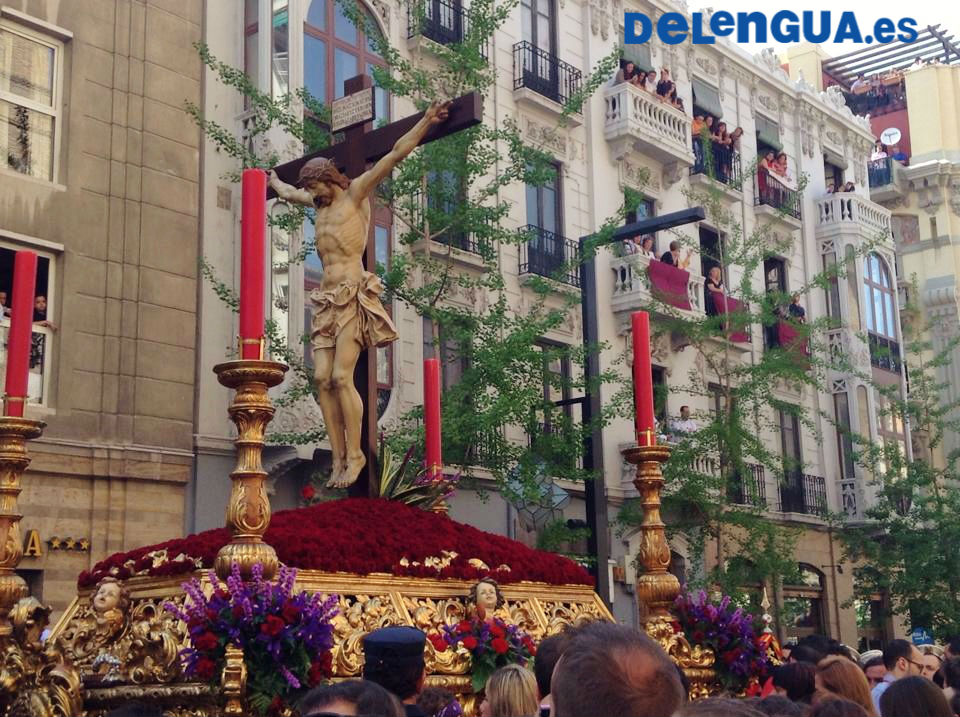
La ciudad también tiene muchos museos como el Museo de Bellas Artes de Sevilla, establecido en 1835 y también hay muchos jardines y parques como el Parque de María Luisa que fue construído para la Exposición Universal de 1929 en Sevilla. La ciudad es bien conocida por sus bonitas procesiones durante la Semana Santa y por su feria animada que tiene lugar dos semanas después, la Feria de Sevilla ó Feria de Abril.

Otra atracción a la ciudad es la cultura de las tapas, la gente va de un bar a otro para disfrutar de especialidades locales. El Flamenco es otra atracción a la ciudad, sobre todo en el barrio gitano de Triana.

Escuela Delengua, la escuela de español que está situada en la ciudad de Granada organiza excursiones durante los fines de semanas a Sevilla. En autobús desde Granada a Sevilla, el trayecto es de 3 horas aproximadamente, lo cual es un destino perfecto para un viaje de un día.

Seville is the artistic, cultural and financial capital of southern Spain, it is also the capital of the autonomous community of Andalusia and of the province of Sevilla. It is situated on the River Guadalquivir which is the second longest river in Spain and the longest in Andalusia.

Seville is more than 2,000 years old and is a large and well-preserved historical center, although it has a strong medieval, renaissance and baroque heritage, the city received heavy influences from the Arabic culture. The Cathedral is one of Seville’s main landmarks, it was built from 1401–1519 after the Reconquista on the former site of the city’s mosque. It is amongst the largest of all medieval and Gothic cathedrals. The interior is the longest nave in Spain, and is lavishly decorated, with a large quantity of gold. Another famous landmark in Seville is the Alcázar facing the cathedral, it has developed from the city’s old Moorish Palace. Construction begun in 1181 and continued for over 500 years, mainly in Mudéjar style, but also in Renaissance. Its gardens are a blend of Moorish, Andalusian, and Christian traditions.

The city also has many museums like The Museum of Fine Art of Seville, established in 1835 and also many beautiful gardens and parks like the Parque de María Luisa which was built for the 1929 World’s fair held in Seville. It is also known for its beautiful processions during Holy Week and for the lively and colourful fair held two weeks after, La Feria de Sevilla.

Another main attraction to the city is the tapas culture where people can go from one bar to another enjoying the tapas of local specialities. Flamenco is also another attraction to the city, shown in the gypsy area of Triana.

Escuela Delengua, the Spanish language school which is situated in the city of Granada organises weekend trips to Seville. By bus it takes just three hours to get to Seville, making it a perfect destination for a day trip!